Cancel

    Open app

    Search

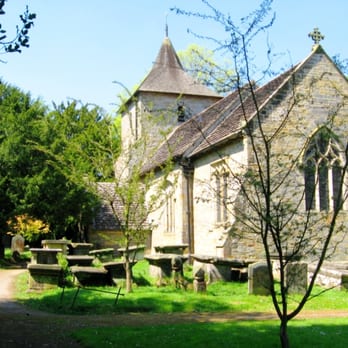
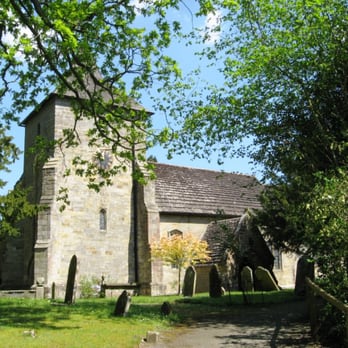
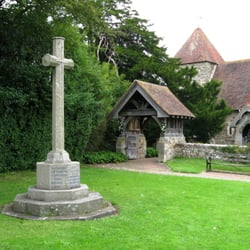
    St Mary's Church, Balcombe

    4.0 (1 review)

    St Mary's Church, Balcombe Photos

    Recommended Reviews - St Mary's Church, Balcombe

    Your trust is our priority, so businesses can't pay to alter or remove their reviews. Learn more about reviews.
    Yelp app icon
    Browse more easily on the app
    Review Feed Illustration
    Photo of David J.
    97
    2355
    12135

    18 years ago

    Helpful 0
    Thanks 0
    Love this 0
    Oh no 0

    Verify this business for free

    Get access to customer & competitor insights.

    Verify this business

    East Chiltington Church

    East Chiltington Church

    5.0(1 review)
    10.3 mi

    East Chiltington is a small village situated at the end of a lane, itself off a small side road on…read morethe B2116 from Lewes to Burgess Hill. Too small to warrant a dedication, the church was originally a chapel before it became the parish church. It's a wonderfully tranquil spot. The church is mediaeval in origin, with a 12th century nave and a squat 13th century tower, with a tiled pyramidal cap. It has a very attractive exterior, more so because of the ancient yew that guards its entrance said to be at least 1,500 years old. The crown of the tree has long since disappeared, and to keep it upright the villagers have filled the trunk with concrete. Very odd, but it seems to have worked. Once inside, the atmosphere betrays the work of heavy Victorian restoration which, despite the lovely scale small and intimate has nevertheless left feeling it a little soulless, especially the rather large and new-looking chancel arch, the neat tiled floor and modern pews. There are a few items worth noting, though: there's an original 12th-century Norman round-headed window, barely 6 inches wide, piercing the South wall next to the porch, and the inside arch of the South Door also looks ancient. Most of the other windows are Victorian inserts. The roof, with its heavy tie beams, is 17th century, and the pulpit and solitary bell date from the 18th. But it's well worth a look if you are in the area walking, or visiting the nearby Jolly Sportsman pub.

    Photos
    East Chiltington Church
    East Chiltington Church
    East Chiltington Church

    See all

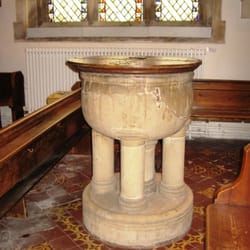
    Holy Trinity Church, Cuckfield - Font, 13th century

    Holy Trinity Church, Cuckfield

    4.0(1 review)
    3.8 mi

    Cuckfield's church has one of the most delightful settings of any village church I know. Situated…read moreon the south side of this delightfully well-kept Sussex village, it's churchyard and the adjoining cemetery are full of mature trees and surrounded by delightful cottages and lanes of old village houses. A footpath runs from Haywards Heath right past the churchyard, and makes for a delightful summer afternoon walk. The church itself has low stone walls and a steeply pitched tiled roof, the squat tower topped a spire covered in wooden shingles, visible for miles around. The main north porch is a delightfully rustic structure, which would not look out of place in 'Lord of the Rings'. The entrance to the churchyard from Church Street has the largest gateway I know - almost like a pavilion. But despite its ancient foundation, the real interest to-day lies in some fine Vistorian additions. Records refer to a church here as early as 1092, but the present building dates from a rebuilding begun about 1250. The original church occupied what is now the nave, the walls following the line of the present arcade. The south aisle was added about 1250, and the base of the tower begun. The north aisle, with its hexagonal columns, was added in the 14th century, together with the present chancel and side chapels, and in the 15th century the roof was rebuilt in its present sweeping form, rising from the aisle walls direct to the ridge. The Sergison chapel on the north side was added in the 16th century, and the two porches were rebuilt by the Victorians. From 1855 onwards, the church underwent a major restoration, under the direction of the famous church architect, George Frederick Bodley. Much of the work - including the painted ceiling and some of the stained glass - was undertaken by his even more famous pupil, C E Kempe, who also worshipped here. The ceiling in particular is an astonishing piece of decoration for a parish church, and would humble many a cathedral. As if to finish the roll call of Victoriana, the south aisle also has windows by Clayton and Bell. Other items of interest include a wide range of memorials from the 16th century onwards and a 13th century bowl-shaped font. The church is the centre of a very active parish life, details of which can be found on its website.

    Photos
    Holy Trinity Church, Cuckfield - Church Street entrance

    Church Street entrance

    Holy Trinity Church, Cuckfield - Church tower and shingled spire, from the south.

    Church tower and shingled spire, from the south.

    Holy Trinity Church, Cuckfield - Nave ceiling, detail.

    See all

    Nave ceiling, detail.

    All Saints Church

    All Saints Church

    5.0(1 review)
    14.6 mi

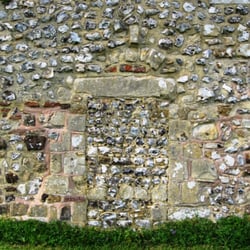
    All Saints can lay a strong claim to being England's most hidden church. Although only yards from…read morethe busy A283, it lies across a small, thickly wooded valley from a narrow lane, only a diminutive wooden sign hinting that there might be a church here. To reach it, you follow a path falling steeply to the bottom of a small valley, across a wooden footbridge and rising back up again. As if to make it even harder to find, the lane is signposted 'Wiston', a mile further east than the turning for Wiston Park and House. On my visit, the path was lined with bluebells and ramsons. The church itself a small, simple two-celled structure, with a Norman nave and small Norman windows high up in the walls. Blocked arches abound, although the church guide assures us that the church was never larger. They must remain a mystery. The Chancel is brighter, with a 14th century East Window and two Early English lancets lending a little more light. The walls have small fragments of homespun 14th century wall paintings, and the Chancel arch crude Romanesque decoration. Until 2004 this included an interesting horizontal figure carved on the impost on the North side, possibly some sort of fertility symbol, sometimes called a Sheela-na-gig. Sadly, this was destroyed by an act of vandalism - after 800 years. I hope it can be restored. More happily, to the right of the altar, a perfect Decorated Piscina dates from the 14th century. Of perhaps more interest, however, are the various arches on the outside of the chancel, especially those on the north side (see above). Of late 12th Century date and of extraordinary quality, these too are something of a mystery: they clearly weren't meant for their present position. They may have come from the nearby Benedictine Priory at Sele and inserted in the 14th century when the chancel was being rebuilt. Whatever their origin, they are a delight.

    Photos
    All Saints Church
    All Saints Church
    All Saints Church

    See all

    Clayton Church

    Clayton Church

    5.0(2 reviews)
    10.4 mi

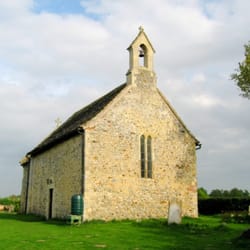
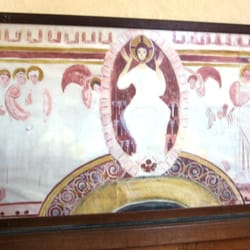
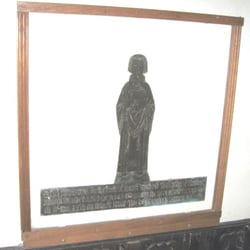
    Photos added 13-08-2007…read more Just off the busy main road between Brighton and Hassocks lies the little village of Clayton. Nestling at the foot of the South Downs, it is a quiet spot, known locally for its two windmills, called Jack and Jill, after the English nursery rhyme. Most visitors are ramblers, walking the South Downs long-distance footpath. And most probably overlook the small, squat church, with its wooden shingle turret, which seems as if it is trying to hide itself in the hillside. But go inside.. The interior immediately gives away its antiquity. It is mentioned in the Domesday Book. The nave is Saxon, pre-dating the Norman conquest of 1066, with an ancient romanesque arch separating it from the chancel. Other elements suggest Norman and later gothic additions. But what draws the eye are the frescoes, which adorn the nave walls: here is one of England's most complete set of early mediaeval church wall-paintings. Although the age is disputed, the concensus is that they are late 11th or early 12th century, although some believe that they may also pre-date the Norman conquest. The theme is judgement. Above the chancel arch is Christ seated in glory, attended either side by the apostles. To the left, on the north wall, a great procession of clergy, kings and lay-people walk towards the chancel and a depiction of Jerusalem, to be met by St Peter: above the door, the Antichrist (dressed as a king) is shown being cast down by an angel. A similar procession occurs on the south (right-hand) wall. The western part of this frieze is missing, but there is enough to suggest this was the depiction of hell: there is a wonderful rendition of a beast being ridden by a devil, trampling one of the damned under foot. A series of framed drawings of the frescoes is provided at ground to aid their interpretation. Elsewhere, on the south wall of the chancel is a small memorial brass, commemorating a 16th century Rector. Although depicted in his vestments (how little they have changed!), the memorial is in surprisingly modern English. It reads: 'Of ye charite pray for the soule of Mayst: Richard Idon, pson of Clayton and Pykecu, whiche decessed the VI day of January the yere of our Lord M V and XXIII on whose soule Jhu have mercy amen.' The building has a few other items of interest, notably a Kempe window and a weather vane from 1781. In summer, it hosts a delightful flower festival.

    As the previous reviewer has said, it is easy to overlook this church, but shame on you if you do…read more I do suggest taking small binoculars (e.g. opera glasses) with you when you visit. The lower level depictions of the frescoes give a good idea of the appearance of the frescoes above, but to see the real thing clearly requires a bit of ocular aid.

    Photos
    Clayton Church
    Clayton Church
    Clayton Church

    See all

    St Mary's Church, Balcombe - churches - Updated August 2026

    Loading...
    Loading...
    Loading...