1. Stephen's House and Gardens

    1. Stephen's House and Gardens

    0

    London, XGL

    Cancel

    Open app

    Search

    Stephen's House and Gardens

    5.0 (1 review)

    Stephen's House and Gardens Photos

    Recommended Reviews - Stephen's House and Gardens

    Your trust is our priority, so businesses can't pay to alter or remove their reviews. Learn more about reviews.
    Yelp app icon
    Browse more easily on the app
    Review Feed Illustration

    10 years ago

    Helpful 0
    Thanks 0
    Love this 0
    Oh no 0

    Verify this business for free

    People searched for Landmarks & Historical Buildings 373 times last month within 5 miles of this business.

    Verify this business

    The Whittington Stone - Dick Whittington Stone and Cat, Archway, London

    The Whittington Stone

    4.1(7 reviews)
    3.1 miArchway

    Lovely afternoon with friends. Great food and super friendly staff would highly recommend Thank…read moreyou for a great afternoon

    Dick Whittington was a real person,who lived from about…read more1350 to 1423, and he was indeed Mayor of London. There are many variations of the story based on a play produced in 1606 with later additions and evolution over hundreds of years.He was never actually 'Lord' Mayor, as that title was not used until a much later period, but the Mayor was a very important position: the holder was head of government for the City of London.Usually the story is 3 times Lord Mayor. He was Mayor 4 times. Near the foot of Highgate Hill is the famous Whittington stone, which is supposed to mark the point where Dick Whittington, on his way out of London, heard the sound of bow bells chiming 'turn again Whittington, Lord Mayor of London' and decided to return to the city. The cat is harder to explain; there is no evidence that Dick Whittington ever had a cat. Maybe the association with the animal arose from the type of boat he used for trading, known as a 'cat'. The present sculpted cat on the top of the stone was not added until 1964. The story first appeared nearly 200 years after Whittington's death. Other characters were added, and Dick Whittington became a favourite pantomime in the 19th century. Many legends surround Old Highgate and Hampstead, and there is an old belief that if Whittington's Stone is ever removed or if any harm should befall it, great change and disaster will fall upon the neighbouring area. Of course, this myth is probably based upon the fact that the Stone is one of Highgate's oldest landmarks, and therefore, it would be bad luck to remove it. The real Richard Whittington was apprenticed to the Mercers' Company in the City of London. He became a successful trader, dealing in valuable imports such as silks and velvets. All his goods would have entered London through the river quays. Whittington was three times Master of the Mercers' Company and four times Mayor of London. Richard II and his successor Henry IV were important customers for Whittington. He supplied silks for the wedding dresses of the daughters of Henry IV. Richard Whittington's fortune was used for many charitable purposes, including almshouses, a library, and also public works such as improvement to the water supply and a public lavatory. The Whittington Charity still exists, and provides housing and financial help.

    Photos
    The Whittington Stone
    The Whittington Stone
    The Whittington Stone

    See all

    Freddie Mercury's Studio

    Freddie Mercury's Studio

    3.9(8 reviews)
    7.1 miKensington

    We walked blocks and blocks to get to this spot to see where Freddie Mercury's last residence and…read morestudio was in London. There isn't much to see but a high wall painted in anti graffiti paint. There isn't much to see or do, no tour to take - therefore it was just an okay experience for me. The highlight was the memories that sprung to mind when being in this place.

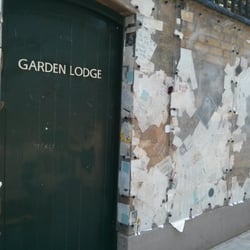
    I went to visit Freddie's final haunt more for sentiment than expecting to see some great tribute,…read moreor anything much more than a vandalised door and some bricks (as the previous Yelp pictures suggested). I was pleasantly surprised that it seems a compromise has been reached between vandalism and tribute; the bricks directly beside that famous door - now redecorated with 'Garden Lodge' printed on it - are covered in perspex but fans have slipped through letters, notes, doodles, all full of so much love. In reality, Freddie was a private man and I doubt he'd want a shrine (he objected to the place being turned into a museum, apparently) but to see the love people still hold for him nearly 25 years on is beautiful. My sentiments were fulfilled, and I respectfully left listening to 'I'm Going Slightly Mad'. Just around the corner (I kid you not) I bumped into a person dressed as a life-size can of paint. I was already wondering if 'slightly' wasn't quite appropriate for me but that just proved it - hah! Worth going for the sentiment alone, if you're sentimental like that. You won't be bowled over by what you see but more what you feel, if you're that way inclined.

    Photos
    Freddie Mercury's Studio
    Freddie Mercury's Studio - Taken December 2018. Wall is completely free of graffiti and tributes.

    Taken December 2018. Wall is completely free of graffiti and tributes.

    Freddie Mercury's Studio

    See all

    Paul McCartneys Home

    Paul McCartneys Home

    4.3(3 reviews)
    4.6 miSt John's Wood

    I noticed in discussions folk like celebs so heres a bit of info:…read moreThis is Paul McCartney's London home, which was bought in April 13 1965 for 40,000, and Paul moved in late March 1966. Paul McCartney will always be in the news I guess. McCartneys housekeeper was a Mrs. Kelly who was fired along with her husband when they tried to sell their story to an Australian newspaper. A music room/den was on the top floor and had a window overlooking the front courtyard Songs such as Penny Lane, Getting Better and Hey Jude were written there. A Knight piano stood in the music room. McCartney got design team Binder, Edwards and Vaughan to paint the piano in psychedelic colours. The job cost £300. The many visitors to Cavendish Avenue included Andy Warhol and Mick Jagger. McCartney reportedly offered Jagger his first joint in the music room at Cavendish Avenue. He had a meditation chapel built in his garden around 1967 which contained a circular bed donated to him by Groucho Marx. In 1968 fiance Jane Asher returned unexpectedly to Cavendish Avenue from Bristol to find him in bed with another girl. They broke up shortly afterwards. McCartney was the only Beatle to remain a London resident during the years that The Beatles were together. It is still owned by Paul and obviously access is prohibited.

    6/18/16 Sir Paul wasn't home when we came by but I must say…read morehis home was quite well cared for and exceptionally clean! A nice neighborhood but not pretentious in any way.

    Photos
    Paul McCartneys Home
    Paul McCartneys Home
    Paul McCartneys Home

    See all

    Crossbones Graveyard

    Crossbones Graveyard

    4.6(5 reviews)
    7.8 miBorough

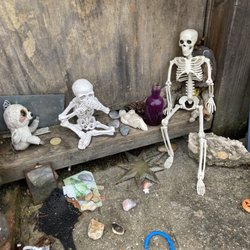
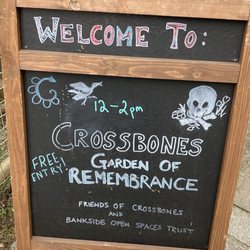
    This little garden was on a list of strange/offbeat attractions to see on my trip to London because…read moreof the dark history around it. It's basically a garden grown atop a mass grave for poor, unmarried women, sex workers, and children. Small but lovingly cared for by volunteers, it is only open from noon to 3PM on weekdays during the summer. There is some artwork and little memorials. It's a little out of the way, but if you're in the area it's a nice quick stop to pay tribute to the forgotten women and children.

    Another Halloween visit? This one holds a celebration here…read more Cross Bones Graveyard was a mediaeval burial ground, situated in St Saviours parish, now Redcross Way SE1. There is a long established tradition that it was a final resting place for Winchester Geese, ie prostitutes, from the legalised brothels or 'stews' of Bankside. This dates back to the days when the Bishop of Winchester ran Bankside and licensed the Geese. Recent archaeological digs for the Jubilee Line extension have uncovered evidence of a highly overcrowded graveyard where bodies are piled up on top of each other and tests have shown that many of the bodies are women and children with diseases ranging from smallpox, TB and pagets disease to osteoarthritis and vitamin D deficiency. This is Cross Bones, an unconsecrated graveyard going back to medieval times. The Tudor historian John Stow refers to it as a burial ground for 'single women' - a euphemism for the prostitutes who worked in Bankside's legalised brothels or 'stews'. In his 1603 Survey of London, Stow writes: 'I have heard of ancient men, of good credit, report that these single women were forbidden the rites of the church, so long as they continued that sinful life, and were excluded from Christian burial, if they were not reconciled before their death. And therefore there was a plot of ground called the Single Woman's churchyard, appointed for them far from the parish church.' The burial registers of St Saviour's parish don't distinguish between burials in Cross Bones and those in the churchyard adjoining what is now Southwark Cathedral. However, the long-established local tradition - that Cross Bones was a prostitutes' graveyard - is restated in the Annals of St Mary Overy (1833): 'There is an unconsecrated burial ground known as the Cross Bones at the corner of Redcross Street, formerly called the Single Woman's burial ground, which is said to have been used for this purpose' Such women were condemned to be buried in unhallowed ground. Yet many were actually licensed by the church. For some 500 years, the Bishop of Winchester exercised sole authority within Bankside's 'Liberty of The Clink', including the right to licence prostitutes under a Royal Ordinance dating back to 1161. These women became known as 'Winchester Geese'. Cromwell and the Puritans shut down the Bankside pleasure quarter, with its bear-pits, theatres, taverns and stews. By Victorian times, the area around Cross Bones was known as The Mint - an overcrowded, cholera-infested slum, and a notorious thieves quarter. When William Booth was conducting his survey of poverty, his researcher George Duckworth described it as: ' a set of courts and small streets which for number, viciousness, poverty and crowding, is unrivalled in anything I have hitherto seen in London.' Duckworth walked around The Mint with a policeman who told him: 'Police don't go down here unless they have to, and never singly.' Around this time, Cross Bones witnessed many a pauper's burial. It was also the haunt of body-snatchers, seeking specimens for the anatomy classes at nearby Guy's Hospital. The graveyard was finally closed in 1853, on the grounds that it was 'completely overcharged with dead' and that 'further burials' would be 'inconsistent with a due regard for the public health and public decency'. In 1883, it was sold as a building site, prompting Lord Brabazon to write to The Times: ' with a view to save this ground from such desecration, and to retain it as an open space for the use and enjoyment of the people.' (10th November 1883) The following year the sale was declared null and void, under the Disused Burial Grounds Act (1884). Subsequent attempts to develop the site were fiercely resisted by local people. The land was briefly used as a fair-ground until an action was taken against the showmen for abatement of the nuisance caused by steam organs and noisy music. Apart from these minor intrusions, the graveyard slept peacefully and unmolested for the best part of a century. Then, in the 1990s, London Underground built an electricity sub-station to supply power for the Jubilee Line Extension. Prior to the work, Museum of London archaeologists conducted a partial excavation of the site, removing some 148 skeletons. By their own estimate, these represented: 'less than 1% of the total number of burials that were made at this site.' Some were exhibited at the Museum's 1998 London Bodies exhibition, including: ' a young woman's syphilitic skull with multiple erosive lesions, from Red Cross Way, Southwark, 18th century'.' 'For tonight in Hell, they are tolling the bell For the Whore that lay at The Tabard And well we know how the carrion crow Doth feast in our Cross Bones Graveyard.' They have since conducted many rituals and community events at the graveyard. The rituals are simple, inclusive and non-dogmatic, emphasising respect for 'the Ancestors', and honouring the spirit of


    Photos
    Crossbones Graveyard
    Crossbones Graveyard
    Crossbones Graveyard

    See all

    Stephen's House and Gardens - landmarks - Updated July 2026

    Loading...
    Loading...
    Loading...