Cancel

    Open app

    Search

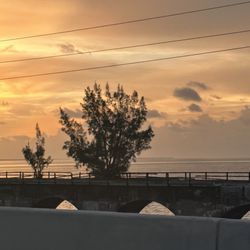
    Tavernier Creek Bridge Photos

    Recommended Reviews - Tavernier Creek Bridge

    Your trust is our priority, so businesses can't pay to alter or remove their reviews. Learn more about reviews.
    Yelp app icon
    Browse more easily on the app
    Review Feed Illustration

    27 days ago

    Helpful 5
    Thanks 1
    Love this 2
    Oh no 1

    Verify this business for free

    Get access to customer & competitor insights.

    Verify this business

    Indian Key State Historic Site

    Indian Key State Historic Site

    4.5(22 reviews)
    12.6 mi

    This historic park has a lot of great history here. I'd recommend reading about it on Wikipedia and…read moremany other websites. It's an island off the coast of Islamorada, FL. It was a fun trip from Robbies. We rented 5 kayaks to go out on the water. Most of the water was shallow until after you get past the bridge, the water will become deeper. They provide you a path to follow and a map to ensure that you stay away from the current. You have the option to go with a guide, but we went together and did just fine. It took us 35 minutes to get from Robbies to the Island via Kayak. When you arrive, they have an area that they recommend you to park your kayaks at. Now there are other locations but if you seen them, this is the best location to stop at for sure. The island is small and difficult to understand that there was a neighborhood here once upon a time in 1863, over 100 years ago. We were able to make it to the other side of the island. Members of our team decided to go swimming at the top of the surface to see what they seen under the water. One thing it was very hot on this day, so it worked our well. The island doesn't have lots to offer, but can be a good day to paddle out, explore, even take a lunch and relax until it's time to go back.

    Indian Key State Historic Site is situated on an island, and configured to illustrate its history…read more  It's a fun and easy trip by kayak from Robbie's Kayak Shop.  Tip: When you're on the island you'll find well-marked signs that guide you on a walk around the points of interest.  You can even download an audio about the tour and play it on your phone. This is a nice way to spend an hour or so, and it makes coming here even more fun if you come by kayak :-)

    Photos
    Indian Key State Historic Site
    Indian Key State Historic Site
    Indian Key State Historic Site

    See all

    Freedom Tower - Miami Freedom Tower

    Freedom Tower

    4.2(34 reviews)
    57.7 miDowntown

    If you have ever been to downtown Miami, the Freedom Tower looms large as an iconic landmark. But…read moredo you know its history? Come along with me as we check it out. Admission is normally $18 for adults, but on the first weekend of each month, Bank of America account holders can visit for free through the Museums on Us program. You can also park for free in the Miami Dade College Wolfson Campus Garage, located just a block from the tower. The story of the Freedom Tower begins with James Middleton Cox, a former Ohio congressman, governor, and presidential candidate who came to Miami in 1923. He built the tower in 1925 to house his newly purchased newspaper, The Miami Daily News and Metropolis, which later became The Miami News. With 17 floors, the tower became Miami's first skyscraper. It was designed by the prestigious New York architectural firm Schultze and Weaver, which also designed the Waldorf Astoria New York, The Breakers, and the Hotel Sevilla-Biltmore. The Miami News Tower was modeled after the Giralda bell tower of the Cathedral of Seville in Spain. It was designed in the Mediterranean Revival style, which was popular during Florida's land boom years of the 1920's. In 1957, Miami News moved out of the tower. From 1962 to 1974, it was the home of the Cuban Refugee Center, which opened following the Cuban Revolution. Enacted during President John F. Kennedy's administration, the Migration and Refugee Assistance Act of 1962 authorized aid for the large number of Cubans fleeing the island in search of political asylum. The U.S. government leased the building to process, document, and provide medical and dental care for the influx of Cuban exiles. During this period, the building became known as "El Refugio" ("The Refuge"), or the Freedom Tower. Nicknamed the "Ellis Island of the South," the Freedom Tower became a symbol of hope and freedom for those seeking democracy. After the refugee center closed, the tower was sold, fell into neglect, and was nearly demolished. Community leaders stepped in to save it, and it was listed on the National Register of Historic Places in 1979. In 1997, the tower was purchased by Jorge Mas Canosa, founder and leader of the Cuban American National Foundation. He passed away only two months after purchasing the building, but his family continued with his restoration plans. In 2004, they sold the tower to another Cuban American family, the Pedro Martin family. In 2005, the building was donated to Miami Dade College, the largest Hispanic-serving institution of higher education in the United States. The tower was designated a National Historic Landmark on October 6, 2008. In July 2025, the Freedom Tower celebrated its 100th anniversary. As part of the centennial celebration, the tower underwent significant renovations, including several new exhibits. These include Libertad, a permanent exhibition on the first and second floors that tells the story of how Miami was shaped by immigration through digital installations, personal testimonials, and historic artifacts. Another exhibit, El Refugio in Context, examines the Freedom Tower's role as a Cuban Refugee Center during the 1960s. One room has been recreated to look as it did when the tower served as a Cuban processing center. Another exhibit, Unidad: The World's Game, was created by the FIFA Museum and showcases how soccer, or fútbol, inspires and connects billions of people around the world. Visitors can explore historic artifacts, interactive stations, and immersive installations. I expect this exhibit to be especially popular when the FIFA World Cup comes to Miami in June. The tournament is the most prestigious competition in international soccer, bringing together the world's best men's national teams every four years to compete for the sport's highest honor. I also enjoyed viewing Languages of Migration in the Kislak Center. This exhibition explores global migration through rare maps, colonial-era artifacts, and contemporary art. The Freedom Tower is open Wednesday through Sunday from 10:00 AM to 6:00 PM. I very much enjoyed my visit and highly recommend adding this historic landmark to any itinerary that includes downtown Miami. The exhibits bring Miami's rich history to life. Freedom is not free, and the tower stands as a powerful reminder of that through the stories and memories of those who have left their mark on this important cultural landmark.

    Such a beautiful space. Went to and event for the Miami film festival and didnt know what to expect…read morewhen I walked in. The decor was minimal but beautiful. Very spacious and parking was very easy

    Photos
    Freedom Tower - Miami Freedom Tower

    Miami Freedom Tower

    Freedom Tower - Freedom Tower, September 16, 2025. Photo by Victor Jaramillo, courtesy of World Red Eye.

    Freedom Tower, September 16, 2025. Photo by Victor Jaramillo, courtesy of World Red Eye.

    Freedom Tower - MIAMI FREEDOM TOWER

    See all

    MIAMI FREEDOM TOWER

    Scarface Historic Marker

    Scarface Historic Marker

    4.7(3 reviews)
    59.0 mi

    I always love discovering a bit of history and this marker is Hollywood magic right here in Miami…read more On Ocean Drive in South Beach is a plaque honoring that the building appeared in the movie Scarface. It used to be an apartment building but it is now a CVS that still has much of its original architecture. The rooms that were used for filming during the movie are now part of the pharmacy. Scarface is a 1983 film based on a 1929 novel and a 1932 movie. It tells the story of a mobster based on real life criminal Al Capone. In the movie Cuban refuge Tony Montana played by Al Pacino comes to Miami during the Marial boatlift in 1980 when Cuba released jail inmates and mental hospital patients who then fled the island for Florida. The film charts Tony Montana's humble arrival in Miami to his transformation as a wealthy murdering drug lord. Other people who appeared in the movie were Steven Bauer, Mary Elizabeth Mastrantonio and Michelle Pfeiffer in her first dramatic role. The movie marker is at the entrance of the staircase used during the filming of the chain saw scene. Look for it to the right of the stairs and to the left of the main entry to the building. You might think the city of Miami was pleased to be depicted in a Hollywood film but it was not. They were concerned about the movie's portrayal of Cuban Americans so civic leaders pushed to get filming moved out of Florida. Very little was actually filmed in South Beach and the filmmakers continued production in New York and California. If you are in the area its a great place to stop for a selfie.

    Okay, I know rating a plaque 5 stars is a little over the top BUT Scarface is one of my all time…read morefavorite movies and I HAD to check this place out. Oddly we were looking for a drug store, so it was a win/win when we found out the old Sun Ray Hotel, the Scarface scene of the coke deal with Colombians and chainsaw body mutilation were one and the same! Super cool to just envision the whole thing, then go in and get some water, snacks and toiletries at the CVS!

    Photos
    Scarface Historic Marker - Very iconic stairway from a scene in Scarface that I watched growing up. Glad to have Visited!

    Very iconic stairway from a scene in Scarface that I watched growing up. Glad to have Visited!

    Scarface Historic Marker
    Scarface Historic Marker

    See all

    Stiltsville - 1930 creative housing

    Stiltsville

    4.6(17 reviews)
    51.3 mi

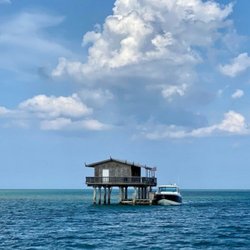
    The seven remaining structures can be seen in the park I was walking at…read more Stiltsville is a group of wood stilt houses located one mile south of Cape Florida, on sand banks of the Safety Valve on the edge of Biscayne Bay in Miami-Dade County, Florida. The structures stand on wood or reinforced concrete pilings, generally ten feet above the shallow water, which varies from one to three feet deep at low tide. View from the Cape Florida Light History Most sources claim the first stilt shack was built in the early 1930s, but some Dade County historians say that there were a dozen shacks in "the flats" as early as 1922. Crawfish Eddie "Crawfish" Eddie Walker built a shack on stilts above the water in 1933, toward the end of the prohibition era, allegedly to facilitate gambling, which was legal at one mile offshore. Crawfish Eddie sold bait and beer from his shack and was known for a dish he called chilau, a crawfish chowder made with crawfish he caught under his shack. Thomas Grady and Leo Edward, two of Eddie's fishing buddies, built their own shack in 1937. Shipwrecking and channel dredging brought many people to the area and more shacks were constructed, some by boating and fishing clubs. Local newspapers called the area "the shacks" and "shack colony". Crawfish Eddie's original shack was destroyed by the late-season Hurricane King of 1950. Calvert Club at Stiltsville Calvert Club The first social club built at Stiltsville was constructed during the late 1930s and named the Calvert Club. The Miami Beach Rod & Reel Club was organized in 1929 and held its first official outing at the Stiltsville Calvert Club in August 1938. A club picture was taken in front of the club, which was popular enough to have picture postcards printed with its image. Quarterdeck Club The Quarterdeck Club, built on a barge by Commodore Edward Turner, opened in November, 1940. The club gained popularity after an article about the club appeared in Life magazine on February 10, 1941. The article noted that this was an "extraordinary American community dedicated solely to sunlight, salt water and the well-being of the human spirit." The club was described as "a $100,000 play-palace equipped with bar, lounge, bridge deck, dining room and dock slips for yachts". The local newspapers began running stories and photographs of parties with celebrities. The Quarterdeck Club was viewed by tourists as a "must see" attraction at Miami Beach, Florida. Rumors of gambling persisted, and the club was raided in 1949, but no evidence of gambling was found. Hotelman Warren Freeman purchased the club in 1950 and envisioned it as a high-class operation. The structure was renovated and expanded, only to be heavily damaged by Hurricane King late in the season. Dejected and broke, Freeman sold what remained. The club was rebuilt, but never regained the popularity of its early years. Hurricane Donna in 1960 damaged most of the structures in Stiltsville, including the Quarterdeck Club, then the building was completely destroyed by a fire in 1961 that burned all the way to the pilings. The rumor was that the owner's wife set fire to the club after a jealous fit. Karl Mongelluzzo, the last owner of the Quarterdeck Club, was denied a building permit in 1967. Party Central Stiltsville may not have looked like much, but in the 1940s and 1950s, it was a popular place where lawyers, bankers, politicians, and other moneyed, well-connected Miamians came to drink, relax and kick back. Law enforcement periodically visited the area, looking for vice activities.

    A boat or watercraft is needed to reach Stiltsville as it is 1 mile due south of Key Biscayne…read more Hurricane Andrew destroyed must of the home and businesses. It is a great way to view the Miami coast from sea.

    Photos
    Stiltsville
    Stiltsville
    Stiltsville - Another beautiful South Florida evening.

    See all

    Another beautiful South Florida evening.

    Tavernier Creek Bridge - landmarks - Updated June 2026
    Loading...
    Loading...
    Loading...