Victoria Coach Station Photos


Recommended Reviews - Victoria Coach Station
Start your review...


Reviews With Photos


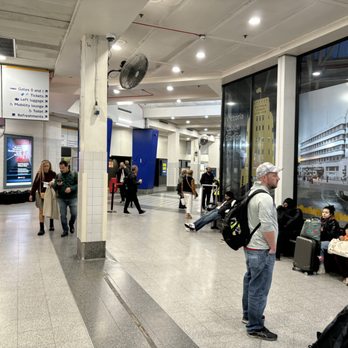
Station itself doesn't have enough seats for all waiting passengers. It has cafe inside though so you can easily grab food and drinks, just make sure you have enough time to finish them before you board. No HOT food and drinks allowed (if the driver sees you holding them) inside the bus. We had to throw ours away only to see other people drinking their hot coffee inside. Again, this doesn't apply to cold drinks so you can be holding an iced coffee without hassle. Ticket check is not that strict if you bought online and have the barcode ready. Bus started moving a minute earlier so don't be late! Seatbelts are required in the bus.


The Victoria Coach Station Pendulum... Apparently the source for all exiting requirements and one of the main outlets to destinations outside of the immediate city via coach and train. But, for now, the automation process is a very simple check-in which confirms that you can use your own data code. However, which company to use can be quite complex as the different price points and travel destinations differ in terms of the number of users, schedules, and locations. Overall, a great way to make it back to the station and airport on time.
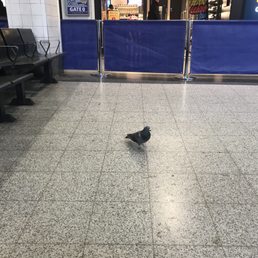

Not a fan of this place. It was very difficult to figure out. The information desk was more unhelpful than other people working at the gates. They told us 4 different gates to go to then finally told us we're not with their company. The Evan Evans check in was very good and the best part. There's pigeons everywhere inside, toilets only take exact change and it's very dirty inside.


Victoria Coach Station is the largest coach station in London. It serves long-distance coach services and is also the departure point for many countryside coach tours originating from London. It should not be confused with the nearby Green Line Coach Station or the Victoria bus station, which serves London Buses. It is operated by Victoria Coach Station Limited a subsidiary of Transport for London. The Coach Station was opened at its present site in Buckingham Palace Road, London, in 1932, by London Coastal Coaches, an association of coach operators. The building is in a distinctive Art Deco style, the architects for which were Wallis, Gilbert and Partners.[2] The building was listed at Grade II by English Heritage on 1 September 2014. It was originally managed by London Coastal Coaches, a consortium of coach operators. In 1970 it became a subsidiary of the National Bus Company.[2] In 1988 ownership of Victoria Coach Station Limited was transferred to London Transport. In 2000 ownership passed to Transport for London.
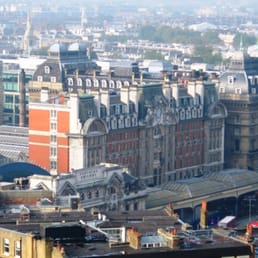

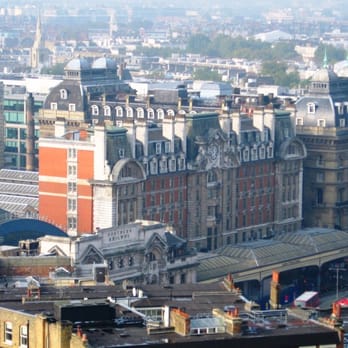
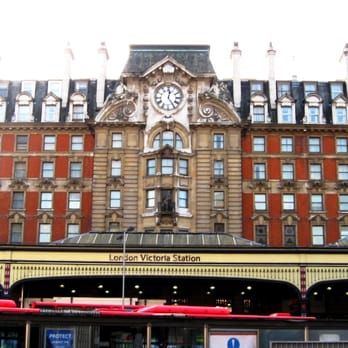
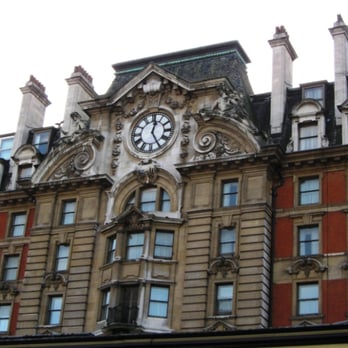
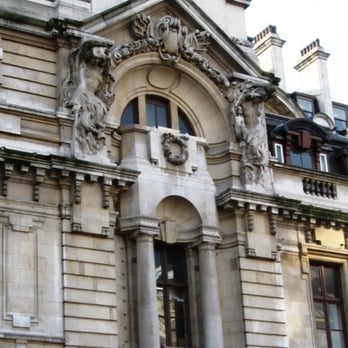
John Betjeman described Victoria station as, 'London's most conspicuous monument to commercial rivalry', referring to the fact that there are actually two distinct station at Victoria, side by side. Although modern redevelopment over the platforms has obscured this division, the brick arches above W H Smiths still separate the station into two distinct parts. Each has been partially rebuilt during its life, giving Victoria no fewer than four different styles of architecture! The first station on the site, dating from 1860, was built by the London, Brighton and South Coast Railway (LBSCR), and incorporated the Grosvenor Hotel as part of the terminus. Designed by the architect J T Knowles, this is one of the earliest railway hotels and, despite internal alterations, still retains much of its original splendour. The exterior is well preserved, in an Italianate style, with dressings in Bath stone, and French-style mansard roofs. The hotel (opened in 1861) is now the oldest surviving part of the original station. The original LBSCR terminus alongside the hotel was rebuilt in a grand red-brick Renaissance style in 1898, and features a central clock tower and glass portico over the cab road, both of which still exist. Underneath, the passages retain the original maps of the old LBSCR as an historical feature. Behind is what is now the spacious main concourse, retaining its original roof. Unfortunately, the continuation of this roof over platforms 9-19 has disappeared, to make way for the Victoria Place shopping development and offices. This renders the platforms below rather cramped and claustrophobic. But services from here still go the original LBSCR destinations Brighton and the South Coast (via Gatwick Airport) and suburban services to Croydon, Streatham, Tattenham Corner, Epsom Downs, Beckenham Junction and Sutton. In 1862, the LBSCR station was joined by that of the London, Chatham and Dover Railway, since known for obvious reasons as the Continental side. Before the advent of the Channel Tunnel, trains for Dover and Ramsgate departed from here to meet the boat trains. The famous 'Golden Arrow' and 'Night Ferry' service even crossed the channel, by a specially adapted ferry complete with railway tracks, onto which the carriages were shunted, to be pulled off on the French side. The London, Chatham and Dover's original 1862 building has survived untouched on the far side behind platform 2. Once the main entrance, this is a handsome three-storey structure in the classical Georgian style. The original and elegant train-shed over platforms 1-8 by Sir John Fowler also survives, now mostly sheltering suburban trains to the Medway towns, Bromley, Crystal Palace, Orpington and Sevenoaks. It comprises two spans, one of 127ft by 455ft, and the other of 129ft by 385ft. You can get an excellent view of this from the balcony of the Wetherspoons pub. By the turn of the century, the London, Chatham and Dover railway had been absorbed by the South Eastern and Chatham Railway, and the modest original terminus was no longer viewed as sufficiently grand, especially next to the new LBSCR building. So the frontage of the Continental side was rebuilt in 1908 in a grand 'Banker's Baroque' style in Portland stone, by the architect A W Bloomfield. This features huge female caryatids under classical broken pediments, and a grand entrance arch. It still carries the words 'Southern Railway' across the top, reflecting the merger of the two former rival companies in 1924 - which also unified the station properly for the first time. To-day, the station is one of London's (and Europe's) busiest, with over 115 million passengers passing through each year, and over 350,000 each week-day. The adjacent underground station on the District, Circle and Victoria lines deals with 80 million passengers a year the second busiest in London after King's Cross / St Pancras. Facilities apart from the dizzying array of shops and bars include showers (and baby-changing facilities, alongside the toilets), wi-fi access (BT and T-mobile), a bureau de change, a shoe-shine, secure left luggage facilities and bicycle storage. Rarely for a London terminus, there is also an NCP car-park at the station, accessed from Eccleston Bridge Road. Walk up to and through the Victoria Place shopping centre and there is also another cab road, which is less hectic than the one at the front of the station. The Network Rail site has an excellent map of the station and its facilities.
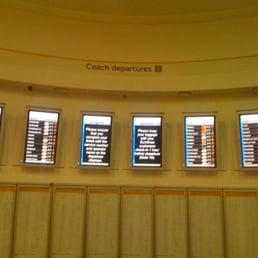

We had to catch the day tour bus from Victoria coach station and it was very early. We left hotel around 6 AM to catch the bus. Navigating is very easy, just follow the directions. Don't get confused: Victoria train station and coach station are a few hundred yards apart along Buckingham Palace Road, a level walk that'll take about 3 or 4 minutes. Victoria Coach Station is the largest coach station in London, located in the central district of Victoria in the City of Westminster. It serves as a terminus for many medium- and long-distance coach services in the United Kingdom and is also the departure point for many countryside coach tours originating from London. It is operated by Victoria Coach Station Limited, a subsidiary of Transport for London (TfL). It should not be confused with the nearby Green Line Coach Station for Green Line Coaches, or with Victoria bus station which serves London Buses operated by TfL Victoria Coach Station itself is monopolized by National Express and Megabus services. National Express are the largest operator with a network reaching just about every town and city in England. The departures terminal closes at 01:00 and opens at 05:00. If you are travelling on an overnight service, please arrive 20 minutes before your coach is scheduled to depart The left luggage facility is open daily between 07:00-22:45. read more


There is nothing fancy about the Victoria Coach station. There is some seating while waiting for your coach. In the middle is a food station to purchase coffee etc. it was easy to find where to stand inside to be connected with the correct coach. To make it run smooth, your passport should be out when you show the coach ticket. read more


3 years ago
Station itself doesn't have enough seats for all waiting passengers. It has cafe inside though so you can easily grab food and drinks, just make sure you have enough time to finish them before you board. No HOT food and drinks allowed (if the driver sees you holding them) inside the bus. We had to throw ours away only to see other people drinking their hot coffee inside. Again, this doesn't apply to cold drinks so you can be holding an iced coffee without hassle. Ticket check is not that strict if you bought online and have the barcode ready. Bus started moving a minute earlier so don't be late! Seatbelts are required in the bus. read more


3 years ago
The Victoria Coach Station Pendulum... Apparently the source for all exiting requirements and one of the main outlets to destinations outside of the immediate city via coach and train. But, for now, the automation process is a very simple check-in which confirms that you can use your own data code. However, which company to use can be quite complex as the different price points and travel destinations differ in terms of the number of users, schedules, and locations. Overall, a great way to make it back to the station and airport on time. read more


3 years ago

2 years ago


6 years ago

Not a fan of this place. It was very difficult to figure out. The information desk was more unhelpful than other people working at the gates. They told us 4 different gates to go to then finally told us we're not with their company. The Evan Evans check in was very good and the best part. There's pigeons everywhere inside, toilets only take exact change and it's very dirty inside. read more
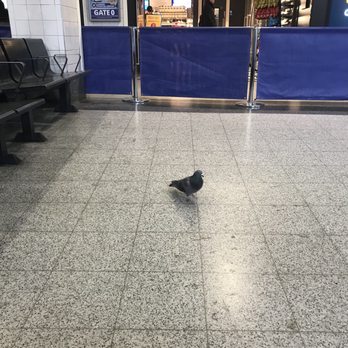


Victoria Coach Station is the largest coach station in London. It serves long-distance coach services and is also the departure point for many countryside coach tours originating from London. It should not be confused with the nearby Green Line Coach Station or the Victoria bus station, which serves London Buses. It is operated by Victoria Coach Station Limited a subsidiary of Transport for London. The Coach Station was opened at its present site in Buckingham Palace Road, London, in 1932, by London Coastal Coaches, an association of coach operators. The building is in a distinctive Art Deco style, the architects for which were Wallis, Gilbert and Partners.[2] The building was listed at Grade II by English Heritage on 1 September 2014. It was originally managed by London Coastal Coaches, a consortium of coach operators. In 1970 it became a subsidiary of the National Bus Company.[2] In 1988 ownership of Victoria Coach Station Limited was transferred to London Transport. In 2000 ownership passed to Transport for London. read more


John Betjeman described Victoria station as, 'London's most conspicuous monument to commercial rivalry', referring to the fact that there are actually two distinct station at Victoria, side by side. Although modern redevelopment over the platforms has obscured this division, the brick arches above W H Smiths still separate the station into two distinct parts. Each has been partially rebuilt during its life, giving Victoria no fewer than four different styles of architecture! The first station on the site, dating from 1860, was built by the London, Brighton and South Coast Railway (LBSCR), and incorporated the Grosvenor Hotel as part of the terminus. Designed by the architect J T Knowles, this is one of the earliest railway hotels and, despite internal alterations, still retains much of its original splendour. The exterior is well preserved, in an Italianate style, with dressings in Bath stone, and French-style mansard roofs. The hotel (opened in 1861) is now the oldest surviving part of the original station. The original LBSCR terminus alongside the hotel was rebuilt in a grand red-brick Renaissance style in 1898, and features a central clock tower and glass portico over the cab road, both of which still exist. Underneath, the passages retain the original maps of the old LBSCR as an historical feature. Behind is what is now the spacious main concourse, retaining its original roof. Unfortunately, the continuation of this roof over platforms 9-19 has disappeared, to make way for the Victoria Place shopping development and offices. This renders the platforms below rather cramped and claustrophobic. But services from here still go the original LBSCR destinations Brighton and the South Coast (via Gatwick Airport) and suburban services to Croydon, Streatham, Tattenham Corner, Epsom Downs, Beckenham Junction and Sutton. In 1862, the LBSCR station was joined by that of the London, Chatham and Dover Railway, since known for obvious reasons as the Continental side. Before the advent of the Channel Tunnel, trains for Dover and Ramsgate departed from here to meet the boat trains. The famous 'Golden Arrow' and 'Night Ferry' service even crossed the channel, by a specially adapted ferry complete with railway tracks, onto which the carriages were shunted, to be pulled off on the French side. The London, Chatham and Dover's original 1862 building has survived untouched on the far side behind platform 2. Once the main entrance, this is a handsome three-storey structure in the classical Georgian style. The original and elegant train-shed over platforms 1-8 by Sir John Fowler also survives, now mostly sheltering suburban trains to the Medway towns, Bromley, Crystal Palace, Orpington and Sevenoaks. It comprises two spans, one of 127ft by 455ft, and the other of 129ft by 385ft. You can get an excellent view of this from the balcony of the Wetherspoons pub. By the turn of the century, the London, Chatham and Dover railway had been absorbed by the South Eastern and Chatham Railway, and the modest original terminus was no longer viewed as sufficiently grand, especially next to the new LBSCR building. So the frontage of the Continental side was rebuilt in 1908 in a grand 'Banker's Baroque' style in Portland stone, by the architect A W Bloomfield. This features huge female caryatids under classical broken pediments, and a grand entrance arch. It still carries the words 'Southern Railway' across the top, reflecting the merger of the two former rival companies in 1924 - which also unified the station properly for the first time. To-day, the station is one of London's (and Europe's) busiest, with over 115 million passengers passing through each year, and over 350,000 each week-day. The adjacent underground station on the District, Circle and Victoria lines deals with 80 million passengers a year the second busiest in London after King's Cross / St Pancras. Facilities apart from the dizzying array of shops and bars include showers (and baby-changing facilities, alongside the toilets), wi-fi access (BT and T-mobile), a bureau de change, a shoe-shine, secure left luggage facilities and bicycle storage. Rarely for a London terminus, there is also an NCP car-park at the station, accessed from Eccleston Bridge Road. Walk up to and through the Victoria Place shopping centre and there is also another cab road, which is less hectic than the one at the front of the station. The Network Rail site has an excellent map of the station and its facilities. read more





16 years ago
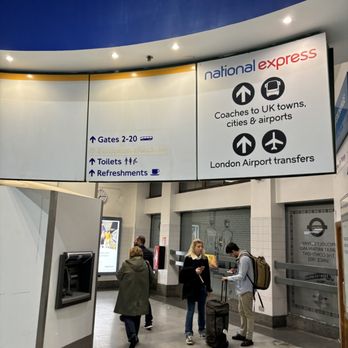
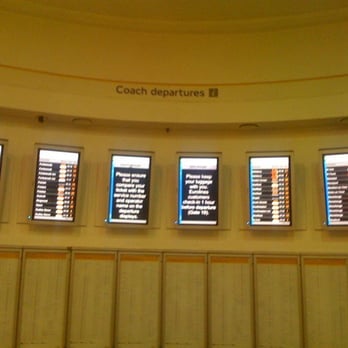
From Victoria underground station, Victoria coach station is a 15-20min walk, probably slower if your got heavy luggage and kids. As you get into the building, you are met with the computerised coach departures on the top of the wall. You also have one of the workers in a little office, who is their for coach information. Their is also newsagent's, Upper Crust and other takeaway eateries in the station. I'm not impressed with their toilets, what i mean is having to pay 30p to use the bog! C'mon!! I have used it due to desperation. The waiting area have their gate numbers, with the computerised board saying the destination and time of coach leaving. Their is also seating area at each gate, i do agree with Yee Gan that it can be crowded. I think the station is well sign posted to tell you were to go. Ive only ever used it for National Express coaches, so over the years that Ive used the station its pretty much been the same except using the bog was only 20p. read more


8 years ago

18 years ago
The sort of station that would look superb taken by a professional photographer in black and white, an amazingly designed station, but it's downhill from there. 2 words - commuter hell - describe it perfectly. Heaving every morning, unbelievably hot, sweaty and crowded, then add into this the Victoria Line tube shutting regularly every morning because of overcrowding (I swear I'll never ever ever go on it again at 8.30am - I'd sooner walk). If you can humanly (or should that be humanely) avoid it, don't even think of coming before 10am. The reviewer who said it's never that busy - she's probably the night shift cleaner - it's never not busy! That said, if retail is your thing, browse through the also hot, sweaty and crowded station versions of WHSmith or Burger King. Even the station forecourt runs along similar lines - dirty and smelly. Get my drift yet? Avoid. If. You. Can. P.s. If you're there for the Gatwick Express, get straight on the train, don't queue - tickets are the same price onboard. read more


9 years ago

12 years ago

17 years ago
Whenever I travel from Leeds to London or vise versa I use a service called Mega Bus because it is dirt cheap. The London stop on this route is Victoria Coach Station. Victoria Coach Station is a very busy place and the majority of coaches to and from London will be to or from Victoria. It has 20 terminals. 17 for National Express and 3 for Mega Bus. This was not clear the first time I used this service and it caused a big problem for me. As you walk in their is an LED departures board with cities in alphabetical order and the time and terminal they are leaving from. I looked for the Leeds sign and went to wait at the terminal. What it doesn't say is that these are National Express buses only and all mega buses go from the end few terminals next to the mega bus office. I waited at the wrong terminal and then was not allowed on because it was the wrong company. This meant that I had missed my mega bus only a few terminals down, whilst waiting for the wrong coach. It also meant a 3 hour wait before the next coach. Grr. If you know exactly where you coach is leaving from it is a fairly easy process, just be prepared for possible big crowds and pigeons nose diving at you. read more


17 years ago

14 years ago


12 years ago


What a dissapointing Coach station where thousands and thousands international and national souls go through. I mean with all the fancy and more practical train/tube/bus station in London you would expect that the Victoria Coach station would be a bit more upscale. But que neni. Avoid the toilets (dirty and not free) and forget about relaxing and earing a bite as there are no good food outlet inside the coach terminal and very few seats. Oh God, can't wait to board my bus!! read more
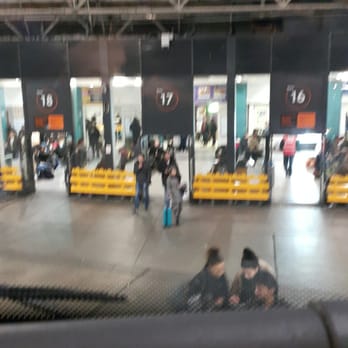


12 years ago

11 years ago
8 years ago

18 years ago
Page 1 of 3
More info about Victoria Coach Station
Victoria Coach Station Reviews in Other Languages
Review Highlights - Victoria Coach Station














Why does Yelp recommend reviews?
9 reviews that are not currently recommended
The reviews below are not factored into the business's overall star rating.

13 years ago
8 years ago

11 years ago

11 years ago

15 years ago

9 years ago

11 years ago

5 years ago

15 years ago


