Honolulu Harbor Photos


More like Honolulu Harbor
Recommended Reviews - Honolulu Harbor
Start your review...



State Of Hawaii, city of Honolulu, Honolulu Harbor equals the lifeline to our state for many things. 1. Honolulu Harbor is the depot for all of our goods. And I mean ALL. We live on islands so whatever we consume, use, or whatever needs to come to use from afar and usually by barge. 2. Honolulu Harbor was first to welcome the cruise ships, I think the Lurline back in the 50's? where she moored at Pier 35 and was greeted by the fun and fanfaire at the Aloha Tower 3. Sets a gorgeous view with blue waters stretching as far as your eyes can see. I've read the reviews to this page and won't / don't have to reiterate. All were well written, described illustrated. I enjoy stopping at the mouth of the Harbor to watch the barges come and go.... read more


2 years ago
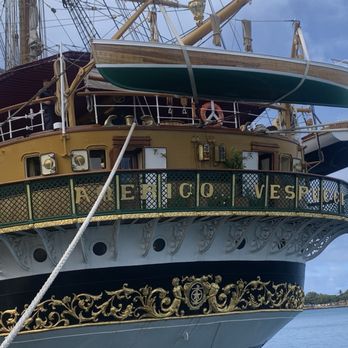
Cyndy's Bottom Line: "The most beautiful ship in the world" docked at Honolulu Harbor. Stopped by to see the Amerigo Vespucci, known worldwide as "the most beautiful ship in the world". The Amerigo Vespucci is the oldest ship in service in the Italian Navy. It is a magnificent ship which embarked on an extraordinary global tour on 2023 and will finish the grand voyage in 2025. This was such a great opportunity to board and explore the Training Ship of the Italian Navy. A three-masted sailing ship launched on February 22, 1931. A spectacular sight to see the Amerigo Vespucci in our Hawaiian waters. Mahalo and Aloha! Happy Sailing! read more




Honolulu Harbor is the principal seaport of Honolulu and the State of Hawai'i. This harbor is also called "Kulolia" and "Ke Awa O Kou". Honolulu Harbor contains 5 distinct components in its 200-acre container yard and over 30 berth facilities along its 5-mile mooring space: the Main Channel (Fort Armstrong Channel), the Main Channel Basin, the Kāpalama Channel, the Kāpalama Channel Basin and the Kalihi Channel. Because the State of Hawai'i is an island chain, the services that this harbor provides is crucial to everyone's lives as we import nearly 80% of required goods. As longtime residents and descendants of Chinese families who came to Hawai'i during the late 1800's, we have used and passed by Honolulu Harbor throughout our lives. Most or many Hawai'i's families have used this port to establish the islands as their homes and lives. Historically, Honolulu Harbor has been shown to have been active prior to 1100. In the mid-1800's, it took King Kamehameha III to declare Honolulu as the official capital to the Kingdom of Hawai'i that more investments poured into improving the harbor to accommodate more vessels. Honolulu became the port-of-call for the trans-Pacific trade of sandalwood, fur and whaling. The Kingdom of Hawai'i became wealthier which provided for well-being of native Hawaiians. As more wealth poured in from foreign trade, the British built a fort to protect the harbor. BUT, in Hawaiian history, Honolulu Harbor isn't only known for its trade and wealth that was brought into the Kingdom of Hawai'i. It bore witness to the Overthrow of the Hawaiian Monarchy in 1893. The USS Boston docked at Pier 12 and sent its troops (the Bluejackets) to march with the revolutionaries to proclaim a Provisional Government. A coup by the U.S. Government made up of U.S. citizens living in Hawai'i and backed by U.S. Marines troops intimidated the royalists. To avoid bloodshed, Queen Lili'oukalani along with her court abdicated the throne while being imprisoned in 'Iolani Palace. She was tried in Court as a Provisional Government was declared. Newly elected President Grover Cleveland (1893) called for an investigation of the overthrow and concluded that the overthrow was accomplished by the abuse of U.S. diplomatic and Military authorities. It wasn't until 1993 when President Bill Clinton signed a bill apologizing to native Hawaiians for the overthrow of their kingdom. Today, downtown Honolulu has developed into a major financial district with many high-rise condominiums and bustling businesses that exist along the waterfront. One of Hawai'i's most iconic landmarks stands at Pier 9, the Aloha Tower, which has witnessed the growth of tourism in Hawai'i. Ah, but, that's another story in Hawaiian history. read more


More info about Honolulu Harbor




















Honolulu Harbor - localflavor - Updated September 2026
Best of Honolulu
People found Honolulu Harbor by searching for…
Trending Searches in Honolulu, HI
Barbershop For Men near Honolulu Harbor
Bike Shop near Honolulu Harbor
Consignment Shops near Honolulu Harbor
Ear Piercing near Honolulu Harbor
Elementary Schools near Honolulu Harbor
Eyebrow Threading near Honolulu Harbor
Hair Braiding near Honolulu Harbor
Hidden Gems near Honolulu Harbor
Kids Haircut near Honolulu Harbor
Public Golf Courses near Honolulu Harbor
Things To Do Alone near Honolulu Harbor
Browse Articles
Browse Nearby
BEST of Honolulu, Hawaii Restaurants near Honolulu Harbor
BEST of Honolulu, Hawaii Coffee near Honolulu Harbor
BEST of Honolulu, Hawaii Things to Do near Honolulu Harbor
BEST of Honolulu, Hawaii Arts & Entertainment near Honolulu Harbor
BEST of Honolulu, Hawaii Scenic Drive near Honolulu Harbor
BEST of Honolulu, Hawaii Boston Cream Pie near Honolulu Harbor
BEST of Honolulu, Hawaii Sightseeing near Honolulu Harbor
Browse Brands
Related Searches in Honolulu, HI
Best Fun Things to Do in Honolulu, Hawaii
Best Places for Stunning Views in Honolulu, Hawaii
Best Saimin Dishes to Try in Honolulu, Hawaii
Best Wood Fired Pizza Available in Honolulu, Hawaii
Discover Authentic Little Italy in Honolulu, Hawaii Neighborhoods
Discover Beautiful Garden Spots in Honolulu, Hawaii
Discover Farm to Table Restaurants in Honolulu, Hawaii
Discover Historic Sites and Places in Honolulu, Hawaii
Discover Popular Landmarks in Honolulu, Hawaii
Discover Stunning Skyline View Spots in Honolulu, Hawaii
Discover Top Points of Interest in Honolulu, Hawaii
Discover a Library Near You in Honolulu, Hawaii
Discover the Best Beaches in Honolulu, Hawaii
Discover the Best Caves to Explore in Honolulu, Hawaii
Enjoy Authentic Oxtail Soup Near Honolulu, Hawaii
Enjoy the Best Night View Spots in Honolulu, Hawaii
Enjoy the Best Walking Trails in Honolulu, Hawaii
Essential Tips for Every Tourist in Honolulu, Hawaii
Experience Stunning Sunset Views in Honolulu, Hawaii
Experience the Best Carnival Events in Honolulu, Hawaii
Explore Beautiful Botanical Gardens in Honolulu, Hawaii
Explore Free Things to Do Around Honolulu, Hawaii
Explore Fun Activities to Do in Honolulu, Hawaii
Explore Popular Craft Fairs in Honolulu, Hawaii
Explore Secret Spots Worth Visiting in Honolulu, Hawaii
Explore the Best Swimming Holes Around Honolulu, Hawaii
Find Delicious Homemade Pasta in Honolulu, Hawaii
Find Popular Festivals and Fairs in Honolulu, Hawaii
Find Top Brick Oven Pizza Options in Honolulu, Hawaii
Find Top Libraries to Visit in Honolulu, Hawaii
Find Top-Rated Waterfalls in Honolulu, Hawaii Now
Find the Best Mochiko Chicken Dishes in Honolulu, Hawaii
Find the Best Playgrounds to Visit in Honolulu, Hawaii
Fun Things for Kids in Honolulu, Hawaii
Great Things to See and Do in Honolulu, Hawaii
Locate a Cemetery in Honolulu, Hawaii Today
Must-See Tourist Attractions Around Honolulu, Hawaii
Popular Kids Activities in Honolulu, Hawaii
Popular Places to Walk Around in Honolulu, Hawaii
Savor Authentic Huli Huli Chicken in Honolulu, Hawaii
Savor Delicious Kalua Pork Dishes in Honolulu, Hawaii
Savor the Best Tiramisu in Honolulu, Hawaii
Taste Traditional Laulau Dishes in Honolulu, Hawaii
Top Hiking Trails to Explore in Honolulu, Hawaii
Top Local Attractions to Visit in Honolulu, Hawaii
Top Must See Attractions and Spots in Honolulu, Hawaii
Top Things to Do With Kids in Honolulu, Hawaii
Tour Famous Lighthouses Located in Honolulu, Hawaii


