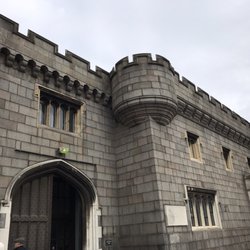
Houghton Hall Photos


Recommended Reviews - Houghton Hall
Start your review...



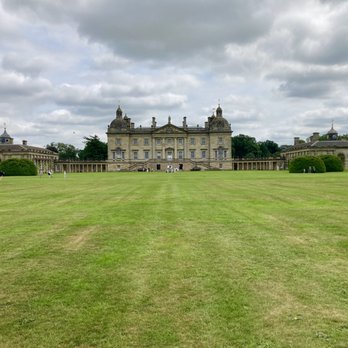
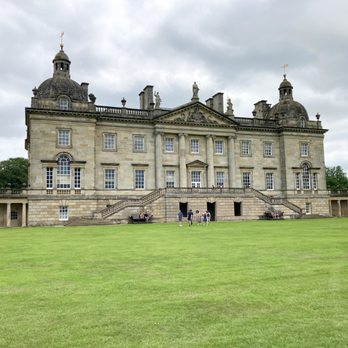
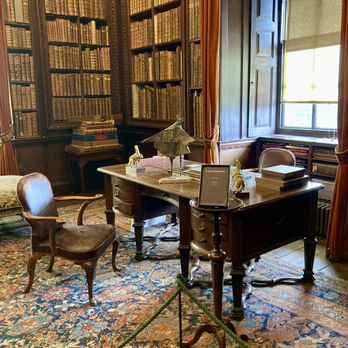
Houghton Hall was built for the first Prime Minister of England, Sir Robert Walpole, and is now home to the Marquesses of Cholmondeley (pronounced "CHUM-lee"). One of the finest examples of Neo-Palladian architecture in the country, Houghton has an extensive park of 17,000 acres, an outstanding sculpture collection, and beautiful formal gardens. It is open to the public on selected days from May to October. The house was commissioned by Sir Robert Walpole in 1720, on an estate which was already the home of the Walpole family, which he had inherited in 1700. The architect was Colen Campbell, with later additions (in particular the corner turret domes) by James Gibbs, and interiors by William Kent. Designed as a showpiece, Houghton comprises a central house of three stories, with flanking wings. Construction was undertaken between 1722 and 1735. As well as a family seat, Houghton was intended to host huge parties for Walpole's political circle, and to house his collection of 400 Old Master paintings, which included works by Van Dyck, Poussin, Rubens, Rembrandt and Velázquez. However, after Walpole's death, the debts he had accrued building the house (reputed to have cost £200,000 - around £40m today) meant that the art collection had to be sold. (It was purchased by Catherine the Great and is now displayed in the Hermitage.) The house passed via marriage to the Cholmondeley family in 1797. The house deteriorated during the 19th century but was rescued by the 5th Marquess and his wife, Sybil, from 1919, who undertook extensive restoration, which continues today. Access is via a rather humble ground floor, but you are immediately presented with a grand staircase; a pattern is then established which becomes familiar as you go through the house, with bronze and stone statuary of the highest quality, and paintings and tapestries lining the walls. The first main room, the Stone Hall, is a magnificent showpiece, with carvings by John Michael Rysbrack, depicting Roman emperors and the Walpole family, under a ceiling by Guiseppe Artari. The following rooms are more domestic, albeit still grand, and including the drawing room, dining room, and state bedrooms, but all are filled with original furniture and paintings, carpets and tapestries. Remember to look up, as the elaborate ceilings (mostly by William Kent) and chandeliers are phenomenal. One of the most interesting rooms is Walpole's personal office, fitted out as a library with over 1,000 volumes. There are helpful and friendly volunteer guides in each room, as well as detailed files describing the art and furniture. As well as the house, the grounds include an impressive stable block with a formal courtyard, now the cafe, shop, and a small museum of model soldiers and a collection of horse riding tackle. The 5-acre formal gardens (which can be visited separately from the house) are wonderful, on our visit including the most beautiful wild meadow planting I have ever seen. The grounds also contain the impressive modern art collection of the present Marquess, with pieces by Richard Long, James Turrell, Rachel Whiteread and, on our visit, an extensive outdoor exhibition by Lynn Chadwick. Walpole himself is buried (alongside his family) in the nearby church of St Martin, which is also within the grounds, and can be visited. read more