Huguenot Cemetery Photos


You might also consider


More like Huguenot Cemetery
Recommended Reviews - Huguenot Cemetery
Start your review...


Reviews With Photos


Such a neat and historical place to visit. I typically think that people who 'experience hauntings' are full of it but I can tell you with 100% certainty this place gave me the heebie jeebies... not once but twice I got a really uneasy feeling, felt like crying for no reason and the hairs on my a stood up. Maybe I am crazy but with the history behind this place I wouldn't be surprised if there are some sort of lingering spirits. I wish the gates were open when we visited but interesting place to see nonetheless.


I still cant pronounce the name of the cemetery and the graveyard itself is very small and very very old with a bit of historic beginnings. An info placard about the cemetery is inside. The cemetery is behind the St Augustine Visitor Center, a few feet from the edge of St George Street and across from the Old City Gates. The entryway has a nice worn black thin steel archway hovering above two thick cement pilars with a double steel gate. The grave stones are not in good shape, most difficult to read, but the property was well maintained but no attendant in sight. Since 1884, the City of St Augustine forbid any more burials. The cemetery currently operates as a non-profit and accepts donations to keep it maintained. read more

6 years ago
Who else loves cemeteries? Especially old ones! I remember being scared of them when I was very young and then at some point I outgrew that fear. Probably after the first funeral I attended as a teenager, when I realized how peaceful they truly are. Huguenot Cemetery was built as a public burying ground during the Yellow Fever pandemic in 1821. It was created by the Protestant pioneers and maintained by the Presbyterian Church since 1932. There is a historical marker adjacent to the half acer lot- where I got my history on ;) Quiet reverence~ that is what a cemetery holds for me. Even off a bustling AIA in St Augustine! It's a moment to reflect and know that death is inevitable- hence, live your life to the fullest and be as adventurous as you can! read more
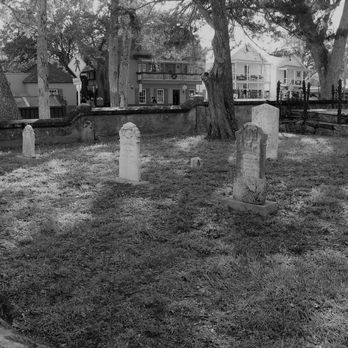


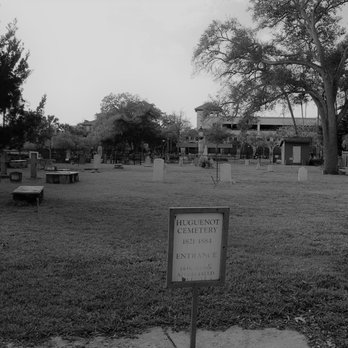


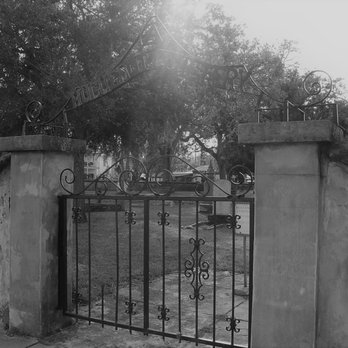


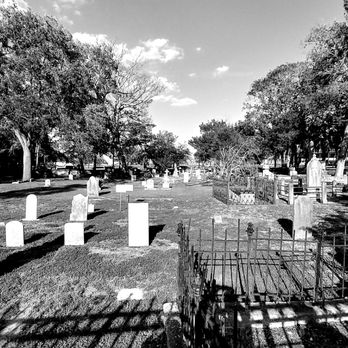
This is a historic cemetery located in historic Saint Augustine, Florida. It is located just outside the city's famous north City Gate. Nearby Tolomato Cemetery, that is located within the old walled city, was reserved for only Catholics. Huguenot is just outside the walled city and was first used for the interment of victims of the 1821 yellow fever epidemic and then for the burial of members of city's Protestant population. The cemetery was closed to burials in 1884. The cemetery is believed to hold at least 436 burials. Both cemeteries are popular stops on the local ghost tours. One story tells of a fourteen-year-old girl abandoned at the nearby city gates during the yellow fever epidemic. Since no one claimed her and she couldn't be proven to be Catholic, she was buried here. It's said her ghost, clad in a flowing white dress, still wanders the cemetery after midnight. Sometimes she waves at visitors. She's even been seen atop the cemetery gate. If you go, please note you will only be able to view the cemetery from the outside perimeter - that is unless you visit on the third Saturday of the month when the gates are opened to visitors. read more

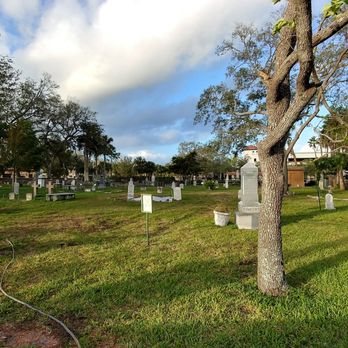


Such a neat and historical place to visit. I typically think that people who 'experience hauntings' are full of it but I can tell you with 100% certainty this place gave me the heebie jeebies... not once but twice I got a really uneasy feeling, felt like crying for no reason and the hairs on my a stood up. Maybe I am crazy but with the history behind this place I wouldn't be surprised if there are some sort of lingering spirits. I wish the gates were open when we visited but interesting place to see nonetheless. read more



5 years ago

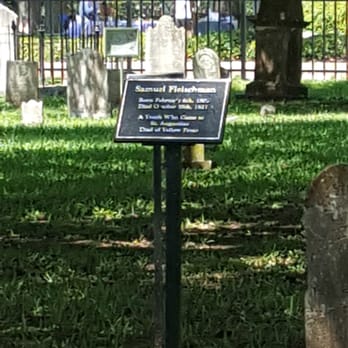
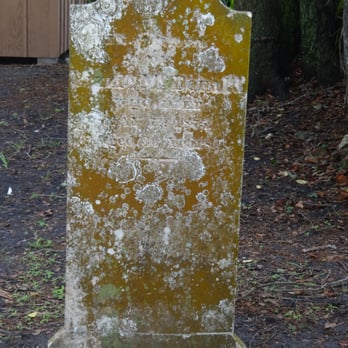
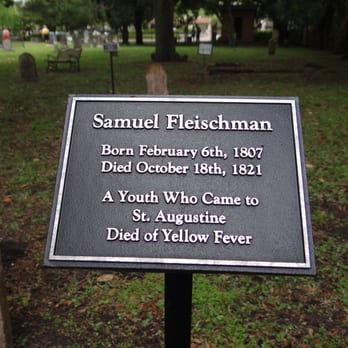
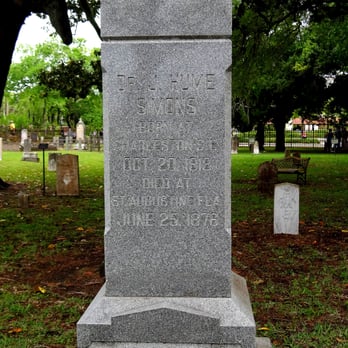
"So we go inside and we gravely read the stones All those people, all those lives Where are they now? With loves, and hates and passions just like mine They were born and then they lived and then they died It seems so unfair, I want to cry" - The Smiths Only The Smiths could so eloquently describe one of the appeals of a cemetery. Call me morbid, call me pale (oh wait, I'm quoting The Smiths again), but I just love cemeteries, especially old, historic ones, and living in South Florida, finding a cemetery this old is a special find. After unsuccessfully trying to enter the cemetery on my first day to Saint Augustine and leaving frustrated, imagine my surprise when the gates were open the next day. Turns out, they open only on the third Saturday of the month from 11-2 (and some Sundays in observance of religious holidays, such as Palm Sunday), so talk about extreme luck, being there at the right time! This is a beautiful cemetery, not only due to the fact it is surrounded by large trees and wispy Spanish moss overhanging, giving it an eerie, yet peaceful ambiance, but it is centrally located, across from historic sites such as the historic City Gate, the heart of the town of Saint Augustine, and diagonally from Castillo de San Marcos and Matanzas Bay. This cemetery is known as the "Protestant" burial ground between the years 1821 and 1884. The reason I put it in quotations is because you may actually find people of other denominations, such as Jewish (Samuel Fleischman, for example) and Catholic in here. Before you ask why a Catholic was not buried in the Tolomato cemetery instead (the other historic cemetery reserved for Catholics), the reason was that perhaps they belonged to what the Catholics would consider "heretics", for example, a Catholic Mason would automatically be qualified for exclusion of their cemetery. One of these "heretics" is Manuel Crespo, a Catholic Mason, and his gravestone is marked very distinctly with a sign. The cemetery, although named "Huguenot Cemetery," isn't believed to contain any members of the Huguenots, a French Protestant sect started in the 16th century in France. The cemetery is believed to hold at least 436 burials according to city records, but not all the bodies have headstones, so you may inadvertently be walking on top of corpses. Therefore, you need to be respectful when walking the grounds. It is currently run by the Friends of the Huguenot Cemetery, Inc., a group of concerned citizens belonging to the Memorial Presbyterian Church, wanting to help in preserving and caring for this historic place. When the gates are open, one of the volunteers will speak to you about the cemetery and may request a donation for the upkeep. These volunteers also serve as watchdogs to insure no one is disrespecting or vandalizing the grounds and the tombs while the gates are open. Strolling along, a few monuments can be observed, as well as marble slabs, plots surrounded by wrought iron fences, and weathered headstones, as well as funerary art popular in the 19th century. This includes stone carvings and false box tombs with inscriptions. The work of several important stone carvers has been identified here, including Thomas Walker and members of the White family who had shops in Charleston, South Carolina and Savannah, Georgia. Most of the burials are casualties of the 1821 yellow fever epidemic, and can include infants, as well as colonels of the army. This cemetery is a popular stop on the ghost tour, as is the Tolomato Cemetery. One of the alleged ghosts that haunts Huguenot Cemetery is that of a specter named Elizabeth. She has been described as the daughter of a Spanish era guard at the City Gate who would often visit him and greet people entering the city or she is the ghost of a thirteen or fourteen-year-old girl who died in the 1821 yellow fever epidemic either at the City Gate. Judge Stickney is another reputed ghost. Angry that upon his exhumation (to move his body elsewhere at the request of his relatives) his gold teeth were stolen by drunkards, old Judge Stickney can still be seen roaming around the Huguenot Cemetery. He is presumably, looking for his gold teeth or maybe the men who stole them. Though I did not presence any ghosts, it's still a historically significant cemetery with a beautiful wrought iron gate that deserves a visit, whether at night on the ghost tour, or in the daytime. Happy haunting! read more






12 years ago

10 years ago
More info about Huguenot Cemetery
Across From City Gates
St Augustine, FL 32084
Directions
Payment methods
Ask the Community - Huguenot Cemetery







Huguenot Cemetery - funeralservices - Updated August 2026
Browse Nearby
BEST of St Augustine, Florida Coffee near Huguenot Cemetery
BEST of St Augustine, Florida Things to Do near Huguenot Cemetery
BEST of St Augustine, Florida Restaurants near Huguenot Cemetery
BEST of St Augustine, Florida Cremation Services near Huguenot Cemetery
BEST of St Augustine, Florida Headstones near Huguenot Cemetery
BEST of St Augustine, Florida Antiques near Huguenot Cemetery
BEST of St Augustine, Florida Mortuary Services near Huguenot Cemetery
BEST of St Augustine, Florida Florists near Huguenot Cemetery
BEST of St Augustine, Florida Restaurants With Banquet Rooms near Huguenot Cemetery
Browse Brands
Related Cost Guides
Browse Articles
People found Huguenot Cemetery by searching for…
Headstones in St Augustine, FL
Community Service/Non-Profit in St Augustine, FL
Donation Center in St Augustine, FL
Cremation Services in St Augustine, FL
Cremation Urns in St Augustine, FL
Grave Stones in St Augustine, FL
Funeral Services in St Augustine, FL
Mortuary Services in St Augustine, FL
Non Profit Organizations in St Augustine, FL
State Park in St Augustine, FL
Computer Parts in St Augustine, FL
Columbarium in St Augustine, FL
Direct Cremation in St Augustine, FL
Ironing Services in St Augustine, FL
Donate Books in St Augustine, FL
Donation Drop Off in St Augustine, FL
Black Doctors in St Augustine, FL
Cemeteries in St Augustine, FL


