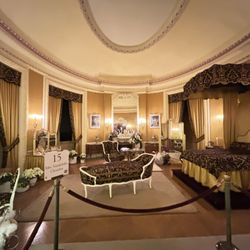
Even if you have no idea who Thomas Wolfe was or what he wrote, if you have any interest in what…read morelife was like in an early-1900s boarding house, you should come here.
I was interested because I had previously toured a Basque sheepherder boarding house in Boise, Idaho, and I was curious to see how it compared with a more traditional Southern boarding house. I had never heard of Thomas Wolfe or "Look Homeward, Angel" until I watched the movie and went on the guided tour. Now I want to read the book.
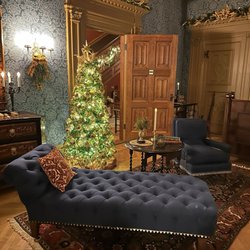
The tour gives you a fascinating look at two very different sides of Asheville life during that era. If you couldn't afford to stay at a grand hotel such as the Grove Park Inn for around $5 a night, you could see what it was like to stay at the Old Kentucky Home, where at one point you could get a room and breakfast for around $8 a week.
But one of the most interesting people I learned about wasn't Thomas Wolfe. It was his mother, Julia Wolfe.
Julia came from poverty but had tremendous industry and business sense. She bought the Old Kentucky Home in 1906 and ran the boarding house for nearly 40 years, expanding it over time to 29 rooms. Our guide told us that she could be up before dawn preparing breakfast for the boarders, while Thomas remembered her still ironing after midnight. In addition to running the boarding house and raising a large family, she invested in real estate.
I couldn't help comparing Julia with another remarkable woman I had learned about during my time in Asheville: Edith Vanderbilt. Their circumstances could hardly have been more different, but both impressed me with their intelligence, resilience, work ethic, and business sense. Edith helped preserve Biltmore after George Vanderbilt died, while Julia built and operated a successful boarding house and helped provide for her family largely through her own determination and work. I hadn't expected learning about these two strong women to become one of the most memorable parts of my visit to Asheville.
The admission fee was only $8 for the guided tour. Tours were offered at 30 minutes past the hour through 4:30 p.m. when I visited. The movie was about 20 minutes, the guided house tour took about an hour, and you should allow additional time for the exhibits. I would plan on about 1 1/2 to 2 hours altogether. The exhibit and film are free if you don't want to do the tour.
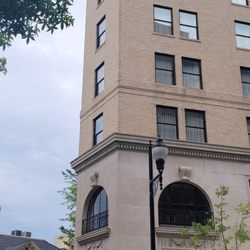
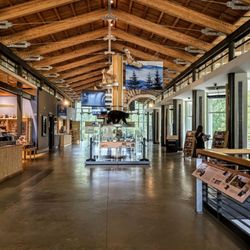
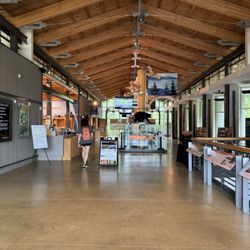
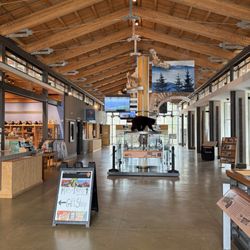
One thing that may be confusing when you arrive: although the historic house is on one side, you first need to go to the Visitor Center behind the house to pay admission, see the movie and exhibits, and meet for the guided tour. There is also a restroom in the Visitor Center.
The house was closed Sundays, Mondays, and holidays when I visited, but check the website for the latest days, hours, tour times, and admission prices before going.
I really enjoyed seeing what everyday life in an early-1900s boarding house was like, hearing about Thomas Wolfe's life even though I knew nothing about him when I arrived, and especially learning about Julia Wolfe.
I went because I was curious about the house. I left wanting to read "Look Homeward, Angel" and with a profound admiration for the woman who ran it.