The Cobblestone Society & Museum
The Cobblestone Society & Museum Photos


More like The Cobblestone Society & Museum
Recommended Reviews - The Cobblestone Society & Museum
Start your review...



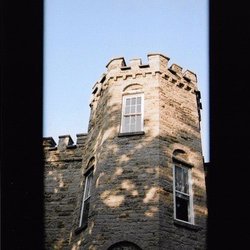
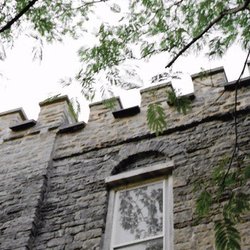
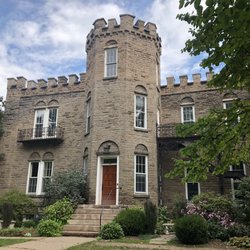
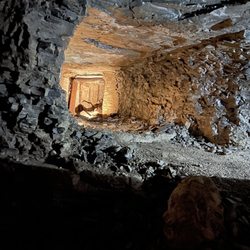
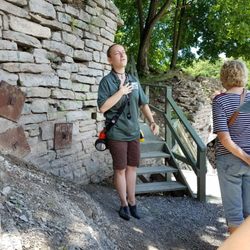
A few years ago, when I started to hunt landmarks to shoot and mount on a historic landmark website, I came upon a farmhouse in southern Wisconsin that was built of cobblestones. I had never seen anything like that before and just shrugged it off as something unique. And then I found a few more, A cobblestone stage stop in East Troy, an office in Port Washington, a subdivision in Waukesha with several cobblestone houses including the sales office, a three story home in the middle of Green Lake County and a spectacular home in Eau Claire. With each find, I became even more intrigued by the construction method. The Wisconsin Historical Society says the methodology came out of New England, but the owner of a Wisconsin cobblestone structure told me the masons who crafted these structures were from New York. In 2020, I found myself in Western New York for an extended stay. When I went out to hunt landmarks, I kept finding cobblestone houses that were on the National Register of Historic Places plus plenty more cobblestone sheds, barns, schools, churches and houses. Some were on the NRHP and many weren't. Coincidentally, many of these structures are in the proximity of the Erie Canal and Lake Ontario. An owner told me that the majority of cobblestone structures in America are within a 75 mile radius of Rochester. Another owner of a large cobblestone farmhouse told me I should go to the cobblestone museum in Albion - and here we are. The museum is on Ridge Road, itself a historic thoroughfare that runs the length of four counties in Western New York. There are several structures located on the museum campus, not all are cobblestone but of interest to the history of the community. The cobblestone structures (a church, a house, and a school) are great examples of how the craftsmen that built these structures refined their methods over the years when this method of construction remainded popular. (The popularity of cobblestone construction essentially ended with the Civil War.) When you visit the museum, the docents explain all this in great detail, along with what life was like in Western New York in the first half of the 19th Century. You start your tour in basement of the church, where you'll see examples of other cobblestone structures in New York. You'll learn how the stones were selected, sorted for size and color, and how the selection process was refined over the years. In visiting the church, you'll see a unique heating system and learn more about 19th Century life. In the schoolhouse, you'll experience what life was like for kids in a one room school, and other buildings preserve rural New York life in the past. There are probably 1,000 or more cobblestone structures around Rochester, New York while there may be two dozen in Wisconsin. Relatively few are on the National Register of Historic Places although there are many listed for one reason or another. Beside those, there are many cobblestone schoolhouses, outbuildings, barn foundations, and many small cobblestone houses in Western New York. Many have been expanded and modernized, which excludes those structures from the NRHP. The Cobblestone Museum is an educational stop for anyone interested in the history of Western New York, life in the 19th Century and, of course, cobblestone construction. I highly recommend it! read more


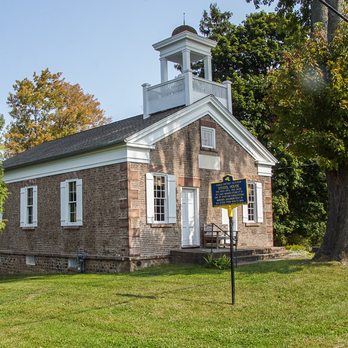
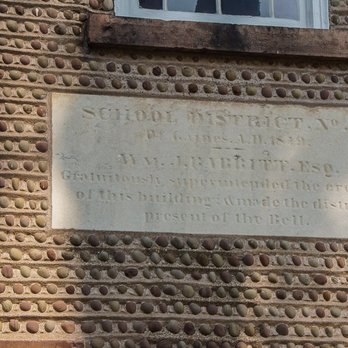


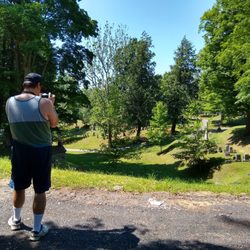
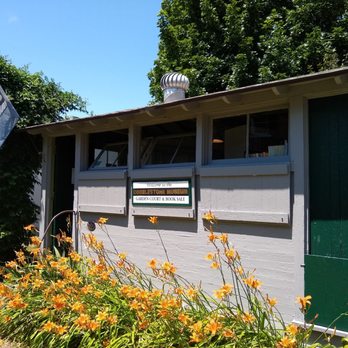
We recently stumbled on the Cobblestone Society & Museum while randomly driving by; the "Book Shop Open in Rear" sign on the side of the road caught our eye. On a whim we pulled a U'ey, and pulled into the museum's lot. On that day the museum was closed, but we still walked the grounds to explore what we could. There is some information outside that indicates cobblestone architecture originated in the Rochester NY area, with the oldest structures remaining in the Albion area. There are two cobblestone structures here on the museum site, one being the oldest cobblestone church still standing in North America. We definitely want to return to go into the museum itself on a day it is open--but OH BOY were we happy we stopped for the book shop! This family of bibliophiles was elated to find such a sweet little shop in the country. The bookshop building has a historic marker that it was originally used as a polling station in the early 1800s. But now it is a quaint used bookstore. Used books are fifty cents for paperback and a dollar for hardcover, with on-your-honor cash payments only. There are about a half dozen well-organized short aisles with a surprisingly good assortment for such a small space. There were sections for popular authors, classics, nonfiction, cookbooks, fantasy and sci-fi, how-to, biographies, large-print, childrens, new arrivals, and more. There are bins outside to leave book donations. We each left with a few finds, me with a couple short story collections to leave at our nearby camp, and a couple older novels. I look forward to coming back to peruse the bookshop again, as well as catch the museum at an open time--a great local history gem here! read more




9 years ago
More info about The Cobblestone Society & Museum
14393 Ridge Rd W
Albion, NY 14411
Directions
(585) 589-9013
Call Now
Visit Website
http://www.cobblestonemuseum.org
Hours
Other Amenities
From the Business