Cancel

    Open app

    Search

    Timothy Lallathin Memorial

    5.0 (1 review)

    Timothy Lallathin Memorial Photos

    More like Timothy Lallathin Memorial

    Recommended Reviews - Timothy Lallathin Memorial
    Your trust is our priority, so businesses can't pay to alter or remove their reviews. Learn more about reviews.
    Yelp app icon
    Browse more easily on the app
    Review Feed Illustration
    Photo of John M.
    663
    8885
    30861

    3 years ago

    Helpful 6
    Thanks 0
    Love this 5
    Oh no 0

    Verify this business for free

    People searched for Landmarks & Historical Buildings 210 times last month within 5 miles of this business.

    Verify this business

    Lake Jesup Bridge

    Lake Jesup Bridge

    5.0(6 reviews)
    2.0 mi

    Lake Jesus is the largest lake in Seminole County. It is 13 miles in length and consists of 16,000…read moreacres of open water and floodplains. The lake is roughly 8,000 acres and is part of the St. Johns River waterway. It connects to the St. Johns River at the north end by a narrow strait. Lake Jesup is notable for having the concentration of alligators in Florida. Lake Jesup is believed to have been named for General Thomas Jesup who served as the Commander of the Army of the South during the Second Seminole War from 1835-1842. The lake was discovered during the time the army was exploring the St. Johns River for transportation for troop and supplies lines. Long before the army found the lake however it had a rich Native American history. The southern shore of Lake Jesup is called Kitchen Middens. Middens are a kind of ancient garbage dump that can tell you a lot about the people who lived there. Early Native American inhabitants processed food and disposed of the waste in this area. Pottery shards and pieces along with animal bones have been discovered here. In the middle of Lake Jesup is a 30 acre island called Bird Island. The island was owned by Forest Michaels, who had a tomato farm on part of the island in the 1960s. Today the island is a nesting site for many birds including cattle egrets, white ibises, great egrets, glossy ibises, snowy egrets, eagles, and blue herons. SR 417 crosses Lake Jesup on a 1.5 mile bridge built in 1993. The bridge is part of the Seminole Expressway section of the 417 tollway which begins at the Seminole County line. This section run by Florida's Turnpike Enterprise is 17-mile-long and extends to an interchange with I-4 in Sanford at the end of the beltway. Driving across the Lake Jesup Bridge is very enjoyable. The view of the lake is spectacular and if you have the chance to look up there is a number of birds nesting on top of the light poles. I highly recommend a visit to Overlook Park at the southern end of the bridge for a close up view of Lake Jesup and its wildlife.

    Lake Jesup Bridge spans Lake Jesup as you drive along Highway 417. It has been said that Lake Jesup…read moreis the most alligator infested lake in the world and you can often see alligators out there in Lake Jesup. Lake Jesup Bridge is a bridge that I would always associate with the thought that I was almost home whenever I would be traveling from some long-distance destination and heading home and I would cross Lake Jesup Bridge. Lake Jesup Bridge is a cool part of the highways of Florida and Lake Jesup Bridge will always be a part of my memories. I will give Lake Jesup Bridge five stars.

    Photos
    Lake Jesup Bridge
    Lake Jesup Bridge
    Lake Jesup Bridge

    See all

    Hannibal Square

    Hannibal Square

    4.3(6 reviews)
    9.4 mi

    Hannibal Square is a historic district in Winter Park on New England Avenue two blocks west of Park…read moreAvenue, between Virginia and Pennsylvania Avenues. Winter Park sprang up around a railroad track laid in 1880 by the South Florida Railroad that connected Orlando to Sanford. Hannibal Square was founded in 1881 as an African-American community of laborers who built the town and worked as domestic servants to the areas wealthy families. The people who lived in Hannibal Square had educational opportunities, prosperity, and professional standing. The railroad tracks served as the dividing line in the town with whites living on the east side and blacks to the west. While visiting Hannibal Square I enjoyed taking in the charming architecture, Shady Park, the Hannibal Square Heritage Center, restaurants, and shops. Hannibal Square is not as busy as the Park Ave area of town but it is still near enough to it that you could easily walk there.

    2019 Review 47/100 A…read moregreat little area in Winter Park. Worth stopping by if you're strolling down Park Ave (it's only a few blocks away). Hannibal Square is lined with a variety of great restaurants and cool shops (Rifle Paper Co. is my fave!). It's much smaller than Park Ave. And almost never as crowded. So it's great if you're looking for a chill "Winter Park experience" without the hustle and bustle of Park Ave. Plus parking is always much easier. I usually park in Hannibal Square on Saturday mornings and go for a nice run through the Square up to Park Ave and walk around the Winter Park Farmers' Market.

    Photos
    Hannibal Square
    Hannibal Square
    Hannibal Square

    See all

    Downtown Winter Park Historic District - The annual Christmas parade.

    Downtown Winter Park Historic District

    4.9(14 reviews)
    9.1 mi

    The Winter Park Downtown Historic District is a fantastic neighborhood with its roots tracing back…read moreto 1881. The neighborhood has some great restaurants and shopping options and is close enough to downtown Orlando to make it convenient, yet far enough away to embrace its own identity and be a lot more laid back. The streets are cobblestone and just adds to the ambiance. This is a nice upscale neighborhood and gives a cool, almost small-town feel in the midst of the city of Orlando, Florida. I would definitely recommend a visit to this cool neighborhood.

    Winter Park began as 8 acres of land purchased by David Mizoram Jr. in 1858 who called his purchase…read moreLakeview. The town of Winter Park was plotted when Loring Chase and Oliver Chapman purchased 600 acres in 1881. Life was given to the new town when the railroad was persuaded to extend it's line. The railroad depot built in 1882 was the towns first building. A store was built at Park Ave and Morse Blvd that housed a mercantile, post office, and assembly room. The building still stands. The town was chartered in 1887 and became a retreat for wealthy northerners looking to escape the cold climate in the winter, hence the name of the town Winter Park. The towns economy was built on entertaining winter tourists. Rollins College, the oldest college in Florida was founded here in 1885. The city was incorporated in 1925 and is governed by four city commissioners and a mayor. Today Winter Park is 9 square miles and home to approximately 28,500 residents. The town is known for it's lakes, parks, museums, and shops and restaurants along historic Park Avenue. My favorite restaurant is the Briar Patch. The Winter Park Historic District includes buildings constructed from 1882 through 1965, and it runs along Park Avenue from Canton to Comstock Avenues. Winter Park has held on to its old small town charm. Popular past times here include a boat ride on Lake Osceola, a meal on Park Avenue, and a trip to the Morse Museum. Favorite festivals include the Winter Park Sidewalk Art Festival and the 4th of July Celebration in Central Park. The Winter Park Historic District is a delightful mixture of the new and the old and just like in the 1800's you can still arrive by train.

    Photos
    Downtown Winter Park Historic District
    Downtown Winter Park Historic District
    Downtown Winter Park Historic District

    See all

    PICO Building

    PICO Building

    5.0(1 review)
    7.2 mi

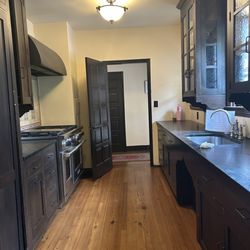
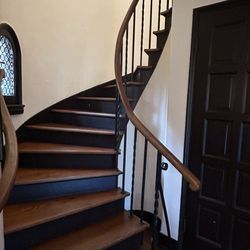
    As a fan of both architecture and history, I will sometimes come across a jewel like this two…read morestory, red brick building located at 209 North Oak Avenue on the corner of West Commercial Street, in Sanford. It is in Sanford's historic commercial district. The PICO Building is a historic two story redbrick building built in 1886-1887 for the Henry B. Plant of Plant Investment Co. Henry Plant was a prominent 19th-century businessman, entrepreneur, and investor who played a crucial role in developing Florida's transportation infrastructure and economy. He is best known for building a vast network of railroads and steamship lines, collectively known as the Plant System, that connected Florida to the rest of the United States and the Caribbean. He also built several hotels including the former Tampa Bay Hotel which is now home to the Henry B. Plant Museum and the University of Tampa. The Turkish style of the PICO Building resembles Plant's Tampa Bay Hotel. The purpose of the PICO building was to serve travelers arriving in Sanford on the Plant railroad and steamship lines. President Calvin Coolidge stayed at the Pico Hotel when he came to Seminole County in 1929. The building was designed by local architect William T. Cotter who drew inspiration from the Romanesque Revival and Moorish Revival styles of architecture. It was built by the H. M. Papworth Construction Company. You can see the Moorish influence in the intricate geometric patterns, including stars, polygons, and arabesques. The first floor of the hotel had a restaurant, a store, a reception area, and a guest's lounge. Guest's rooms were located on the second floor. On the right side of the building there is an entry to second floor with beautiful original door. The building is characterized by high ceilings, original wooden floors, and 9 fireplaces throughout the interior. The windows have horseshoe and ogee arches. Originally the PICO building was adorned with an onion shape dome on the right corner on top of a decorative bartizan tower but sometime in the 1950's it sustained significant storm damage and was ordered to be removed by the city. In 1906, the building was remodeled and sold to the Takach family, Hungarian immigrants who operated the restaurant next door. Mr. Plant was a fan of their food so he let them take over the PICO building for their restaurant which operated for the next 50 years. After that the building was used for law offices. On June 15, 1976 the PICO Building was added to the National Register of Historic Places. The building is currently for sale for $1,645,999 and it comes with an osprey nesting in the chimney! The property is fitted for office space but it could it also be turned back into a hotel or even a museum.

    Photos
    PICO Building - Osprey nesting in the chimney and keeping watch over the building until the new owners come.

    Osprey nesting in the chimney and keeping watch over the building until the new owners come.

    PICO Building
    PICO Building

    See all

    Casselberry

    Casselberry

    4.5(2 reviews)
    4.8 mi

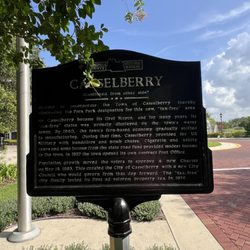
    While I am very familiar with the blue markers of the state wide Florida Historical Marker Program,…read moreoccasionally I will come across a county or city historic marker. On a recent walk around City Hall, I found this marker erected by the Seminole County Historic Society. Historic markers are a great way to learn about the formative people, buildings, and events in Florida's history. Hibbard Casselberry is the founder of Casselberry, Florida. In 1926 he came to the area to visit his family in Winter Park. At the time the surrounding area was a fern farm that grew asparagus plumosis ferns for the florist industry. Casselberry became the sales manager for Fern Park Estates but left to plat his own subdivision, Winter Park Ferneries which became known as Fern Park. Throughout the 1930's he continued to develop his fernery and real estate business. This marker recounts how the City of Casselberry was initially tax free. Mr. Gordon Barnett, a local former state legislator proposed a town charter for Fern Park that included property taxes. Mr. Casselberry's Countered with a tax free proposal and and he agreed to pay out of pocket any necessary costs needed by the town. On October 10th, 1940, the tax-free Town of Casselberry including parts of Fern Park Estates was officially incorporated and Mr. Casselberry lent his name to the town and served as its first mayor. For many years the town proudly boasted of being tax free. On May 16, 1965 a new governing City Council was created and they levied the first ad valorem property tax in 1976.

    Casselberry City Hall is just off of 17-92 and has a pleasant enough park next to it and a…read moresculpture garden on the grounds. Overall, it is a peaceful place and has good parking if you are here to do business.

    Photos
    Casselberry
    Casselberry
    Casselberry

    See all

    Hedy Lemarr Historical Marker

    Hedy Lemarr Historical Marker

    5.0(2 reviews)
    4.4 mi

    While I am very familiar with the blue markers of the state wide Florida Historical Marker Program,…read moreoccasionally I will come across a county or city historic marker. On a recent walk through Red Bug Lake Park, I discovered that Seminole County has their own historic marker program. Historic markers are a great way to learn about the formative people, buildings, and events in Florida's history. This marker was erected in 2023 by The Jewish American Society for Historic Preservation with support from the Casselberry Historical Society and the Seminole County Historical Society. It recounts the important WWII contributions made by the actress Hedy Lamarr who passed away in Casselberry at the age of 85 on January 19, 2000. According to this marker, famed Golden Age of Hollywood actress and inventor Hedy Lemarr had a home near Red Bug Lake Park in the later years of her life. Hedy was born Hedwig Eva Marie Kiesler on November 9, 1914, in Austria to Emil and Gertrude Kiesler and she was raised in the Jewish faith. In 1938 she came to the U.S. and became a naturalized citizen in 1953. She went on to star in two dozen movies, including the notable Samson and Delilah directed by Cecil B. DeMille. During WWII, Hedy and George Antheil received U.S. patent number No. 2,292,387 for their Secret Communication System. Hedy explored potential military applications for radio technology. She theorized that varying radio frequencies at irregular intervals would prevent interception or jamming of transmissions, thereby creating an innovative communication system. Together she and Antheil designed a way to help the U.S. Navy against Nazi Germany by allowing spread spectrum and frequency jumping of radio waves in torpedo guidance systems. This technology was later used to make Wi-Fi, GPS, and Bluetooth technology possible. The National Inventor's Hall of Fame posthumously inducted Lemarr and Anthiel in 2014. Her invention has led Heddy Lamar to be known as the mother of Wi-Fi.

    Who knew that Hedy Lemarr had a connection to Oviedo, Florida? I certainly did not until today as I…read morewas walking around Red Bug Lake Park and came across this historical marker. Hedy Lamarr was n incredibly popular actress back in the golden age of film making. She starred in over two dozen movies including the Cecil B. DeMille classic "Sampson and Delilah." What many do not realize is that in addition to her beauty, Hedy Lamarr was not only incredibly intelligent, but she was also the co-onventor of a "secret communication system," which allowed frequency jumping in radio waves. This later was beneficial with WiFi and cellular phone technology possible. It appears that Lamarr relocated to the Oviedo, Florida area and this is where she passed away back in 2000. I love finding these historical markers that connect us to a community's past.

    Photos
    Hedy Lemarr Historical Marker
    Hedy Lemarr Historical Marker - Hedy Lamarr

    Hedy Lamarr

    Hedy Lemarr Historical Marker

    See all

    Timothy Lallathin Memorial - landmarks - Updated July 2026
    Loading...
    Loading...
    Loading...