Cementerio de la Recoleta
Cementerio de la Recoleta Photos


Recommended Reviews - Cementerio de la Recoleta
Start your review...
Reviews With Photos


Eva Peron is here, and you will find her under the Duarte name. This is a spectacular cemetery. It's not perpetual care, because when the wealthy family heirs die off, the mausoleums fall into disrepair. One can look at the caskets displayed through broken windows. There is one dog interred with its owner, see photo. The entry fee is higher than expected, but if you like cemeteries, this is a one of a kind you won't want to miss. We spent 2 hrs here and didn't see it all. If necessary, it can be walked in an hour, but I recommend taking your time.


This cemetery was built in 1822 for use by the wealthy in Buenos Aires. The mausoleums and pantheons are Magnificat. The architects that designed the sculptures were at the top of their trade. This is a self guided excursion, unless you hire an individual guide at an additional cost. It is located in the neighborhood of "Recoleta", an area we found to be safe and filled with shopping, bars, and restaurants.


One of the coolest cemeteries in the world, it's mostly mausoleums and there are a number of historic ones here. I went with a free walking tour and paid by card for the entrance. I highly recommend taking a free tour so you can better understand the history, architecture, and such. Very clean and absolutely worth it!


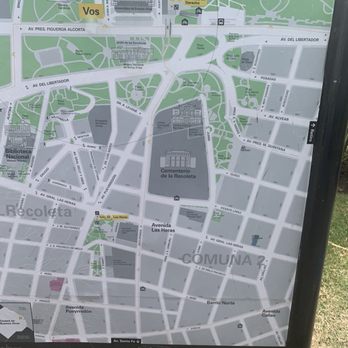
This cemetery is one of the most popular attractions in Buenos Aires. You have to pay an entrance fee to enter. They offer free guided tours in Spanish twice a day or you can pay to hire a licensed tour guide. They are not necessary though. You can self explore and they will give you a map when you enter that shows where all the famous people are entombed. The most famous person here is Eva Peron, former First Lady of Argentina. This is not an ordinary cemetery. Everyone buried here has an elaborate tombstone or mausoleum. I have also been on one of the popular cemetery tours of New Orleans but the structures here were even more intricate and lavish. The place is really big and is definitely worth a visit if you are looking for a more unique attraction.


Who knew that a cemetery could be so breathtakingly beautiful! I suggest coming with a tour guide to understand the history of this cemetery or learn before visiting.


The main gate was under renovation so I could not get a photo of the famous entrance. A couple of licensed tour guides were outside and you can arrange directly with them a price which was separate from the cemetery admission. Free walk Buenos Aires also had a tour for 13000ARS. Or you could just wander on your own. Admission could only be paid via credit card. The map provided by the ticket office wasn't really that helpful. Luckily, I scoured the web before my visit and made a list of the main burial tombs to see. A couple (ie. Evita, President Sarmiento) had helpful signs pointing to their location, google maps had some pinned and findagrave.com sometimes contained a location that opened in google maps. It took me about 1.5 hours of wandering to see my list, read some of the stories on the web about the occupant(s) and explore other tombs that caught my interest. If you need to use a toilet there were only porta potties located next to the exit. Not very clean. Really a fabulous place to see with its mix of old and modern, famous and everyday persons.


What an amazing property. Obviously a must do when in Buenos Aires. If you've been to Père-Lachaise in Paris then this is a way more intimate version. It's not as overwhelming, but we did notice how so many of them needed work. Like, bad. I noticed how the glass part of the door were broken and you can legitimately reach the urns inside if you stick your arm in. It felt so invasive walking by certain area. Every notable Argentinian is resting here, even Eva Peron herself. The mausoleums here are over above and beyond. I couldn't help but keep looking up. Some were more decorated than others. We happened to walk by numerous tour groups and ended up overhearing a bunch of random information.


Very interesting place to visit. Historically significant people for Argentina interred including Eva Peron (Evita).


CNN named this one of the top 10 most beautiful cemeteries in the world in 2013, and it's easy to see why. There is no shortage of wonderment and awe at the elaborate tombs and pantheons. Of the over 4500 plots here, over 90 of them are National Historic Monuments. The hours are 9am to 5pm. We spent about three and a half hours exploring the area as there is so much detail and all five hectares. The cemetery was founded in 1822 and we actually found a few crypts bating back to 1823. There is so much history here, so if you're into history and especially architecture, you'll find yourself getting immersed in the vast assortment of pantheons and crypts. There are many notable people from Argentine history buried here including First Lady Eva Perón. Around every nook and cranny is something of interest and significance. My advice is to not rush, and make time to take it all in. There is an admission price to the cemetery. Adult admission was 5090 Argentine Pesos, or about $6 USD. Overall, an incredible experience not to be missed in Buenos Aires!


This is the most celebrated Argentineans cemetery, including Eva Peron and her family, Napoleon's daughter, Nobel prize winners ... are buried at this elaborate cemetery, where mausoleums replicate chapels, pyramids and Greek temples. The cemetery was created in 1822 next to the church Iglesia de Nuestra Señora del Pilar. It contains 4691 graves all located in a 5,5 ha area. The beautiful mausoleums gives the cemetery that special look. There is an entrance fee for tourists and guided tours are available. It was a very hot day, and there was little shade here. There were clean bathrooms, and benches to sit down. There were crowds at Eva Perrone's mausoleum.


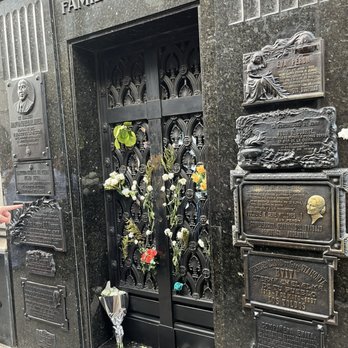
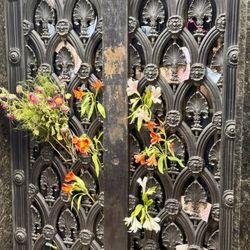
Cementerio de la Recoleta is a must visit when in Buenos Aires. Many of the famous and infamous Argentinians are interned here. The cemetery grounds are well presented and maintained and admission will run you about ten bucks. I believe the cemetery is about ten acres in size and there is the Basillica Nuestra and several museums next to it. I found it fascinating that some mausoleums are in excellent shape, while others have fallen into serious disrepair to the point where some are overgrown with ivy and some where the glass and doors are broken. With those, the coffins and caskets are clearly visible and exposed to the elements. Also interesting is the diverse architectural styles of the mausoleums here. I'm not a cemetery / graveyard aficionado by any means but I did appreciate the different representations. The most popular mausoleum that people visit is Eva Peron's. It's actually named Familia Duarte. The door was adorned with flowers and roses when we visited. On busy days the line could be quite long so I'm told. We spent a little over an hour or so here walking around which isn't enough if you're into this sort of thing. We were with a big group and decided to meet up with folks at a brewery across the street. Outside the walls of the cemetery is a pretty vibrant neighborhood with shopping and plenty of dining options.


Significant historical cemetery where prominent figures of Argentine's past now rest in peace. Giant mausoleums, some with statues, some around 30 meters high, with various architectural styles like Doric columns, domes, Angels, etc.. adorn this magnificent park-like cemetery. You could easily spend a half day in this very large cemetery which dates back to 1822. It's the first cemetery in Buenos Aires and is on land that used to be owned by an order of Recollect Monks, thus its name. Entry fee was approximately $5 USD in February 2024. As for who is resting here - Eva Peron Duarte (Evita), numerous Argentine Presidents, Military Figures, Nobel Laureates, a woman accidentally buried alive, a long time cemetery care taker, and other prominent people and their families. Note that I know very little about Argentine and South American history and am only somewhat familiar with Mexican culture being from the US, however, traveling in SA has opened my eyes to the European colonial influences of the past and present in many South American countries. Italian, Portuguese, French, and of course Spanish sur names dot the various crypts, mausoleums, and the corridor / avenue names in this cemetery. Worth visiting and if you can, latch on to a tour. Tip as appropriate.


Absolutely worth a visit when in Buenos Aires. A lot of famous people have a mausoleum there, including Eva Peron. I would recommend getting a guide at the entrance (some of them wait by the ticket office) because the place is huge and there are a lot of interesting facts to discover. Honestly, we wouldn't not have known where to start otherwise. Our guide was Simon, recommended by other tourists and he was incredibly knowledgeable. We spent a little more than an hour with him and it was fascinating!


This is a must visit for all. It is the most extravagant cemetery I have seen in the world, very gothic and bizarre. Additionally, it is the eternal home of Eva Peron. It is not as quiet as most cemeteries, it is in the center of town and touristy, but there are some quieter spots available, if you know what I mean. Bwahaha!!! read more


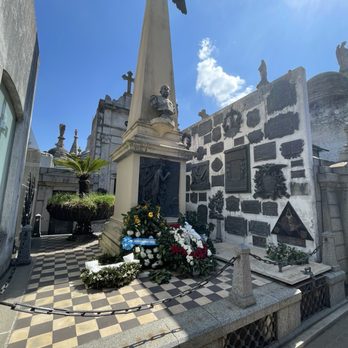


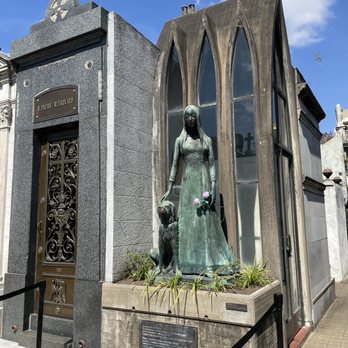


From Wikopedia: "La Recoleta Cemetery (Spanish: Cementerio de la Recoleta) is a cemetery located in the Recoleta neighbourhood of Buenos Aires, Argentina. It contains the graves of notable people, including Eva Perón, presidents of Argentina, Nobel Prize winners, the founder of the Argentine Navy, and military commanders such as Julio Argentino Roca. In 2011, the BBC hailed it as one of the world's best cemeteries, and in 2013, CNN listed it among the 10 most beautiful cemeteries in the world." My words: I love to visit old cemeteries and this one is a very spectacular. Ever since the show {Evita} opened in the West End of London in 1979, it brought light to both Evita and Buenos Aires to me. I also knew that one day I would be able to visit. That day was now. BA was an amazing place and finally going to the Casa Rosado just paved a path to visiting Evita's family mausoleum. I was not familiar with Recoleta Cemetery nor the amount of people who are interred here. I did watch some you tube movies about visiting here and while it really helped, it did not prepare me for the overall scope of this place. In conclusion... this place is beautiful and the stories that go with many of the sites are just amazing and even haunting. Remember that there is an entry fee and a line which moved very quickly. I truly recommend having a guide to explain the monuments and stories as it adds so much more to the sites. KUDOs to the team and guides at Cementerio de la Recoleta read more

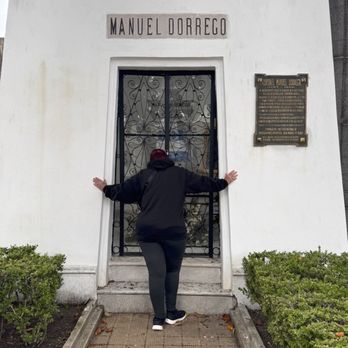


8 months ago
A small group of us decided to trek 2.5 miles across the city of Buenos Aires to visit El Cementerio on a hot Saturday morning. The primary objective was to find the resting place of Eve Peron (Evita). We arrived about 2 hours after they opened and there was a small queue outside. The queue moved quickly. They have maps at the payment counter. Once inside we were all amazed by the size, design and layout of the cemetery. Initially, we started by wandering through the paths and viewing the designs of the various family mausoleums. Then we focused and found our way over to the Familia Duarte mausoleum, where Eva Peron is said to be. It wasn't difficult to find but there was a queue to venture down the correct path to view it. After that we were nearly ready to depart. We meandered a bit more to visit others as we made our way towards the exit. A reasonable excursion that is worth the visit if such things interest you. I think that 2 hours would be more than enough time. Pay for the guided tour if you really want to know details and history. read more


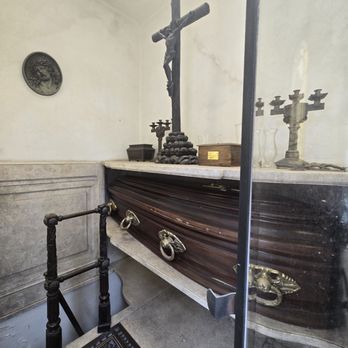
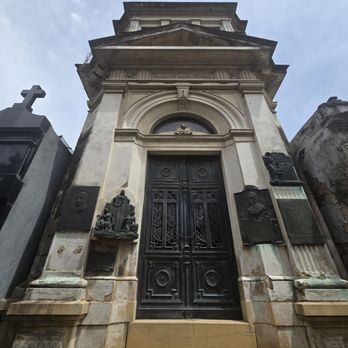


Eva Peron is here, and you will find her under the Duarte name. This is a spectacular cemetery. It's not perpetual care, because when the wealthy family heirs die off, the mausoleums fall into disrepair. One can look at the caskets displayed through broken windows. There is one dog interred with its owner, see photo. The entry fee is higher than expected, but if you like cemeteries, this is a one of a kind you won't want to miss. We spent 2 hrs here and didn't see it all. If necessary, it can be walked in an hour, but I recommend taking your time. read more



9 months ago
This cemetery was built in 1822 for use by the wealthy in Buenos Aires. The mausoleums and pantheons are Magnificat. The architects that designed the sculptures were at the top of their trade. This is a self guided excursion, unless you hire an individual guide at an additional cost. It is located in the neighborhood of "Recoleta", an area we found to be safe and filled with shopping, bars, and restaurants. read more


4 months ago
One of the coolest cemeteries in the world, it's mostly mausoleums and there are a number of historic ones here. I went with a free walking tour and paid by card for the entrance. I highly recommend taking a free tour so you can better understand the history, architecture, and such. Very clean and absolutely worth it! read more


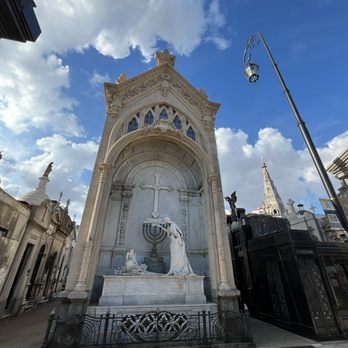



This cemetery is one of the most popular attractions in Buenos Aires. You have to pay an entrance fee to enter. They offer free guided tours in Spanish twice a day or you can pay to hire a licensed tour guide. They are not necessary though. You can self explore and they will give you a map when you enter that shows where all the famous people are entombed. The most famous person here is Eva Peron, former First Lady of Argentina. This is not an ordinary cemetery. Everyone buried here has an elaborate tombstone or mausoleum. I have also been on one of the popular cemetery tours of New Orleans but the structures here were even more intricate and lavish. The place is really big and is definitely worth a visit if you are looking for a more unique attraction. read more

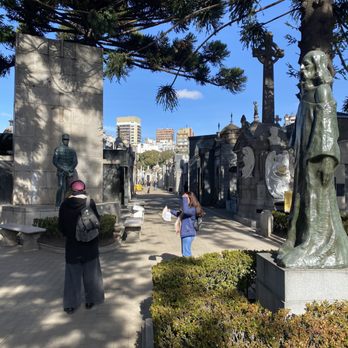


The main gate was under renovation so I could not get a photo of the famous entrance. A couple of licensed tour guides were outside and you can arrange directly with them a price which was separate from the cemetery admission. Free walk Buenos Aires also had a tour for 13000ARS. Or you could just wander on your own. Admission could only be paid via credit card. The map provided by the ticket office wasn't really that helpful. Luckily, I scoured the web before my visit and made a list of the main burial tombs to see. A couple (ie. Evita, President Sarmiento) had helpful signs pointing to their location, google maps had some pinned and findagrave.com sometimes contained a location that opened in google maps. It took me about 1.5 hours of wandering to see my list, read some of the stories on the web about the occupant(s) and explore other tombs that caught my interest. If you need to use a toilet there were only porta potties located next to the exit. Not very clean. Really a fabulous place to see with its mix of old and modern, famous and everyday persons. read more


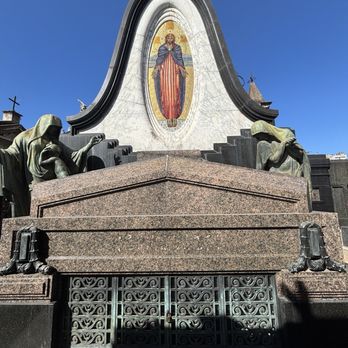
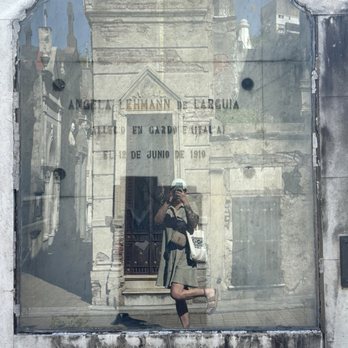
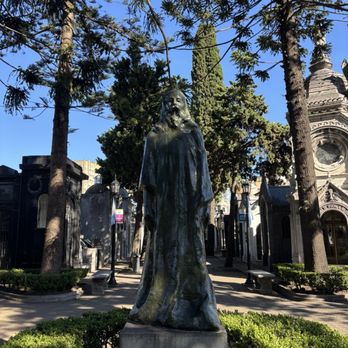
What an amazing property. Obviously a must do when in Buenos Aires. If you've been to Père-Lachaise in Paris then this is a way more intimate version. It's not as overwhelming, but we did notice how so many of them needed work. Like, bad. I noticed how the glass part of the door were broken and you can legitimately reach the urns inside if you stick your arm in. It felt so invasive walking by certain area. Every notable Argentinian is resting here, even Eva Peron herself. The mausoleums here are over above and beyond. I couldn't help but keep looking up. Some were more decorated than others. We happened to walk by numerous tour groups and ended up overhearing a bunch of random information. read more





10 months ago
Very interesting place to visit. Historically significant people for Argentina interred including Eva Peron (Evita). read more


3 years ago
CNN named this one of the top 10 most beautiful cemeteries in the world in 2013, and it's easy to see why. There is no shortage of wonderment and awe at the elaborate tombs and pantheons. Of the over 4500 plots here, over 90 of them are National Historic Monuments. The hours are 9am to 5pm. We spent about three and a half hours exploring the area as there is so much detail and all five hectares. The cemetery was founded in 1822 and we actually found a few crypts bating back to 1823. There is so much history here, so if you're into history and especially architecture, you'll find yourself getting immersed in the vast assortment of pantheons and crypts. There are many notable people from Argentine history buried here including First Lady Eva Perón. Around every nook and cranny is something of interest and significance. My advice is to not rush, and make time to take it all in. There is an admission price to the cemetery. Adult admission was 5090 Argentine Pesos, or about $6 USD. Overall, an incredible experience not to be missed in Buenos Aires! read more
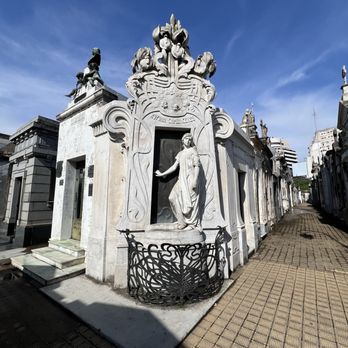

This is the most celebrated Argentineans cemetery, including Eva Peron and her family, Napoleon's daughter, Nobel prize winners ... are buried at this elaborate cemetery, where mausoleums replicate chapels, pyramids and Greek temples. The cemetery was created in 1822 next to the church Iglesia de Nuestra Señora del Pilar. It contains 4691 graves all located in a 5,5 ha area. The beautiful mausoleums gives the cemetery that special look. There is an entrance fee for tourists and guided tours are available. It was a very hot day, and there was little shade here. There were clean bathrooms, and benches to sit down. There were crowds at Eva Perrone's mausoleum. read more


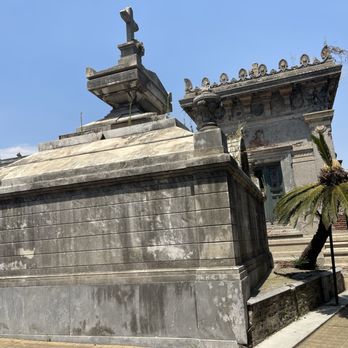


Cementerio de la Recoleta is a must visit when in Buenos Aires. Many of the famous and infamous Argentinians are interned here. The cemetery grounds are well presented and maintained and admission will run you about ten bucks. I believe the cemetery is about ten acres in size and there is the Basillica Nuestra and several museums next to it. I found it fascinating that some mausoleums are in excellent shape, while others have fallen into serious disrepair to the point where some are overgrown with ivy and some where the glass and doors are broken. With those, the coffins and caskets are clearly visible and exposed to the elements. Also interesting is the diverse architectural styles of the mausoleums here. I'm not a cemetery / graveyard aficionado by any means but I did appreciate the different representations. The most popular mausoleum that people visit is Eva Peron's. It's actually named Familia Duarte. The door was adorned with flowers and roses when we visited. On busy days the line could be quite long so I'm told. We spent a little over an hour or so here walking around which isn't enough if you're into this sort of thing. We were with a big group and decided to meet up with folks at a brewery across the street. Outside the walls of the cemetery is a pretty vibrant neighborhood with shopping and plenty of dining options. read more


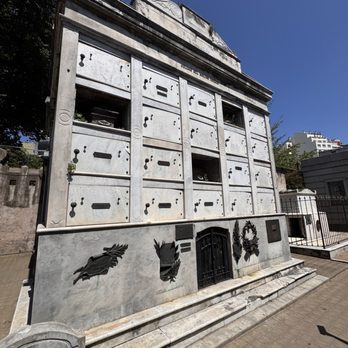


Significant historical cemetery where prominent figures of Argentine's past now rest in peace. Giant mausoleums, some with statues, some around 30 meters high, with various architectural styles like Doric columns, domes, Angels, etc.. adorn this magnificent park-like cemetery. You could easily spend a half day in this very large cemetery which dates back to 1822. It's the first cemetery in Buenos Aires and is on land that used to be owned by an order of Recollect Monks, thus its name. Entry fee was approximately $5 USD in February 2024. As for who is resting here - Eva Peron Duarte (Evita), numerous Argentine Presidents, Military Figures, Nobel Laureates, a woman accidentally buried alive, a long time cemetery care taker, and other prominent people and their families. Note that I know very little about Argentine and South American history and am only somewhat familiar with Mexican culture being from the US, however, traveling in SA has opened my eyes to the European colonial influences of the past and present in many South American countries. Italian, Portuguese, French, and of course Spanish sur names dot the various crypts, mausoleums, and the corridor / avenue names in this cemetery. Worth visiting and if you can, latch on to a tour. Tip as appropriate. read more


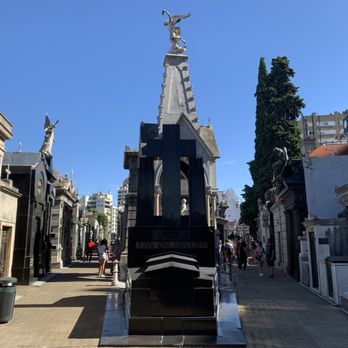


3 years ago
Absolutely worth a visit when in Buenos Aires. A lot of famous people have a mausoleum there, including Eva Peron. I would recommend getting a guide at the entrance (some of them wait by the ticket office) because the place is huge and there are a lot of interesting facts to discover. Honestly, we wouldn't not have known where to start otherwise. Our guide was Simon, recommended by other tourists and he was incredibly knowledgeable. We spent a little more than an hour with him and it was fascinating! read more


La Recoleta Cemetery (Cementerio de la Recoleta) is a world-renowned cemetery. It is truly a highlight of any visit to Argentina's capital, Buenos Aires. Although it seems unusual at first to be located in one of the most expensive and desirable neighborhoods in Buenos Aires, when it was founded, it was on the outskirts of town. Franciscan Recollect monks first arrived in this area in the early 18th century. A cemetery, on the outskirts of Buenos Aires, was built around the Recollect Convent (Convento de la Recoleta) and a church, Our Lady of the Pillar (Iglesia de Nuestra Señora del Pilar), built in 1732. When the order was disbanded in 1822, the cemetery was converted into Buenos Aires' first public cemetery. The surrounding neighborhood and cemetery reflect the name, hence Recoleta. The design looks more like a city or a "City of the Dead" than a cemetery. It was designed by the French engineer, Próspero Catelin, in 1822. It is filled with tree lined streets, impressive neo-classical gates, and French inspired mausoleums that may have two and three levels. The opulent and grand architectural styles, like Baroque and Neo-Gothic to Art Deco and Art Nouveau, reflect when they were built. The over 6,000 graves are often built of marble and granite so that the residents don't rise back to the surface of the cemetery's marshy earth (similar to the cemeteries in New Orleans). Grab a map to explore. Look for tombs of presidents, poets, writers and boxers. The most famous and controversial is Eva Perón or "Evita." She is buried in a black marble mausoleum owned by her family and listed under her maiden name "Maria Eva Duarte". Her tomb can be found by the flowers and crowds that still honor her legacy. read more


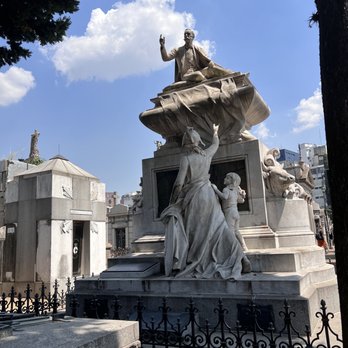
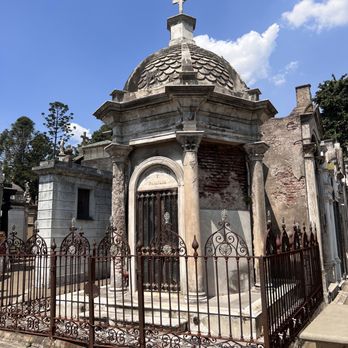


2 years ago
Es el cementerio más antiguo de la ciudad, donde en un área de casi 6 hectáreas se encuentran las tumbas de grandes o simplemente muy ricos argentinos. En el cementerio descansan varios presidentes de Argentina, así como la querida y primera dama de Argentina, Eva Perón. El cementerio más bien parece una pequeña ciudad con amplias avenidas, estrechos pasajes, capillas, espléndidos mausoleos de mármol y lujosas estatuas. Puedes pasear por allí durante horas, admirando la decoración de las tumbas familiares hechas de mármol y granito de alta calidad. La entrada tiene un costo. Se puede comprar en la entrada. Si te gusta caminar en silencio, es mejor llegar al momento de apertura. Es recomendable visitar este lugar con un guía, ya que toda la información dentro está solo en español. read more


This is a must-do tour when you are in Buenos Aires. There's so much history to be unfolded inside this cemetery. We booked a free walking tour that works off of tips for this one. We always love the free walking tour because you can choose the price of the tour based on the quality you received. Most of the time, the tours are great because the guides are really working hard to make sure you have a great experience and that they get the best price for their service. If you are going in the summer, make sure to lather up on that sunscreen because there's not much shade. Bring water to hydrate. Wear a hat or bring an umbrella. It's hot in the summer! Don't use underestimate the summer heat in Argentina because it's hot! I saw Eva Perron's grave so that was really cool plus some other graves that also have very interesting stories behind them. As tourists, I'd like to remind everyone to be respectful of places you visit since you are only visiting. Additionally, avoid trying to be instabaddies here please - this is a cemetery. The tours can be long sometimes and there's a lot of walking to wear the appropriate outfit and shoes. Highly recommend this place. When paying the tour guides, they accept both American dollars and Argentine peso. If you're visiting, please educate yourself about money exchange in Argentina. It's pretty complicated because they're going through a recession right now. read more


3 years ago
We visited this attraction last month while we was visiting the Buenos Aires Argentina area. This a famous cemetery which is a very popular tourist attraction, because it's 14 acres that offers over 6000 graves. You need to pay to visit this cemetery and you can get a map, if you're looking to find some of the famous people that have been laid to rest here. This cemetery is a walled in city, and is truly jammed packed. Depending on when you decide to visit this attraction, I would highly recommend that you plan to visit in the morning because it gets pretty crowded. Also the South America weather can get very warm, which is another reason I'd visit either early morning or late afternoon. You can also hire a local guide as well if you wish, that can explain the history as well as navigate you to many of the more popular graves of famous people. read more


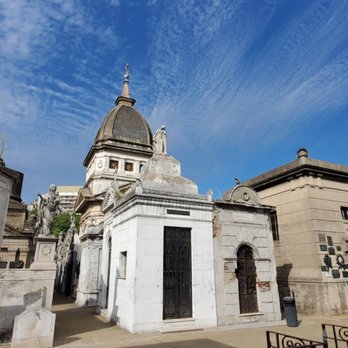

4 years ago
This place is incredible. Located on over fourteen acres with over 6000 graves. This place is all about outdoing the next family. It was started by the wealthy way back when to have a fitting place to bury their dead. And it shows. There are many many famous people out to rest here and lots of great stories. I would highly recommend coming here. It is truly fascinating. read more

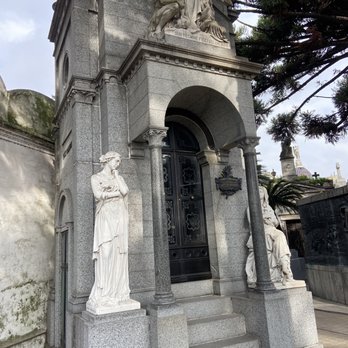


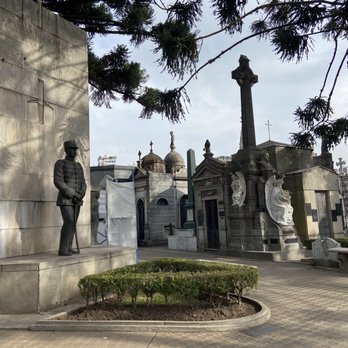
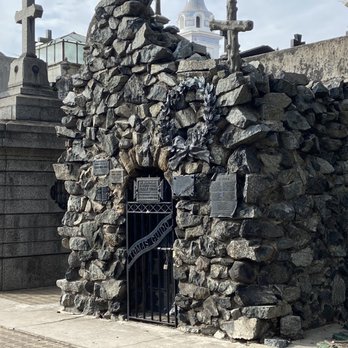


I went to Cementerio de la Recoleta because of all the five-star ratings for it, and once I saw it I could see why. It's a high-walled enclosure of 14 acres opened by Argentina's very wealthy in 1822. It's just loaded with ornate statue after statue and mausoleum after mausoleum. I've really never seen anything like it or so extravagant. When you go through it, you'll be walking on narrow cobblestone (apparently from the ballast of sailing ships) which are very crowded. It's on every guided city tours list and has the gravesite of Argentina's most famous, Eva Peron. Then as there are no signs guiding anyone to the location, you'll be seeing a lot of confused and lost tourists. So here's a tip on that. Its plot #88 and the mausoleum is her family mausoleum, so not under the name Peron, but under the name Duarte. read more

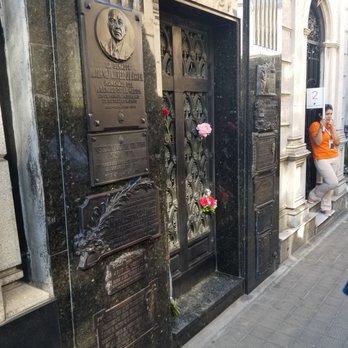


We're passionate about visiting beautiful cemeteries, and we've visited a huge number of them throughout Europe & the U.S. We visited Recoleta Cemetery ten years ago this week and I think it's the most beautiful cemetery in the world; it's really stunning and also huge. You need to allow a few hours, and also be sure to visit the (gorgeous) chapel. I'm posting just twelve of my photos.... read more


The cemetery is laid out like a museum. Their streets are beautiful mausoleums. This is the most impressive cemeteries I've ever seen outside. You get a sense of peace and calm in this cemetery. You think it would be Eatery walking through the cemetery, but everything seem so calm and tranquil here. The feeling is apparent that everyone here has been laid to rest by someone or by a family who loved them dearly. Every mausoleum is expertly and exquisitely designed, down to the the smallest of details. read more


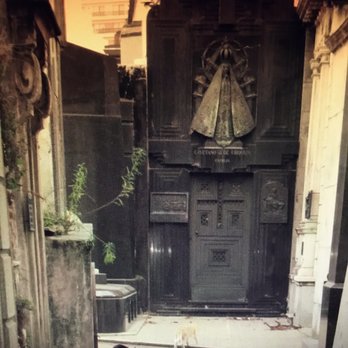

This cemetery is in the heart of Recoleta and is probably the most unique and beautiful cemetery I've ever seen. While I was skeptical about visiting a cemetery that I have no connection to, It ended up being one of the highlights of our vacation. The admittance was free for us and we actually used a local free walking tour guide to navigate us throughout the cemetery. Some of the mausoleums, tombs, sites were amazing to look at and so detailed. Also, the burial site of so many historians of Argentina and especially senora Eva Duarte-Peron (Evita). I am certain that most of the people that visit the cemetery are there for Evita's grave. Our guide was very knowledgeable and she gave us detailed account of the cemetery itself and a lot of its habitants (generals, soldiers, politicians, commanders, athletes, businessmen, physicians and other newsworthy folks). One definitely needs a good hour to two, to visit the entire cemetery and snap all the photos, as there are plenty of Mausoleums that you can just keep on gazing. read more


This is definitely a must-see if you're visiting Buenos Aires. While you may be thinking why on earth would anyone want to see a cemetery that you have no connection to, it ended up being an unforeseen highlight of our vacation. THE CEMETERY: The 14 acre site opened in 1822 and is bordered by high walls. Entry is free, but being interred here is at a premium. The cemetery is laid out like a miniaturized city. The numerous "blocks" are lined with mausoleums from simple to grand to unique. Sadly and shockingly, some are in disrepair and unkempt. Many have coffins and urns in plain view. Some are multi-leveled with underground rooms too. I'm sure 99% of the visitors are here to visit one person, Eva Perón, whose plot # is 88, though no signs will guide you there. There's a map of the cemetery as you enter to reference, but all you have to do is look for the crowds and sole mausoleum that is abundant with flowers. Our poor private tour guide was hounded by more than a few people asking where her place was. Her family's mausoleum is mixed in with the others in a tight aisle, so head-on pics are impossible. Other townsfolk include politicians, celebrities, businessmen, doctors and high-ranking individuals with deep pockets. TIPS: A cluster of white cement/marble graves near the entry are the very first occupants laid to rest. While they're not mausoleums, the markers are quite tall and grand in their own way. Allow at least an hour as there are many photo ops and curiosities to see. OVERALL: Free, interesting and not creepy at all. read more


City of the Dead At the End of Another Lost Highway As Gayle and I were leaving Cementerio de la Recoleta during our first visit, a hearse pulled up to the front with a new resident. That was a quiet reminder that in addition to all the people wandering within this place and many more just wanted to see where Eva Peron's Duarte family vault is located, this remains an active cemetery where the expected rules of peaceful respect must be followed. Gayle and I came a second time a few weeks later and quietly walked the various streets, while admiring many of the family vaults. Some where well maintained and impressive. We would look in to see things like a chapel upstairs and the caskets downstairs, or loving tributes on the outside. Other vaults had fallen into disrepair and it was so sad to see the burial vessels within seemingly abandoned structures and exposed to the elements. There are a lot of graves of notable people here (besides Evita). That would include presidents of Argentina, Nobel Prize winners, and other pillars of society. Duing both visits, Gayle and I spent a good hour quietly wandering down the "streets", reading the inscriptions, and peaking at and in the vaults. We enjoyed the solitude and the history lessons. As for Eva Peron, the surreal journey of how and where her body traveled before it finally rested here is a story that helps explain some of the twists and turns of Argentinian history. By all means, stop at the Duarte family vault. However, this is but a small part of what Cementerio de la Recoleta can offer as a window into this strata of Argentinian society. Don't stop there. read more


This cemetery is a must-see while in Buenos Aires. The most popular tomb to visit is Evita's, because probably to non-Argentinians, she is the most famous person buried here. Her tomb is rather unimpressive compared to the others, so don't expect too much. It's more of a "check the box" type thing to do while here, so definitely walk around and explore the other tombs, even thought you may not know any of the other people buried in the cemetery. Each tomb is different, with amazing attention to detail. Some are quite lavish (stained glass windows, altars, etc). Recoleta is the wealthy part of Buenos Aires, so it's also worth walking around the area surrounding the cemetery and seeing how the upper class lives. And yes, it's free! I guess it would be wrong to charge people to visit a cemetery.. read more


Bring walking shoes. Most Beautiful Cemetery in the world. So, I've not been to the famous one in Paris, but I have been to this and my dad's from NOLA. The architecture is absolutely stunning. It sounds kinda morbid, but it's actually a great place to take a stroll on a nice day. There's a market on weekends right outside the cemetery too and they sell all types of things. There's also a brewery near it too if I recall correctly. read more


How can you not like this place? Even if you aren't fond of cemeteries, this is probably the least creepiest and the most gorgeous cemetery you'll ever see. It's a mini city of elaborate mausoleums buried in the history of centuries of classical figures. Don't mind the black cats that cross your path of the clinking of the loose tile as you walk through and avoid dusk as the sun sets and the gates are about to close. There's a haggle of tour guides that offer to take you around for a price at the gate or you can get a handy map that highlights the famous sites, but it's even worth just wandering around even if you can't recognize all the historical figures. It's also free admission so if you go in and you don't want to spend a lot of time there, it's worth it. It's also a great photography spot read more


8 years ago
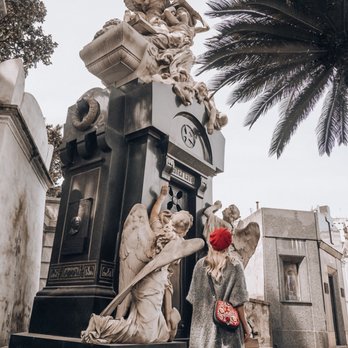
Most beautiful cemetery I've ever been to!! Dont miss Evita Eva Perons Grave! Most beautiful and peaceful place! IG @comeflywithmel read more



7 years ago
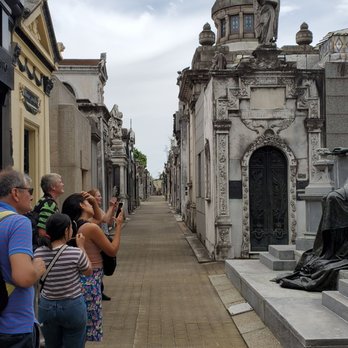
An experience that should be had by anyone who comes to buenos aires. Rich in history and quite eerie but also beautiful and intriguing all at the same time. Can take a couple hours to go thru the vast grounds of the cemetary to really appreciate at the history and of course most people come to see the tomb of eva perron...its a great experience. Go it's free and a good opportunity to experience the vast history of a unique country. read more



11 years ago
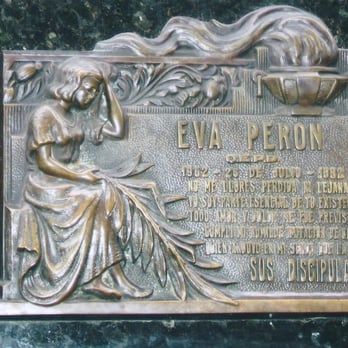
You could go to Buenos Aires, not see Cementerio de la Recoleta, and still have seen Buenos Aires. It might be like going to Los Angeles and not seeing the Walk of Fame on Hollywood Boulevard or Universal Studios, assuming you saw most of the other major things. However, seeing Cementerio de la Recoleta is easy, it's interesting, and it's free. It is not far from from the center, in Barrio Norte and/or Recoleta, however it might be termed, and is next to Parque de la Recoleta, which is a great spot on weekends, humming with both Portenos and tourists alike. It goes without saying that people come here to see the grave of Eva Person. In good taste, her grave is a modest one and is in the Duarte family mausoleum, which is her maiden name. A lot of the Buenos Aires tours also make it to this cemetery to see "Evita's" resting place. It's not near the entry, but it's not too far into the cemetery, either. You can follow the herd, trace it on a "trail map" in a tourist guide, or learn three words to ask any of the attendants or employees: "?Donde esta Evita?" ... which is sort of rude because she's no longer with us. However, they are actually helpful and not put out by this question, since they know that that one grave is what puts Cementerio de la Recoleta on the map ... at least as far as tourists are concerned. If you do visit Cementerio de la Recoleta, be sure to walk around and see some of the other graves. Since people had to be affluent to be buried here, and even Eva Person's being laid to rest here was debated because of her less than stellar ancestral tree, the graves (mostly mausoleums) are a vulgar display of wealth owing to how lavish and ornate they are. Admittedly, it is very interesting. The other interesting thing is all the stray cats that live in the cemetery. I'd say they come a close second in making this cemetery a fascinating place. They are fairly tranquil, you don't see much in the way of cat fights, and you'd almost think THEY think they own the place. Most of them appear to be well fed, as I'm almost sure every eccentric in the neighborhood who is obsessed with cats might be feeding them. Put this cemetery on your bucket list for your Buenos Aires trip. I am a fan, as in 4 stars, because I think I would go check it out every time I could visit this unique capital ... if not for Eva Peron's grave, then to see all the other tourists acting like tourists, obnoxious mausoleums I hadn't seen before, and, of course, the latest bumper crop of cats! read more


12 years ago
The Cementerio de la Recoleta is pretty well covered in every travel guide, and you probably already know whether a cemetery appeals to you as a tourist attraction. So I'll skip the basics that have already been covered and just point out a couple of things. - Entry is free, but there is a cemetery museum inside the attached church that includes historic religious art and artifacts. Admission was nominal (I think it was about AR$45), and it stays open a little later than the cemetery, so visit the cemetery first and then come back for the museum. - It took us about an hour to cover most of the avenues inside the cemetery and feel like we'd seen enough. Late afternoon is a good time to go, especially in summer, because you'll get more shade. - We didn't take a tour, but it looked like private guided tours in various languages were available (I heard French and German groups). - As others have mentioned, Evita's tomb is a little underwhelming, as it was just the Duarte family tomb before her burial. However, there are other elaborate mausoleums inside that resemble mini-cathedrals and those are more impressive. - It's hard to take a bad photo in here, and ruin-porn photographers in particular will LOVE all the stained glass, broken caskets, dusty niches, and spiderwebs that abound. Finally, a tourist activity your sullen goth teen will enjoy! - Do pop into the restroom, if only to see the soap-on-a-pole sticking out of the wall. Yep, just one communal bar of soap for the whole bathroom to share. - Lots and lots of skinny, hungry, attention-starved cemetery cats! If I went back, I would probably fill my pockets with snacks to feed the kitties. read more


Page 1 of 3
More info about Cementerio de la Recoleta
Cementerio de la Recoleta Reviews in Other Languages
Review Highlights - Cementerio de la Recoleta



Why does Yelp recommend reviews?
1 review that is not currently recommended
The reviews below are not factored into the business's overall star rating.

2 years ago


