1. Marlipins Museum

    1. Marlipins Museum

    0

    Shoreham-by-Sea, WSX

    Marlipins Museum

    3.3 (3 reviews)
    Closed Closed

    Marlipins Museum Photos

    Recommended Reviews - Marlipins Museum

    Your trust is our priority, so businesses can't pay to alter or remove their reviews. Learn more about reviews.
    Yelp app icon
    Browse more easily on the app
    Review Feed Illustration

    19 years ago

    Helpful 1
    Thanks 0
    Love this 0
    Oh no 0
    Photo of James Y.
    2
    794
    763

    16 years ago

    Helpful 0
    Thanks 0
    Love this 0
    Oh no 0
    Photo of Amaya T.
    12
    37
    15

    12 years ago

    The volunteer staff were friendly. It is small but we enjoyed looking around the museum when we visited family in Shoreham.

    Helpful 0
    Thanks 0
    Love this 0
    Oh no 0

    Verify this business for free

    Get access to customer & competitor insights.

    Verify this business

    Hove Museum & Art Gallery

    Hove Museum & Art Gallery

    4.7(6 reviews)
    4.1 mi

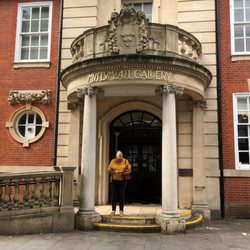
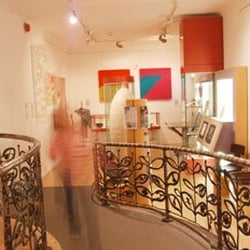
    Hove museum and art gallery is small, but perfectly formed…read more It's not somewhere you'd make a beeline for, unless there was something of specific interest to you personally to see, but it can provide a pleasant enough distraction for an hour or so on a rainy day. It has recently been refurbished and upgraded to provide high quality temporary exhibition space. The museum is housed in one of Hove's grandest former mansions, a large Italianate house just to the west of the shopping area, half a mile from St Andrew's old church on Church Road. The highlight of the permanent collections is actually outside the museum: the Jaipur Gate. This was made for the Colonial and Indian Exhibition of 1886 held in South Kensington, and moved here in 1926. It was paid for by the Maharaja of Jaipur, whose motto is inscribed on the front, in English, Sanskrit and Latin: 'where virtue is, there is victory'. It was carved by Indian craftsmen, although its design was concieved by two Englishment, and it combines both Mughal and Rajput elements. After recent conservation work, it is now in excellent condition. Inside, the ground floor provides two temporary exhibition spaces, a small shop and a tea room, which seemed very popular on my visit, and is probably worth knowing about in its own right. Upstairs are the four main areas of the permanent collection. Most important of these is the collection of early film and cinematic equipment. Brighton and Hove were important in early British film making, and a small film industry was based at Shoreham Beach in the days of silent films. The collection includes a wide selection of early film-making and projection equipment, and a small 8-seat 'cinema' where excerpts from early films and items for children are shown. The art gallery contains a handful of attractive works by European (mostly British) artists, although none are in the 'top flight' of European painting. Details of the collection are on the website (note that this covers Brighton's collection, too, which is wider ranging and more impressive). Next comes a small display of local history, which includes a small number of objects from local excavations from the bronze age to the mediaeval period, and includes the skull of a Saxon woman, important amber Bronze-age grave goods, items from a Saxon warrior burial, and pottery from a Roman villa excavated in nearby Southwick. Finally, there a lovely toy collection, displayed in an area especially designed for children, which seems very well done -the collection covers quite a wide range from the 18th to the present. The temporary collections cover local arts and crafts and, as ever with this kind of display, the quality varies a bit, although the presentation is excellently done. The shop sells cards, postcards and toys as well as small souvenir items. Entrance is free.

    Whether you're visiting to see the museum's fascinating exhibits or tp sample the quaint delights…read moreof it's small but charming tea rooms you're sure to be satisfied by Hove Museum and Art gallery. I went a few months ago during a bike ride with the simple intention of grabbing a tea before heading home. Not only did I extend my order to include a slice of carrot cake and a scone but I had to take a trip round their free exhibitions including a fascinating collection of photos and extracts from Brighton's Herald Newspaper during Word War II. This is open until Jan 10th 2010 so head down soon. Of you're reading this after that date then I would imagine they've set up an equally interesting exhibition by now, as Brighton & Hove council seem to be quite skilled in such areas. If you've lived in Brighton for a while and not yet visited then you're missing out on a very educational and cost-effective excursion. I'd happily go again just for the cream tea and scones!

    Photos
    Hove Museum & Art Gallery - Photo from http://www.brighton-hove-rpml.org.uk/Museums/hovemuseum/Pages/home.aspx

    Photo from http://www.brighton-hove-rpml.org.uk/Museums/hovemuseum/Pages/home.aspx

    Hove Museum & Art Gallery
    Hove Museum & Art Gallery

    See all

    Steyning Museum Trust

    Steyning Museum Trust

    3.5(2 reviews)
    4.5 mi

    This quaint little museum is a great place to head to for some local Sussex history and a taste of…read morethe attractive little town of Steyning. Its open all year round and there are permanent exhibits as well as temporary ones to look at. You need to phone ahead to book a visit but its ideal for a school group or if you are planning a nice country walk afterwards. There's a cute little shop there too if you want to buy some souvenirs!

    The Steyning museum is a little room in a small town run by diminutive grandmamas containing an…read moreabundance of historical information. Everything that's happened in Steyning since prehistoric times is documented here, and brought to life in displays based on archaeological digs, donated artefacts and ancient maps. Its unpromising facade actually gives way to a surprisingly interesting hour or so of your time, even if you have no particular interest in local history for its own sake. Steyning was once situated on a navigable estuary of the Adur, and the small port town was home to all the shenanigans that port towns are susceptible to, such as smuggling, water-borne fighting and seedy public houses of ill repute. There is plenty of archaeological interest, and various anecdotes of local characters past and very nearly present, including Mr Potter and his bizarre collection of taxidermy, which was on display until just a few years ago. It isn't all macabre, however, and there are plenty of interactive exhibits and activities for children. The museum welcomes group visits, and there is even a little shop if you want to pick up some mementoes of your trip. If you find yourself at a loose end in Steyning, this is well worth a visit to absorb a couple of hours productively.

    West Blatchington Windmill

    West Blatchington Windmill

    3.8(5 reviews)
    4.0 mi

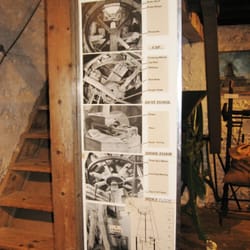
    Visitors driving along Holmes Avenue through modern suburban West Blatchington could be forgiven…read morefor doing a double-take as they approach the crest of the hill: somewhat ignominiously stranded between its two carriageways is a fine early 19th Century windmill, a reminder of the proud tradition of Sussex windmills that once dotted the landscape around the South Downs. West Blatchington mill was built around 1820 to provide flour and animal feed to the tiny village that has existed here since mediaeval times. The mill is unusual in that it was attached to a barn, and the 'A' frame which supports the sail mechanism inside was built from rescued ships' timbers. Milling stopped in 1897 and, although no longer operational, much of the interior mechanism survives in good condition. The building is listed at Grade II+. The mill is a 'smock mill', so named because the octagonal, wooden structure with its sloping weather boarded sides resembles a linen smock. The cap at the top of the mill could rotate to face the wind, driven around by a small fantail rotor (rather like a modern helicopter's rear rotor) on the opposite side of the cap from the main sails. Inside, the ground and first floors comprise an exhibition of the local area and country life in general, with several examples of early agricultural machinery, many of which are still in working order, together with some fine models of windmills. Higher galleries allow access to the milling floor and the bagging floor, and offer fine views over the surrounding countryside. The adjacent barn is now used as a seminar and meeting room, and light teas are available when the mill is open. There is also a small souvenir shop by the entrance. Entry (2008) Adults £1.00 Children 50p Wheelchair Access There is level access to the ground floor (although it is slightly uneven in places). There is also a disabled access toilet. The upper floors are reached by a series of very steep, open-tread steps.

    Built around 1820, West Blatchington Windmill is a sight to behold. You can see it when you…read moreapproach Hove from Devils Dyke by car and I always think that its amazing its still there surrounded by modern houses. This 'Smock' windmill was famously painted in water colours by John Constable in 1825 and is an ideal venue for all age groups to come and visit. Its only open to the public on Sundays and bank holiday Mondays but for schools and large groups they can make an exception. This mill has been quoted as being one of the finest windmills in the country so definitely worth a trip!

    Photos
    West Blatchington Windmill
    West Blatchington Windmill
    West Blatchington Windmill

    See all

    Hove Town Hall

    Hove Town Hall

    3.3(6 reviews)
    4.6 mi

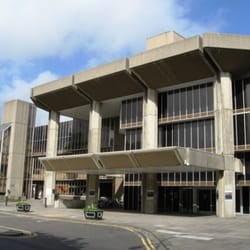
    The original Town Hall at Hove was built in 1882 to the designs of Alfred Waterhouse, best known…read morefor Manchester City Hall and the Natural History Museum in London. This splendid red brick gothic edifice, with its 110ft clock tower, was a well-known landmark until a fire in 1966 severely damaged much of the fabric. A picture of the old Town Hall can be seen at: http://www.mybrightonandhove.org.uk/page_id__5858_path__0p115p188p941p.aspx After several years of debate as to whether to rebuild within the remaining fabric or build a completely new hall, a competition was held for a completely new replacement building, which was won by John Wells-Thorpe, of Gotch & Partners. The new building, completed in 1974, is very much of its time: the structure is covered in unpainted grey-brown rough-cast concrete panels, with large expanses of tinted glass. It's not quite brutalist in style, thanks to the detailing on the panels, and the extensive planting around it softens the harder edges. But it's still a love-it-or-hate-it sort of building architecturally. I think it's mellowed rather well with time, and its low profile and set-back facades don't try to compete with the surrounding, older buildings. The building houses an information point (branded 'Citydirect') for the City Council's services, open 8.45-16.30h Monday - Friday. It also has various function and meeting rooms, which through the year host many diverse events, such as the Sussex Beer & Cider Festival held annually in March.

    Hove Town Hall is a festival of the early 1970s, a mirrored, faux-wooden parade of concrete and…read moreangular features that don't do much to soften the blow of your parking fine. It looks inside like a once-grand hotel gone to seed, with the smoked glass looking onto overly polished walnut accents on the concrete walls. These bits of concrete look like a cast of real wood, which is definitely, definitely better than unadorned concrete. Nevertheless, it's still, ahem, bare concrete. Even the lighting looks like it's been around since back in the day, with yellow gels casting a weird golden glow over everything. It's as if you've taken the wrapper off a caramel Quality Street and held it in front of your eyes. It's worth going here just for the pure authenticity of it - they really don't seem to have updated anything since it was built, so it's a living historical monument to the age of bizarre buildings. A word of counsel - if you do have to go here, for whatever reason, and I hope it isn't as unpleasant as many of the reasons you might pitch up here (parking, housing regulations...), but if you do - don't leave out a visit to the loo. That be-mirrored fairground attraction will stay with me for some time to come.

    Photos
    Hove Town Hall
    Hove Town Hall
    Hove Town Hall

    See all

    Marlipins Museum - museums - Updated July 2026

    Loading...
    Loading...
    Loading...