Observatorio do Alto da Sé Photos


Recommended Reviews - Observatorio do Alto da Sé
Start your review...



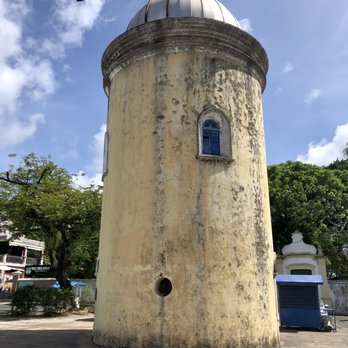
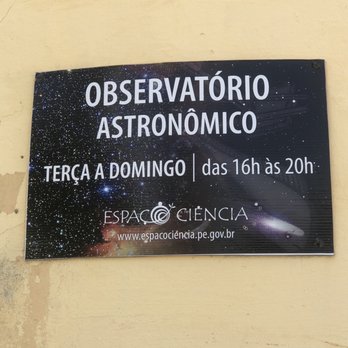
The Alto da Sé Astronomical Observatory is an observatory located in the city of Olinda, Pernambuco, Brazil. It was built close to the place where, on February 26, 1860, the French astronomer Emmanuel Liais observed and described the comet Olinda (C/1860 D1), the first comet discovered in South America and in Brazilian territory. The observatory was built in 1890 in a neoclassical style, during the government of Alexandre José Barbosa Lima. On February 26, 1860, a comet was observed near the site, which became known as Comet Olinda, the first comet discovered in Latin America. On December 6, 1882, astronomers went to the region to observe the phenomenon known as the Venus transit. After these events, an observatory for studies of the stars was built. In 1922 the observatory became a meteorological station, being deactivated in the year 1960. It was only in 2004 that Espaço Ciência took over the administration, installing a dome and reopening it. Today, it is a didactic observatory aimed at popularizing astronomical knowledge, having 3 permanent exhibitions, namely: Moon (ground floor), Mars (1st floor), Universe (Dome). The visit to the observatory is free and is open from Tuesday to Sunday from 4 pm to 8 pm. The observatory constantly participates in national and international events to popularize science and astronomy. read more