Cancel

    Open app

    Search

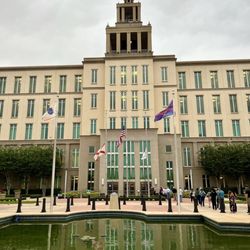
    Seminole County Civil Courthouse

    5.0 (3 reviews)
    Closed Closed

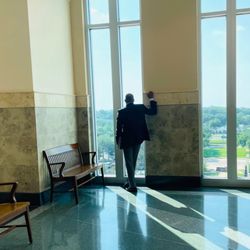
    Seminole County Civil Courthouse Photos

    Recommended Reviews - Seminole County Civil Courthouse

    Your trust is our priority, so businesses can't pay to alter or remove their reviews. Learn more about reviews.
    Yelp app icon
    Browse more easily on the app
    Review Feed Illustration

    8 years ago

    Helpful 0
    Thanks 0
    Love this 0
    Oh no 0

    7 years ago

    Helpful 0
    Thanks 0
    Love this 0
    Oh no 0
    Photo of Heath P.
    234
    26
    12

    10 years ago

    Helpful 0
    Thanks 0
    Love this 0
    Oh no 0

    Ask the Community - Seminole County Civil Courthouse

    Verify this business for free

    Get access to customer & competitor insights.

    Verify this business

    Seminole County Criminal Justice Center

    Seminole County Criminal Justice Center

    4.5(4 reviews)
    5.0 mi

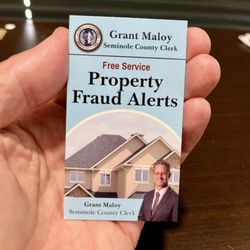
    The jury summons envelope that arrived in the mail gave me pause since I didn't want to take time…read morefrom work for my civic duty. However, my experience here renewed my gratefulness that we, the citizens, become a part of the justice system in our country. As noted in other reviews, security scanners and Seminole Sheriffs ensure a safe location for the people entering for work and other various reasons. They were thorough, quick and helpful. As a potential juror, I needed to check in using the barcode on my jury summons letter. To my surprise, Grant Malloy himself, the Clerk of Courts and Comptroller for Seminole County, checked us in. Later, he introduced himself to the group and thanked us for our participation. Mr. Malloy's humor peppered throughout kept the intro from being dry. The judge conducted a mass swearing in and then we were asked questions and given general instructions for the day, The ladies in charge of calling names for jurors and giving us breaks did a nice job of keeping us informed and providing the next steps once called. The judge in the courtroom, like everyone else, thanked us for participating and informed us of the next steps. After many questions and leaving and returning to the courtroom. The jurors were selected and the rest of us were again thanked and said our duty was completed for the next year. I felt the length of the day, having arrived at 8 am as instructed and departing around 5:30 pm. But, overall I felt it was a worthwhile process and less painful than a root canal (one of the questions from the prosecuting attorney on how we felt being there).

    Came here for the county clerks office. The security at the door was very nice and let me know…read morewhere I needed to go. The staff inside the county clerk was so helpful. I was there for less than 10min and got done what I needed for a traffic ticket court date. The young lady was so informative and nice which was comforting. There's plenty of parking available in the parking lot. The county clerks office is located to the left after you go through security.

    Photos
    Seminole County Criminal Justice Center
    Seminole County Criminal Justice Center
    Seminole County Criminal Justice Center

    See all

    Henry Shelton Sanford Grove and Experimental Gardens

    Henry Shelton Sanford Grove and Experimental Gardens

    4.0(2 reviews)
    0.3 mi

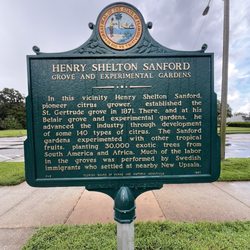
    Historical markers are a great way to learn about the formative people, buildings, and events in…read moreFlorida's history. I found this marker in front of the Sanford Museum dedicated to Sanford founder, Henry Shelton Sanford. Marker F-5 was installed in 1961 by the Florida Board of Parks and Historic Memorials. You can learn more about Henry Sanford in the museum behind this marker. Henry Sanford was born in Woodbury, Connecticut, on June 15, 1823. In 1847 Sanford began his long distinguished career as a diplomat as an attaché and Secretary of the American Legation at St. Petersburg. He was also the United States Ambassador to Belgium under Presidents Abraham Lincoln and Andrew Johnson. In 1870, Sanford purchased 23 square acres of land west of Mellonville, Florida, through the Sanford Grant from Spain. He planned a new city that he called The Gate City of South Florida, which he believed would become the transportation hub for Florida. In 1877, the City of Sanford was incorporated, and Mellonville was annexed six years later. In 1880, while he was in Europe as a U.S. minister, he formed a land company in London to encourage investments in Sanford. That same year construction began on the South Florida Railroad with a terminus in Sanford. By 1884, Sanford was a prosperous town with wharves, a railroad station, and a large hotel. Sanford traveled the world for the U.S. government and wherever he went, he bought seeds and plants to send back to Florida for his groves. The first was St. Gertrude's Grove. The second and more successful was Belair, a citrus grove and experimental garden near his residence in Sanford. More than 30,000 exotic trees from South America and Africa were planted at the gardens, mostly by Swedish immigrants who settled at nearby New Upsala. His young manager, James Ingraham, moved from Ohio in 1874 to help relieve his wife's tuberculosis. At the time it was the largest grove in the state. Sanford experimented with more than 140 varieties of citrus plantings which led to the production of new quality citrus fruits including the Jaffa, Mediterranean Sweet, Villa Francean and the Valencia orange, Carefully constructed experiments were implemented to determine what would grow best in Florida's climate. By 1889, Sanford had extended his farm to over 400 acres with approximately 145 acres of orange and lemon groves, along with a small nursery. All of the plants were tested to determine if Florida citrus growers could introduce new varieties into the blossoming citrus market. While experiments which were conducted to satisfy Sanford's own curiosity, they had the added bonus of benefitting the agricultural interests of the United States. Sanford and his family's last trip to Belair Grove was in the winter of 1890-1891. They returned to Healing Springs, Virginia, where he passed away on May 21, 1891. His wife, Gertrude, sold the Florida property to the Chase Brothers, who had moved to Florida in 1878 and started working with Sanford. During the winter of 1894-1895, a severe freeze destroyed that year's entire crop. Many citizens faced economic ruin and left the area. Those who stayed turned the artesian wells into a subirrigation system that permitted commercial agriculture. By the first decade of the 20th century, Sanford was one of the largest vegetable shipping centers in the United States. The Gate City of South Florida then became known as Celery City after its most successful crop.

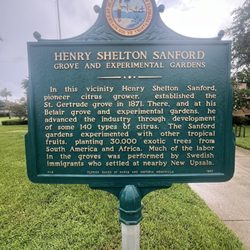
    Located in front of the Sanford Museum (which I MUST make time to visit), this marker denotes an…read moreearly Sanford resident and citrus pioneer. The marker could use a refresh but it reads: "In this vicinity, Henry Shelton Sanford, pioneer citrus grower, established the St. Gertrude grove in 1871. There, and at his Belair grove and experimental gardens, he advanced the industry through development of some 140 types of citrus. The Sanford gardens experimented with other tropical fruits, planting 30,000 exotic trees from South America and Africa. Much of the labor in the groves was performed by Swedish immigrants who settled at nearby New Upsala."

    Photos
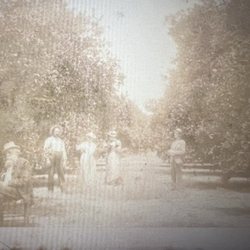
    Henry Shelton Sanford Grove and Experimental Gardens - Henry Sanford and family at Belair.

    Henry Sanford and family at Belair.

    Henry Shelton Sanford Grove and Experimental Gardens
    Henry Shelton Sanford Grove and Experimental Gardens - Marker remembering Henry Shelton Sanford in front of the Sanford Museum

    See all

    Marker remembering Henry Shelton Sanford in front of the Sanford Museum

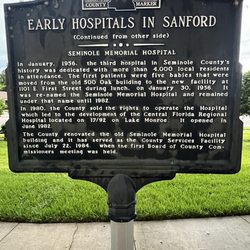
    Early Hospitals in Sanford Historical Marker - The old Seminole County Hospital

    Early Hospitals in Sanford Historical Marker

    4.0(2 reviews)
    0.7 mi

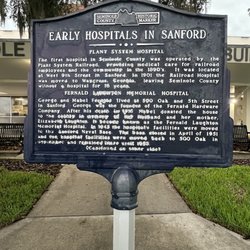
    This Seminole County marker is located in front of the Seminole County Services Building which was…read morethe former Seminole Memorial Hospital. Historical markers are a great way to learn about the formative people, buildings, and events in Florida's history. This historical marker highlights the history of healthcare in Sanford at three early hospitals, Plant System Hospital, Fernald Laughton Memorial Hospital, and Seminole Memorial Hospital. The Plant System Hospital was the first hospital in Sanford and it was managed by the Plant System Railroad which provided medical care for their employees and the community. After the hospital moved to Waycross Georgia in 1901, Seminole County did not have a hospital for the next 18 years. Fernald Laughton Memorial Hospital came into existence after Marbel Fernald donated her home following the death of her husband, Fernald Hardware Company founder, George Fernald. Marbel named the hospital in honor of her mother, Elizabeth Laughton. In 1945 the hospital moved to the Sanford Naval Base. After the base closed in April of 1951 the hospital moved back to 500 Oak until1956. Seminole Memorial Hospital opened in January of 1956. The first patients were five babies that were moved from the old hospital into the new facility. This hospital operated until 1982 when it was taken over by Central Florida Regional Hospital located on 17/92 on Lake Monroe. Since 1984 this renovated building has been the County Services Facility and it was where the first Board of County Commissioners meeting was held.

    Nicely placed marker that is in front of what used to be the hospital but is now just county…read moreoffices. The marker is on two sides and reads: Early Hospitals in Sanford. Plant System Hospital - The first hospital in Seminole County was operated by the Plant System Railroad, providing medical care for the railroad employees and the community in the 1890's. It was located at West 9th Street in Sanford. In 1901, the Railroad Hospital was moved to Waycross, Georgia leaving Seminole County without a hospital for 18 years. Fernald Laughton Memorial Hospital - George and Mabel Fernald lived at 500 Oak and 5th Street in Sanford. George was the founder of the Fernald Hardware Company. After his death in 1916 Mabel donated the house to the county in memory of her husband and her mother, Elizabeth Laughton. It became known as the Fernald Laughton Memorial Hospital. In 1945, the hospital's facilities were moved back to 500 Oak in September and remained there until 1956. There's a lot more on the other side.

    Photos
    Early Hospitals in Sanford Historical Marker
    Early Hospitals in Sanford Historical Marker
    Early Hospitals in Sanford Historical Marker - Back of the Marker

    See all

    Back of the Marker

    DeBary Hall Historic Site

    DeBary Hall Historic Site

    4.8(11 reviews)
    4.6 mi

    I recently had the opportunity to tour the historic 19th century DeBary Hall. The 20 room,…read moreItalianate style hunting lodge was located a mile from the St. John's River. The property was listed on the National Registry of Historic Places on July 24, 1972. DeBary Hall is the oldest intact building in southwest Volusia County. This historic site sits over 10 acres and includes the 8,000 square foot main home, stables, ice house, equipment shed, and tenant house. DeBary Hall was built in 1871 as the winter hunting retreat of Samuel Frederick DeBary (1815-1898), a European-born wine merchant for Mumms Champagne. He chose Florida to help ease his daughters asthma and to indulge in his love of hunting. This was the smallest of his six homes. While this may have been a vacation retreat, he still used it to make money. While in residence he operated a 600 acre citrus grove. He built a packing house beside the lake pier and was one of the first citrus growers to sort oranges by size by rolling them down an inclined trough with variously sized holes. He also developed the DeBary Merchants Line which ran a commercial steamboats for trade up the St. John's River to Jacksonville. German born Samuel Frederick DeBary was one of the wealthiest men of his day. His estate was a center of sport hunting and hospitality. In the late 1800's and early 1900's DeBary entertained Presidents Ulysses S. Grant and Grover Cleveland; the Astors, Goulds, and Vanderbilts, General William Tecumseh Sherman, and the Prince of Wales before he became King Edward VII. Popular activities included swimming in the local springs, fishing, and hunting quail, deer, and alligator. The DeBary's used the hall as their family winter retreat until 1941, when the last American ancestor, Leonie DeBary Lyon Brewster, died without an heir at the age of 31 in a plane crash with her husband. Her brother Adolphe met a tragic end at the age of 23 in New York while saving a young lady from being hit by a taxi. After Leonie's death there were plans was to create a grand subdivision in the 1950's and land was parceled out in 1/2 acre plots to begin Debary Village but it went bankrupt a few years into the project. After that DeBary Hall passed through various hands as the house was left to decay and the furnishings lost. The State of Florida purchased DeBary Hall in 1967. After years of abandonment, people came together in the 1990's to restore the home to its former glory. The State of Florida now leases the historic site to the County of Volusia as a historic house museum. The home has few original pieces but there are other period furnishings representative of what would have been accurate for the time. Unique advanced features of the house for the time include an elevator for guests' luggage, running water through a 500-gallon tank in the ceiling, wall fed electricity made onsite by natural gas, a wired call system throughout the entire house, and a lightning protection system that covered the roof. The house had Florida's first spring-fed swimming pool which used a pump to fill and drain the pool each day. Mr. DeBary also had the bathroom moved indoors which was not common for the time. Later on family members added indoor plumbing. The house also has an almost unheard of feature in Florida, a basement! My admission was only $5. I came late in the day and was lucky to receive a private tour from Ed who was so kind and knowledgeable. I learned do much about the DeBary family and the history of this area. A visit starts with a 15 minute movie about the history of the St. John's River during which you take a simulated steamboat ride. After the movie I was given an informative tour of both floors of DeBary Hall. In February they have an annual Living History Day that I would love to come back for next year. I highly recommend a visit DeBary Hall if you are in the area. A big thanks to the community for saving this historical gem for everyone to enjoy. DeBary Hall is a stop on the Lake Monroe-Gemini Springs-DeBary Hall trail. The Spring to Spring Trail is so named because the 6.6 mile trail links a number of state and county parks that contain springs. Be sure and check out some of the beautiful springs if you visit the area.

    Excellent tour and walk back in time of Florida history. Well worth the stop. Nice park & picnic…read morearea with restrooms adjacent to the home. Use Google maps for directions, Waze was off.

    Photos
    DeBary Hall Historic Site
    DeBary Hall Historic Site
    DeBary Hall Historic Site

    See all

    Seminole County Civil Courthouse - courthouses - Updated August 2026
    Loading...
    Loading...
    Loading...