Cancel

    Open app

    Search

    Sito Archeologico di Cuma

    4.9 (8 reviews)
    Open 9:00 am - 5:00 pm

    Sito Archeologico di Cuma Photos

    Sito Archeologico di Cuma Reviews in Other Languages

    Verify this business for free

    Get access to customer & competitor insights.

    Verify this business

    Museo Archeologico Nazionale - Lighting and heating instruments collection

    Museo Archeologico Nazionale

    4.4(59 reviews)
    16.4 kmCentro Storico

    One of Naples' crowning museums, the artifacts here complement a visit to Pompeii in the same trip,…read moresince the collections span archaeological finds from Pompeii, Rome and beyond. From sculpture, sacred and funerary objects, mosaics, paintings, household items and furniture, to architectural models and decorative elements, there's plenty of intriguing objects to pique various interests. On a grey Sunday morning in April, I arrived at 10am, and was glad I didn't come later! There were two lines, one for those purchasing tickets at the entry and those with pre-booked tickets online in advance. The latter was a fairly short line, maybe about 10 people, while the former was about 20ish. When I left a couple hours later both lines had more than doubled in length. Inside, the exhibit halls begin with sculptures unearthed during archaeological finds, with the direction of visit encircling one of the smaller inner courtyards. They do an excellent job of providing Italian and English translations for didactic labels and descriptions, and I was able to learn much about a) the background and provenance of sculptures and other finds, b) key figures in archaeological excavations which discovered many of the pieces now housed here, and c) the history of this museum. The route of visit continues to a columned hall with some waiting area seating and contemporary local art pieces, (apparently where school groups rest before touring the museum with docents), which lead up a pair of curved stone staircases where you can look upwards at a central dome. On the second floor highlights include a collection of watercolor works from watercolorist Luigi Bazzani, who captured colorful paintings of Pompeii at the turn of the 20th century, a collection of elaborate furniture, and many rooms of artifacts from steles, ceramics, blown glass and tableware. Many colorful wall paintings found in villas and homes were transferred from archaeological sites to this museum. There's a curious collection of erotic art from antiquity called the Secret Cabinet* too. Unfortunately both these sections were closed: a) the mosaic floor where they previously allowed visitors to enter wearing cloth covers over shoes, and b) the sprawling mini replica of Pompeii that looked to be at least 12 x 15 feet. The latter I glimpsed thru a walkway that was cordoned off. The Sundial Hall, named after (you guessed it) a functional sundial installed in the SW corner of the room, was one of the most impressive rooms in the museum, originally serving as the Bourbon** Royal Library of Naples, then later as the National Library. The beautifully restored ceiling fresco depicts the Bourbon royalty as patrons of the arts. Among the most famous group of objects here are items from the Farnese Collection, begun by then Cardinal Alessandro Farnese (1468-1549), who later became Pope Paul III. Theses works were displayed in various settings notably the Farnese palace, villa and gardens in Rome, then subsequently passed down to descendants. Farnese Hercules, Farnese Artemis, the Farnese Bull and the Farnese Cup are all sublimely sculpted pieces. The total time recommended is easily 2.5-3 hours, additional if you want to read more of the placards. Free lockers, coat check and bathrooms are available. Admission is €20.00 for regular tickets, €2.00 for 18-25 year olds, free for teachers, disabled and those with certain city passes including Artecard and Naples Pass. Hours: 9.00 am - 7.30 pm with last entry at 6.30 pm Closed Tuesdays. *did not post these pics as I didn't want to get flagged for posting explicit content! lol **Bourbon as in the royal dynasty that ruled southern Italy from 1734 until 1860. Not the whisky made with a higher percentage of corn from the southern United States. =)

    If you visit Pompeii or Herculaneum, you must visit this museum to see the treasures found in those…read morelocations. Sign up for their free Wi-Fi so that you can download the map because there is very poor signage throughout the museum to help guide you. I was disappointed by the T-shirts they had available because they didn't show the name of the museum in a prominent way, only teeny little letters below an image.

    Photos
    Museo Archeologico Nazionale - Museum cafe

    Museum cafe

    Museo Archeologico Nazionale - Paintings from early 1st century AD

    Paintings from early 1st century AD

    Museo Archeologico Nazionale - Stairs to second story

    See all

    Stairs to second story

    Villa San Michele - The entryway

    Villa San Michele

    4.4(7 reviews)
    32.3 km

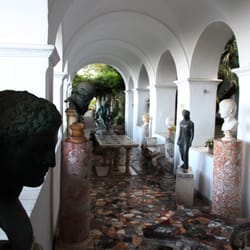
    So I'm giving it five stars not for the museum because in all honesty I am not a museum person and…read moreas far as Italy goes this would hardly rate as a museum unless your really into that author. That being said what I enjoyed was exploring the house and grounds and the views! The house itself is the "museum" aspect that I enjoyed most because it was an insight into how some really fortunate people lived. I enjoyed walking the grounds and the immaculate views the property offered. There was a room at the top that had a piano in it and it had a painting showing people partying there back in the day with the most amazing views behind them- I'll admit it had me daydreaming for a minute! It's peaceful up there with beautiful flowers, views and birds chirping. I'm not sure if you will think it's worth paying 8 euro for, but after tons of crowds everyday on our trip- I enjoyed the quite and birds chirping while gazing out at a immaculate view!

    Villa Michele is a beautiful museum located on the tip top of the Isle of Capri. The property was…read moreonce owned by Axel Munthe, a Swedish doctor (to the Swedish royal fam) who called Capri home for many years. Inside the museum is filled with sculptures, paintings and artifacts dating back to 17th Century. Outside the museum offers up spectacular views of the northern coast of Capri. The garden surrounding the property is also gorgeous. Admission is €7 and I thought a bit steep for the few minutes we spent touring the buildings and snapping photos of the view. Although I'm sure many could spend an afternoon having lunch (they have a bar & restaurant on site) and enjoying the grounds. Despite the cost I'm so glad we got to see Capri from this vantage point.

    Photos
    Villa San Michele
    Villa San Michele
    Villa San Michele

    See all

    Museo Cappella San Severo

    Museo Cappella San Severo

    4.5(39 reviews)
    16.7 kmCentro Storico

    Known as Cappella Sansevero Art Museum, or Chapel of Santa Maria della Pietà, this Neapolitan…read morebuilding contains a diverse collection of ornate sculpture visible for just 7Euro. Adhering to a strict photography policy, circumvented only through time and patience, expect to spend an hour in the two small chambers, mesmerized by the ornate netting on Il Disinganno and breathtaking Veiled Christ by Giuseppe Sanmartino. Downstairs guests will also find two anatomical studies of human vasculature that long pre-date the "Bodies" exhibits touring globally

    Visited in April 2026, and was really blown away by the detail in the marble sculptures. The way…read morethe sheerness of the fabric captured all the folds and wrinkles over the forms of the Christ and Modesty sculptures was stunning. My mind can't even begin to comprehend how Genoese sculptor Francesco Queirolo carved the life-like roped fishing net texture and structure draped over the two human figures out of solid stone for Disillusion. He certainly was a virtuoso in this art form. The other statues in the room were incredibly elaborate and detailed as well. As other reviews have mentioned, the chapel has a strict no photography policy, there are multiple security guards posted around this room and they watch with hawk eyes so don't even try. The "anatomical machines" portion of the exhibit was two open bodies one male, one female, preserved for scientific study, showing possibly the most complete real life version of the human cardiovascular system including veins and arteries. Fascinating, though could present an ick factor for those that aren't into seeing explicit internal organs. Open daily 9am-7pm except Tuesdays. Regular admission is €12.00 for adults, €6-8 for students, handicapped, youth 10 yrs and over. Free admission to 9 yrs and under. Audio guides are available for an additional €3.50 fee. Regular admission feels steep for essentially access to 1.5 rooms, given the amount of people, had to dock a star. A lot of info available on their website below, I don't think you need the audio guide if you can read thru the descriptions in advance, though cell service isn't great inside, so wouldn't recommend trying access it live. https://www.museosansevero.it/en

    Photos
    Museo Cappella San Severo - Our tour guide entered the chapel with her devil horns, and no one told her to take off. lol

    Our tour guide entered the chapel with her devil horns, and no one told her to take off. lol

    Museo Cappella San Severo - Entrance - no pictures allowed inside in April 2026

    Entrance - no pictures allowed inside in April 2026

    Museo Cappella San Severo - Description outside the church

    See all

    Description outside the church

    Castel Sant'Elmo - Scaturchio cafe/bakery location at the top of the fort, open seating inside and out

    Castel Sant'Elmo

    4.6(31 reviews)
    15.2 kmVomero

    Looking for that picture perfect postcard view of Naples? This is your spot!…read more Perched atop Vomero Hill, this fortress was built in 1329 as the residence of King Robert of Naples, expanding upon an existing 13th century structure. In 1537 it was further extended under viceroy don Pedro de Toledo to its six-pointed star design, and additional renovations were made thru subsequent centuries. Tufa, a yellow volcanic stone often used in much ancient construction throughout Naples, is also used here. On entering the grounds at 5pm a short line at the ticket office is unavoidable, since after 4:30pm tickets are reduced from €5 to €2.50. A short five minute walk brings you around a corner to an expansive with tall, broad walls, and a short overpass over a shallow ravine brings you to the gate. A few more turns up a gently sloped path thru the ramparts and the panoramic views start coming into sight. At the top of the fortress, the inner ward encircled by the battlements is wide and open, uncrowded on a Sunday afternoon in April. The Museo Novecento is located here which features modern Italian art from 1910-1980 though closes at 5pm, a small museum with about 170 works. Worth dropping by for a look, admission is included in the fortress ticket. Aside from the museum, there's a location of the well-known bakery/café Scaturchio (see my sep review for their Centro Historico location) here where you can grab a coffee or traditional Italian merenda, or afternoon snack. Surprisingly to me there were a number of offices here too, apparently related to cultural heritage administration and art history and documentation. Multiple stairways lead up to the walkways along the top edges with merlons*. Picturesque views appear in every direction, even on a cloudy day you could see miles around the city of Naples, island of Capri, parts of the Amalfi coastline, and the Matese mountains. Spending about an hour and half here, I felt like this was adequate time to walk around the main sections of the fortress without accounting for the art museum. If I ever find myself back in Naples, would certainly come by again, and hopefully catch a sunny day! *in a defensive wall with repeating pattern of ridges, this is the raised block of the ridge used by defenders for cover. Crenels refer to the narrower lowered sections between the ridges used for archers to shoot thru.

    The castle itself is located on the hill, and it takes quite a lot of stairs getting there from…read morepublic transportation, and even more steps to the top of the castle. The view on each spots and on the top platform is breathtaking. You can overlook the volcano and city views from different angles.

    Photos
    Castel Sant'Elmo - Looking down for the battlements into the ward of the castle fort

    Looking down for the battlements into the ward of the castle fort

    Castel Sant'Elmo - Widen open space on the top of the fort, multiple stairways lead up to the battlements

    Widen open space on the top of the fort, multiple stairways lead up to the battlements

    Castel Sant'Elmo - More of the top of the fort

    See all

    More of the top of the fort

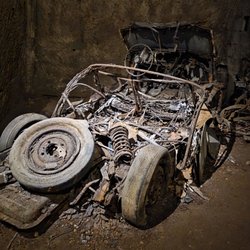
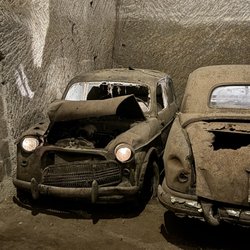
    Galleria Borbonica - Damaged cars from WWII

    Galleria Borbonica

    4.9(22 reviews)
    15.4 kmChiaia

    This was another highlight during our visit of Naples. It's not to be missed if you're a WWII buff,…read moreor have any personal connections to this era. We purchased the standard tour (there are 3) which starts at the entrance of Vico del Grottone. It's close to the Piazza del Plebiscito. There are timed entries. We just happened to get there just before the guided English tour at 11:00am. The timing was perfect. I would rethink this one if you have mobility or night vision issues. The very first thing you'll do is walk down a very high, narrow, and dimly lit stairway with pumice walls surrounding you. I'm pretty sure our tunnel guide said it was 90 steps down. The good news is that you won't have to climb up at the end. You'll exit out into a covered parking area along Via Monte de Dio. Our guide was so passionate & knowledgeable. I think his name was David. He also made sure that every question was answered. It's quite a long & rocky history of why the King had it built, and the obstacles they had building around the aqueducts and holding tanks. The vision was never fully realized after the fall of the Bourbon monarchy. It was abandoned until WWII when it was used as a shelter from bombs. It's an incredible story, and you can see how the residents of Naples lived under the brutal conditions of war. Some lived there longer because they had nowhere else to live after houses were destroyed. We were very impressed with how well the tunnels were restored, and hearing about how all these secrets (artifacts) were uncovered. It had been hiding under Naples all these years until being rediscovered some time in 2005. I don't think it even opened to the public until 2010. It was a very memorable & unique experience. Very much worth the small admission fee. Definitely seek it out if you are in Naples. It only takes an hour, and it's well worth the time.

    An inspiring tour to take. Long history of use in Naples. Started hundreds of years ago and used…read morethrough WWII and after. Excellent tour guides. Multiple tour options ranging from easy to more involved requiring hard hats. Unique antiques shop included as part of tour. Well worth the price of 10€ to see this amazing underground area.

    Photos
    Galleria Borbonica - Damaged cars from WWII

    Damaged cars from WWII

    Galleria Borbonica - The part of the tunnel that leads to the palace

    The part of the tunnel that leads to the palace

    Galleria Borbonica

    See all

    Sito Archeologico di Cuma - landmarks - Updated June 2026

    Loading...
    Loading...
    Loading...