Skylark Photos


You might also consider


More like Skylark
Recommended Reviews - Skylark
Start your review...


Reviews With Photos


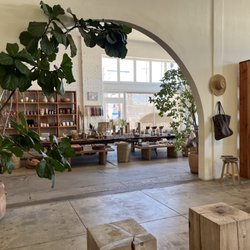
I absolutely love Skylark! I'm surprised to see that I haven't reviewed it before. It's hands down one of my absolute favorite boutiques on Abbot Kinney, along with its sister store next door, Ananda (and hey, that's saying a lot, because Abbot Kinney is basically a row of funky boutiques - they have a lot of competition, and still come out on top in my book). I've been coming to Skylark since I was a teen, but began to frequent it when I first moved to the Westside almost 4 years ago. It's an awesome space with a great vibe - vintage velvet couches, violins mounted onto the walls, great music, and of course, a great selection of clothes, shoes, and accessories. I'm a total sucker for their jewelry, which is a great mix of earthy and modern. It's also a great spot for gift shopping, since the inventory is super versatile yet stylish - you truly can't go wrong with it. I've bought several friends presents from Skylark over the years and they've all loved their gifts. Everyone I've encountered who works there is awesome and friendly. But I'm biased to Brenna - she's a stone cold fox and always plays the best music. Overall, the customer service is always spot on; I've never had any complaints. Speaking as someone who's very familiar with Venice (having lived there for a year and going to Abbot Kinney multiple times a week), Skylark is always among my recommendations for the best boutique on the block. Whether you're looking to revamp your wardrobe or just pick up a few great items, this is your spot!

This place has no respect for customers, treats customers very rude and disrespectfully. i tried to buy a top and worker snatched it out of my hands and looked at me as if i couldn't afford it and laughed when I asked how much it was. don't shop here unless you want to be blatantly disrespected, judged the second you walk in on the way you look and how much you can afford. this place is full of snobs and rude employees that benefit off other rich snobs and treat regular people as peasants.


I had gone to Abbot Kinney with my adult daughter. I went into Skylark and found a pair of $72.00 size 8 sandals and purchased them for my wife of 25 years. I have purchased my wife shoes and clothing on several precious occasions. I brought her the shoes and she said they were small for a size 8. I returned to the store and asked for a refund. I was informed by the sales associate, in an extremely rude tone that I was only entitled to store credit or an exchange. I asked why I could not get a refund and he said it was their policy. I asked where was this posted. He said on my receipt and on a note card inconspicuously located among merchandise (it would not make sense to be on the receipt after you make the purchase). He said he was not authorized to issue a refund. He said I could email the owner and that he was unable to call the owner (I immediately emailed the owner but did not receive a response until 4 hours later that said they offer only exchanges). He said they were a "mom and pop" store and not a corporate store able to issue refunds. I said the shoes were not "mom and pop" priced and he replied, "For Abbot Kinney they are, have you been to the other stores on Abbot Kinney?" I eventually found two items that totaled to $68.00. I asked if I could have difference in cash and he said he was not authorized to issue a refund. I was unable to find anything that would make up the difference so I exchanged the two items. He did give me the difference in cash without issuing me a new receipt and without saying a word. Skylark violates the DISPLAY OF RETURN POLICY BY RETAIL SELLERS (Civil Code Section 1723). Recognizing this, the legislature has enacted a law (Civil Code section 1723), which requires retail sellers to post their refund policy, if the policy does not meet certain common expectations. These common expectations are: * The retail seller gives a full cash or credit refund, an equal exchange, or some combination of these, and * The customer may return the merchandise for at least seven days following purchase, if it is returned with proof of purchase. When Return Policy Must Be Displayed If a retail seller has a return policy which does not meet these common expectations, the seller must conspicuously display its refund policy as described in the next section. This conspicuous display requirement applies to any retail seller which sells goods to the public in this state whose return policy as to any of those goods does not meet these common expectations. If a retail seller sells some goods under a return policy that meets these common expectations, but sells other goods under another return policy, the seller must comply with the conspicuous display requirement as to the latter goods. I have highlighted the sections of VIOLATED by Skylark as to their policy and failure to be in compliance with the code. Location and Contents of Display 1723. (a) Every retail seller which sells goods to the public in this state that has a policy as to any of those goods of not giving full cash or credit refunds, or of not allowing equal exchanges, or any combination thereof, for at least seven days following purchase of the goods if they are returned and proof of their purchase is presented, shall conspicuously display that policy either on signs posted at each cash register and sales counter, at each public entrance, on tags attached to each item sold under that policy, or on the retail seller's order forms, if any. This display shall state the store's policy, including, but not limited to, whether cash refund, store credit, or exchanges will be given for the full amount of the purchase price; the applicable time period; the types of merchandise which are covered by the policy; and any other conditions which govern the refund, credit, or exchange of merchandise. Their sign is arguably not conspicuous and does not include what is required by code. The Civil Code prevents retailers who believe they have the upper hand once they take your hard earned money to keep it to pay their exorbitant rents. It is shameful the owner operates her business in this manner and her sales associates have to deal with her policy that violates the code. Be a savvy, smart and informed consumer. I am now disputing the transaction with my credit card company, another reason to use a credit versus debit card.


Cool little boutique on Abbot Kinney. Has very boho chic, vintage and western styles. Love the twinkling lights and sweet charm of this store. Reminds me a little bit of Anthropology. They have a great selection of not only clothes but handbags, shoes and accessories as well. You can find great pieces here to accessorize from head to toe. Found some really nice boots and some really cool earthy and antique looking necklaces and rings. Absolutely love them! The staff here is super helpful and friendly. They really help you find exactly what you're looking for.


4 years ago

5 years ago

5 years ago

11 years ago
I absolutely love Skylark! I'm surprised to see that I haven't reviewed it before. It's hands down one of my absolute favorite boutiques on Abbot Kinney, along with its sister store next door, Ananda (and hey, that's saying a lot, because Abbot Kinney is basically a row of funky boutiques - they have a lot of competition, and still come out on top in my book). I've been coming to Skylark since I was a teen, but began to frequent it when I first moved to the Westside almost 4 years ago. It's an awesome space with a great vibe - vintage velvet couches, violins mounted onto the walls, great music, and of course, a great selection of clothes, shoes, and accessories. I'm a total sucker for their jewelry, which is a great mix of earthy and modern. It's also a great spot for gift shopping, since the inventory is super versatile yet stylish - you truly can't go wrong with it. I've bought several friends presents from Skylark over the years and they've all loved their gifts. Everyone I've encountered who works there is awesome and friendly. But I'm biased to Brenna - she's a stone cold fox and always plays the best music. Overall, the customer service is always spot on; I've never had any complaints. Speaking as someone who's very familiar with Venice (having lived there for a year and going to Abbot Kinney multiple times a week), Skylark is always among my recommendations for the best boutique on the block. Whether you're looking to revamp your wardrobe or just pick up a few great items, this is your spot! read more
5 years ago
This place has no respect for customers, treats customers very rude and disrespectfully. i tried to buy a top and worker snatched it out of my hands and looked at me as if i couldn't afford it and laughed when I asked how much it was. don't shop here unless you want to be blatantly disrespected, judged the second you walk in on the way you look and how much you can afford. this place is full of snobs and rude employees that benefit off other rich snobs and treat regular people as peasants. read more


5 years ago
4 years ago

9 years ago
6 years ago

11 years ago
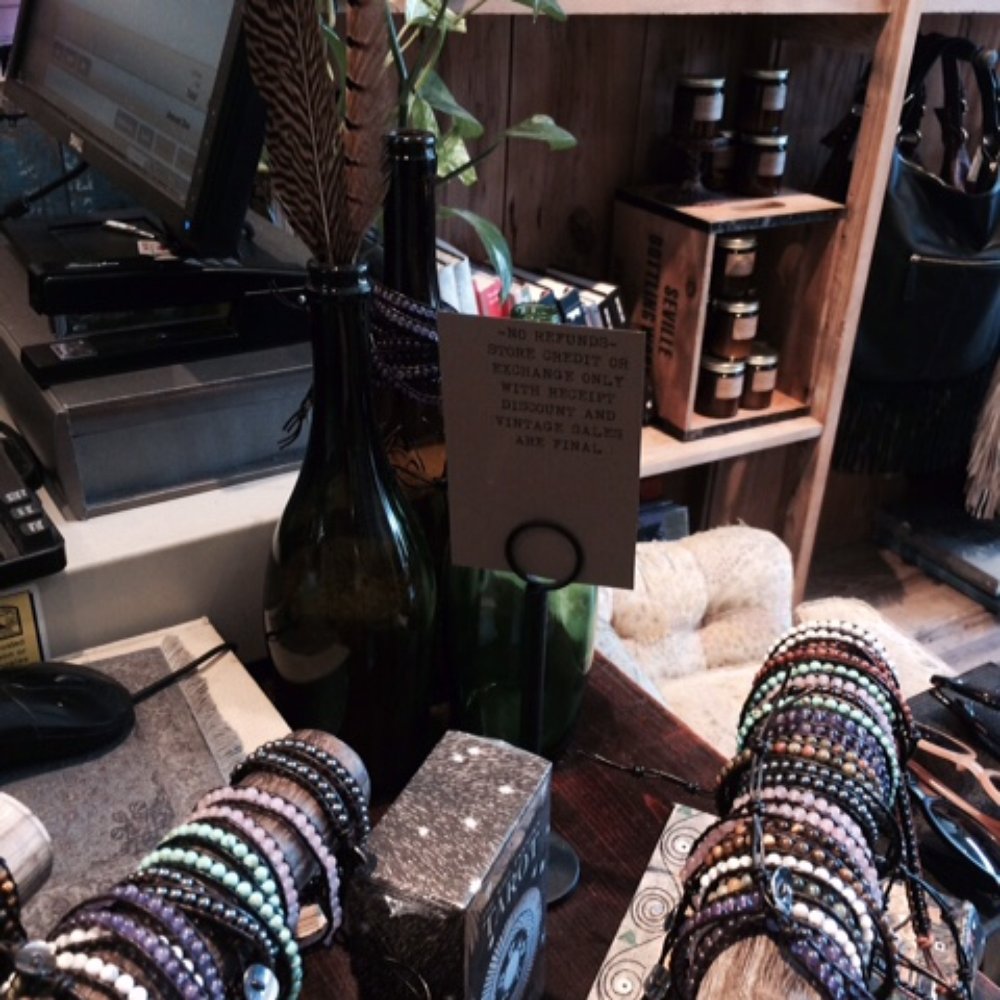
I had gone to Abbot Kinney with my adult daughter. I went into Skylark and found a pair of $72.00 size 8 sandals and purchased them for my wife of 25 years. I have purchased my wife shoes and clothing on several precious occasions. I brought her the shoes and she said they were small for a size 8. I returned to the store and asked for a refund. I was informed by the sales associate, in an extremely rude tone that I was only entitled to store credit or an exchange. I asked why I could not get a refund and he said it was their policy. I asked where was this posted. He said on my receipt and on a note card inconspicuously located among merchandise (it would not make sense to be on the receipt after you make the purchase). He said he was not authorized to issue a refund. He said I could email the owner and that he was unable to call the owner (I immediately emailed the owner but did not receive a response until 4 hours later that said they offer only exchanges). He said they were a "mom and pop" store and not a corporate store able to issue refunds. I said the shoes were not "mom and pop" priced and he replied, "For Abbot Kinney they are, have you been to the other stores on Abbot Kinney?" I eventually found two items that totaled to $68.00. I asked if I could have difference in cash and he said he was not authorized to issue a refund. I was unable to find anything that would make up the difference so I exchanged the two items. He did give me the difference in cash without issuing me a new receipt and without saying a word. Skylark violates the DISPLAY OF RETURN POLICY BY RETAIL SELLERS (Civil Code Section 1723). Recognizing this, the legislature has enacted a law (Civil Code section 1723), which requires retail sellers to post their refund policy, if the policy does not meet certain common expectations. These common expectations are: * The retail seller gives a full cash or credit refund, an equal exchange, or some combination of these, and * The customer may return the merchandise for at least seven days following purchase, if it is returned with proof of purchase. When Return Policy Must Be Displayed If a retail seller has a return policy which does not meet these common expectations, the seller must conspicuously display its refund policy as described in the next section. This conspicuous display requirement applies to any retail seller which sells goods to the public in this state whose return policy as to any of those goods does not meet these common expectations. If a retail seller sells some goods under a return policy that meets these common expectations, but sells other goods under another return policy, the seller must comply with the conspicuous display requirement as to the latter goods. I have highlighted the sections of VIOLATED by Skylark as to their policy and failure to be in compliance with the code. Location and Contents of Display 1723. (a) Every retail seller which sells goods to the public in this state that has a policy as to any of those goods of not giving full cash or credit refunds, or of not allowing equal exchanges, or any combination thereof, for at least seven days following purchase of the goods if they are returned and proof of their purchase is presented, shall conspicuously display that policy either on signs posted at each cash register and sales counter, at each public entrance, on tags attached to each item sold under that policy, or on the retail seller's order forms, if any. This display shall state the store's policy, including, but not limited to, whether cash refund, store credit, or exchanges will be given for the full amount of the purchase price; the applicable time period; the types of merchandise which are covered by the policy; and any other conditions which govern the refund, credit, or exchange of merchandise. Their sign is arguably not conspicuous and does not include what is required by code. The Civil Code prevents retailers who believe they have the upper hand once they take your hard earned money to keep it to pay their exorbitant rents. It is shameful the owner operates her business in this manner and her sales associates have to deal with her policy that violates the code. Be a savvy, smart and informed consumer. I am now disputing the transaction with my credit card company, another reason to use a credit versus debit card. read more


5 years ago
5 years ago

9 years ago

7 years ago

10 years ago

15 years ago

12 years ago
Cool little boutique on Abbot Kinney. Has very boho chic, vintage and western styles. Love the twinkling lights and sweet charm of this store. Reminds me a little bit of Anthropology. They have a great selection of not only clothes but handbags, shoes and accessories as well. You can find great pieces here to accessorize from head to toe. Found some really nice boots and some really cool earthy and antique looking necklaces and rings. Absolutely love them! The staff here is super helpful and friendly. They really help you find exactly what you're looking for. read more

10 years ago

10 years ago
Love this store! The staff goes above and beyond. They forgot to put some earrings that I purchased in my bag. I called when I got home and they were so apologetic and said they'd have them at the register for me. When I arrived the next morning they had my earrings all beautifully wrapped with an additional gift for the inconvenience! Exceptional service. Really doesn't happen very often these days! Especially during the busy holiday season. read more

17 years ago

9 years ago

8 years ago
8 years ago


12 years ago


10 years ago

11 years ago
Business owner information

Skylark V.
hi jessica- i tried sending you multiple messages to rectify this…


16 years ago

15 years ago

9 years ago
8 years ago

14 years ago
15 years ago

8 years ago

11 years ago
Page 1 of 2
More info about Skylark
1612 Abbot Kinney Blvd
Venice, CA 90291
Venice
Directions
(310) 392-9099
Call Now
Hours
Payment methods
Services
Indoor Amenities
Outdoor Amenities
Other Amenities
From the Business
Ask the Community - Skylark
Review Highlights - Skylark
You might also consider





















Why does Yelp recommend reviews?
5 reviews that are not currently recommended
The reviews below are not factored into the business's overall star rating.

5 years ago

17 years ago

11 months ago
14 years ago

15 years ago
Skylark - womenscloth - Updated August 2026
Browse Nearby
BEST of Venice, California Coffee near Skylark
BEST of Venice, California Restaurants near Skylark
BEST of Venice, California Things to Do near Skylark
BEST of Venice, California Breakfast near Skylark
BEST of Venice, California Shopping near Skylark
BEST of Venice, California Plus Size Fashion near Skylark
BEST of Venice, California Airport near Skylark
Browse Brands
Related Cost Guides
Browse Articles
People found Skylark by searching for…
Clothing Boutiques in Venice, CA
Cheap Clothing Stores in Venice, CA
Teen Clothing Stores in Venice, CA
Used, Vintage & Consignment in Venice, CA
Consignment Shops in Venice, CA
Upscale Thrift Shops in Venice, CA
Personal Shopping in Venice, CA
Bohemian Clothing in Venice, CA
Vintage Clothing Stores in Venice, CA


