Smiley Woodfin Native Prairie Grassland Photos



More like Smiley Woodfin Native Prairie Grassland
Recommended Reviews - Smiley Woodfin Native Prairie Grassland
Start your review...



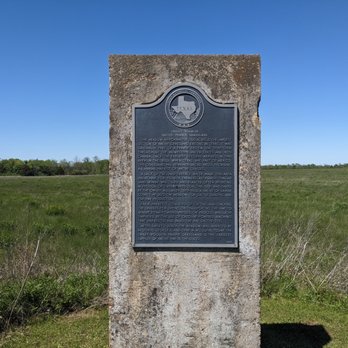
The sign pointed out that there was a marker ahead so I was able to slow down and look out for this, which is truly in the middle of not a whole lot. And as I read the marker, that's the point. Someone was able to preserve this "nothing" for future generations* and that's a good thing. The marker reads, "This meadow, approximately 2100 acres, is the largest section of native grassland existing in Texas. It was originally part of a prairie system that stretched throughout the Midwestern United States and into Canada. Since the earliest settlers arrived in this area in the 1830s, when Texas was part of Mexico, this grassland has remained uncultivated, providing an annual harvest of native grasses. "A lack of fuel and surface water made this area unsuitable for pioneer farmers. Although similar land nearby was tilled and planted, often resulting in erosion or overworked soil, this site was saved by the owner M.L. Smiley (1872-1953). A native of Lamar County, he used the meadow for cattle grazing and for hay production. "Early harvests consisted of cutting and stacking the grasses for drying, or transporting the hay to nearby steam-powered presses. The process was later simplified by the use of gasoline-powered machines that harvested and baled the hay on the site. "After Smiley's death, the meadow was inherited by brothers George S. and Gene M. Woodfin. Today the Smiley-Woodfin Prairie Grassland is the largest supplier of native hay in the state." This is marker number 8227 and it was erected in 1981 by the Texas Historical Commission. * I have read that it may be uprooted for solar panels. [Review 727 of 2024 - 487 in Texas - 21758 overall] read more