Some context before the disappointment: I'm from Los Angeles, which means I have opinions about…read morechili dogs that were formed in the crucible of Pink's lines and late-night Carney's runs and every chili-slicked paper boat handed through a window on Western Avenue at 1am. An LA chili cheese dog has oomph. It has a snappy dog under chili that means something, a structural crisis in your hands, a napkin emergency. This is my heritage and my bias, declared upfront.
And the chili dog itself has a real history, which is worth knowing because it explains what the dish is supposed to be. The American chili dog tradition largely traces back to Greek and Macedonian immigrants in the early twentieth century, who took the New York hot dog and topped it with a spiced, Mediterranean-inflected meat sauce -- and then spread the gospel through the industrial Midwest. Detroit's coney islands -- American and Lafayette, side by side downtown, feuding for a century -- built the canonical version: a natural-casing frank with snap, a loose all-meat beanless chili, yellow mustard, chopped onion. Cincinnati took the same immigrant sauce and put it on spaghetti. Los Angeles, being Los Angeles, went maximalist -- Ptomaine Tommy's on North Broadway slinging chili over everything in the 1920s, giving us the chili size and feeding the tradition that eventually produced Pink's, Carney's, and the whole midnight chili-dog economy of my youth. The point being: the chili dog is a dish with a lineage, a set of principles, and a floor. Even the humblest Detroit coney -- a two-dollar dog eaten standing up -- has snap, spice, and a point of view.
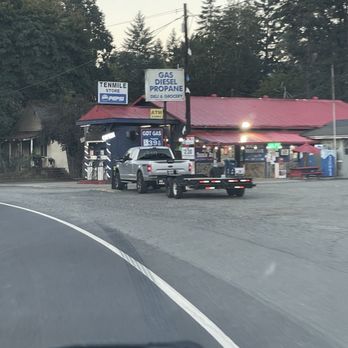
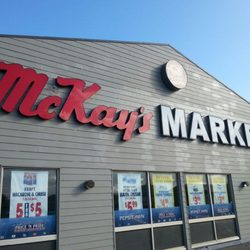
So when we rolled through Langlois on the 101 -- a town of about 175 people that is "world famous" for its hot dogs, over 1.5 million sold, the branded hats and bumper stickers to prove it -- of course we stopped. You have to stop. That's the whole contract of the American road trip: the sign says world famous, you pull over.
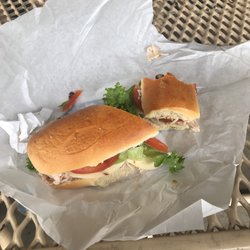
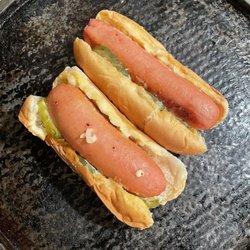
I ordered the chili dog. It arrived open-faced. With a fork. The hot dog was chopped into sections, pre-solved, the entire delicious problem of how to eat a chili dog eliminated before I could even confront it. Chili with beans, chopped onion, cheddar, sour cream -- a composition that reads fine on paper. And then I took a bite and encountered the central mystery of the Langlois frankfurter: it has no snap, because the frankfurters are peeled. On purpose. This is apparently part of the legend. The result is a smooth, soft, casing-free dog that offers no resistance and, to my palate, not much else. The chili was bland. The sour cream, which I'd assumed was there to cool some spice, had nothing to cool -- milquetoast offsetting milquetoast. And everything arrived at room temperature. The chili, the dog, the sour cream, all of it occupying the same tepid middle ground, a chili dog with no thermal narrative whatsoever.
I had this same experience at Casper's in Oakland, and I'll ask the same question I asked then: what is the point of a bland chili cheese dog? The entire dish is an argument for excess. A hundred years of immigrant sauce-makers and midnight counters didn't build this tradition so we could eat it lukewarm with a fork.
Now, fairness requires me to note: the famous order at Langlois is not the chili dog. It's the mustard dog -- the frankfurter with Muriel Sweet's homemade sweet mustard, a recipe dating to 1981 when the market started feeding sawmill workers and truckers. That's the dog that built the legend. I didn't order it. Maybe the mustard redeems the peeled frank. Maybe the whole thing only makes sense as a unit. But a chili dog on the menu is a promise, and this one wasn't kept.