Barstow Harvey House Photos


More like Barstow Harvey House
Recommended Reviews - Barstow Harvey House
Start your review...


Reviews With Photos


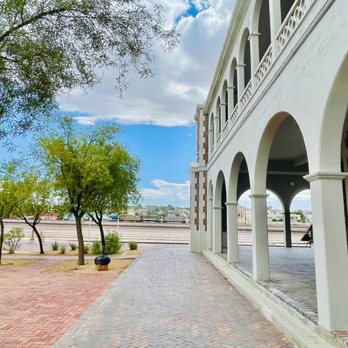
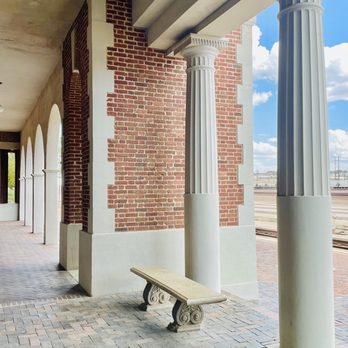
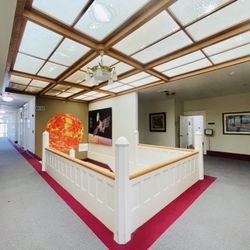
This beautiful place needs more public exposure. Lots of new photos are needed. Absolutely gorgeous building all around and a historic train track area. Huge! Great upkeep and modern looking too. Very clean. Worth the photography stop just to walk around and get a good feel of the place. Distance to foods and restaurants are not too far just across the other side of the old narrow bridge. Train stop is old, but well maintained. Plenty of museums next door if you have time for them. It's definitely a place to burn time and observe. Harvey House is popular for weddings, meetings, special events, etc. Capacity can easily fill up to a few hundred guests inside. Great views and angles. Huge windows are beautiful. Yes, as usual, it does get very gusty and windy outside periodically. Weather may be unpredictable. Spacious inside and outside with great views representing old town Barstow. Felt like a ghost city with less foot traffic, but that's what makes the hidden Barstow city so unique. Dining room for entertainment is absolutely gorgeous and spacious inside with nice chandeliers hanging from ceiling. Big windows bring in positive lights. It's historic and original. Building architecture really stands out. Free access. I think people traveling by car should make the stop to stretch out and take a look at history. It's only dead if people don't stop by to visit. Love the architecture of this landmark. Old trains are parked in the back lot too. Beautiful. You really need to be here physically to get a great look and feel for it. I would come back for another walk around next time. Hidden venue.


Harvey House is one of the few interesting things about Barstow. It's basically an old train station turned into a museum. This also used to be a hotel and restaurant. It was just one of a few across the country. This is one of the few that are intact. It was interesting to learn about Fred Harvey. Basically he was a hotel and restaurant owner. He created these stops along the railroads in the 1800s and they became quite popular. A reason was because of the "Harvey Girls." They were much like the Hooters Girls of the 1800s. At this location there's not that much remaining inside except for lots of photographs, but it's interesting to look around. The upstairs has several exhibits. Currently there's an exhibit about NASA and space travel, with several artifacts. The area isn't thought of as being a place for that, but I found out that there's a NASA satellite located not far from here. It was nice to come across this. It's an interesting stop off the highway. The outside is attached to an old rail station where there's also a museum about that.


Pimp. Harvey House ("HH") in Cali's armpit town called Barstow is a pretty structure/complex. This is not someone's manor. HH was a train depot. The house itself has the Western Rail Museum on one side and the Route 66 Museum on the other side. One part of the parking lot has trains and the commercial train tracks are visible from the south side. In the middle are various offices and commercial businesses with a planet exhibition catered for kids. I peeked into it but its all too gimmicky for me. Location: C Barstow sucks. There is no spin to it. HH cant help that. Barstow is appx 1/2 way point between vegas and los angeles off I-15/40 intersection. Roads/Parking: B Plenty and paved with rough patches. Cost: A Free. Overall: A Nothing to travel thousands of miles for. Ideal if your commuting to/from vegas or grand canyons to so cal. Notable nearbys: Next door (as mentioned) is a Rte 66 Museum, Train museum and planet exhibition. Back way to Big Bear, Morongo/Palm Springs and Fort Irwin. In Barstow is the Mojave River Museum, Discovery/Geology Museum and Historic DT Barstow where Roy's cafe and bunch of Rte 66 signs are. Barstow also has a huge outlets that is famous for Asian tourists. Safe traveling. Shameless IG plugs to check out: Cigar IG @cigarcpa. Food IG @cleeshyun. Travel IG @travelingtaxman.


This is a great place to visit and spend some time while you are in Barstow. The day I was there the lady at the front desk was extremely helpful in answering questions and providing information about the history of the place. Admission and parking is free. You can look around as you wish at all the rooms inside. There is also a Railroad Museum, a Route 66 Museum and a NASA Museum at this location. The day I was there they were open, but the Railroad Museum and the Route 66 Museum were closed. So before going, checkout the times if you want to avoid any disappointments when you get there.


Stopped by to check this place out on my way home from Las Vegas. Came after hours so I did not get a chance to go inside but the outside was what I was really interested in. Me and my family got a chance to walk around the building and take some pictures with the girls. The place is beautiful and it does a great job at maintaining its original look. The trains next to the building were a great sight to see as well. I recommend this spot to anyone driving through and wanting to check out some historic landmarks.


This place is incredible. Not only is a beautiful view back into history but it's also a great look into space: the NASA exhibition. Admission is free and you are always welcomed by a passionate staff. Great place to take the family of all ages and bring a picnic!


Back in 1876, Fred Harvey opened up a restaurant/hotel in Kansas by the railroad. This was the first of many stops along the rails out to California. Eventually, there were 84 Harvey Houses, roughly every hundred or so miles along the rails. At it's height, the Houses even began serving it's fare on the railroads that ran past it's numerous establishments. The hotels & restaurants were staffed by the infamous 'Harvey Girls.' The ads in the papers of the day that hired such girls requested; "young women, 18-30 years of age, of good character, attractive and intelligent." So....they were effectively the Hooters Girls of their day. The Barstow Harvey house, originally opened in 1911 as the "Casa del Desierto" is no longer a restaurant nor a hotel. It's actually an office building. There's a ballroom that's got some Harvey House artifacts in a case. Some Harvey House photographs hung on the wall. The security guard is obviously well schooled on the Harvey House information, as she was incredibly knowledgeable on the subject. I asked several questions and she easily had the answers. She informed me that this building was originally about twice the size it is now, having lost a significant portion to an earthquake. She also told me that the movie with Judy Garland made in the 1940's was actually a fairly accurate portrayal of a Harvey House. Minus all the singing and dancing. As of my visit over Columbus Day weekend in 2017, one of the current tenants is NASA. In addition to a neat lil space museum they've got here, NASA maintains a colossal deep space satellite in the nearby desert nearby. used to communicate with the Voyager spacecraft. It was simply icing on the cake of the incredibly cool & historic building. So if you're in the area of Barstow, definitely check this place out while they're open. It really is super cool. For more information: https://en.wikipedia.org/wiki/Fred_Harvey_Company For more information: https://voyager.jpl.nasa.gov/


Inspired by a book called Appetite for America, I convinced my wife to accompany me on a trip out to Barstow, to see the best-preserved Harvey House remaining in California. This turns out to be a fine day trip. For most folks, Barstow is a place to stop and get a snack and fill up on gas on the road between Las Vegas and Los Angeles. The Harvey House is a piece of authentic history less than five minutes from the interstate, worth your time on that trip you want to stop and stretch your legs for more than a few minutes. Dot his if it would excite your imagination to think of the glory days of rail transit happening there -- with the Atchison, Topeka and Santa Fe rail cars stopping right there, passengers stepping off to be whisked into the first-class dining room and fed lobster americane and bluepoint oysters, get a fresh newspaper and a cigar, served by the legendary Harvey Girls, the ladies who civilized the West, before the half-hour meal stop ended and they got back on board to continue to their destinations elsewhere. Everything was engineered to create a feeling of elegance, wealth, and hospitality -- from the architecture of the building to the military-grade polish on the silverware to the fresh seafood and the friendly, formal service of the ladies in the black dresses and white aprons moving with military precision to get dozens of tables served top-grade meals, all in half an hour before the train left again. Barstow's Casa del Desierto was one of those places, and it still stands in good repair today. It has a gorgeous two-storied collonade at trackside (it's still an actively-used Amtrak stop) and many interesting architectural touches. I'm assuming that locals are still using it because the locks are in good shape and both the interior visible through the glass and the exterior are maintained, clean, and secured. What seems likely to have been the old dining room is now some sort of civic space, used for presentations with modern carpeting, a projection screen, and other indicators of its use for things like seminars and chamber of commerce mixers. Also in the building and on the nearby grounds are a Route 66 museum, which is interesting if cluttered, and a rail museum. The rail museum is the reason to come out of your way. There are quite a few items of interest from over a hundred years of rail operations in and around the area, from tools and computers to an extensive collection of date nails used to note the days when segments of track were laid. Of particular interest to me was the old Harvey Girl uniform -- a long-sleeved black shirt with a white apron and frock, which would be worn by the servers at the old restaurants. The Route 66 museum had a list of house rules governing the conduct of the Harvey Girls, which when contemplated with the conservative uniform suggests that the whole experience of being a Harvey Girl would have been more than a little bit cloistered and prim: "No makeup. No flirting with the customers. No men in the dormitory, ever." No fun for the Harvey Girls! Yet the hospitality chain had no shortage of applicants and young ladies willing to sign six-month contracts to work ten to twelve hours a day, perform to exacting standards, and to not get married until after their terms were over. The pay must have been good and according to legend, any Harvey Girl who wanted a husband would get multiple marriage proposals. They got them by working in places like Casa del Desierto, which even at a glance was obviously the grandest building in town, serving good food and letting their true personalities and appearances shine through.


1 month ago


This beautiful place needs more public exposure. Lots of new photos are needed. Absolutely gorgeous building all around and a historic train track area. Huge! Great upkeep and modern looking too. Very clean. Worth the photography stop just to walk around and get a good feel of the place. Distance to foods and restaurants are not too far just across the other side of the old narrow bridge. Train stop is old, but well maintained. Plenty of museums next door if you have time for them. It's definitely a place to burn time and observe. Harvey House is popular for weddings, meetings, special events, etc. Capacity can easily fill up to a few hundred guests inside. Great views and angles. Huge windows are beautiful. Yes, as usual, it does get very gusty and windy outside periodically. Weather may be unpredictable. Spacious inside and outside with great views representing old town Barstow. Felt like a ghost city with less foot traffic, but that's what makes the hidden Barstow city so unique. Dining room for entertainment is absolutely gorgeous and spacious inside with nice chandeliers hanging from ceiling. Big windows bring in positive lights. It's historic and original. Building architecture really stands out. Free access. I think people traveling by car should make the stop to stretch out and take a look at history. It's only dead if people don't stop by to visit. Love the architecture of this landmark. Old trains are parked in the back lot too. Beautiful. You really need to be here physically to get a great look and feel for it. I would come back for another walk around next time. Hidden venue. read more




3 years ago

Harvey House is one of the few interesting things about Barstow. It's basically an old train station turned into a museum. This also used to be a hotel and restaurant. It was just one of a few across the country. This is one of the few that are intact. It was interesting to learn about Fred Harvey. Basically he was a hotel and restaurant owner. He created these stops along the railroads in the 1800s and they became quite popular. A reason was because of the "Harvey Girls." They were much like the Hooters Girls of the 1800s. At this location there's not that much remaining inside except for lots of photographs, but it's interesting to look around. The upstairs has several exhibits. Currently there's an exhibit about NASA and space travel, with several artifacts. The area isn't thought of as being a place for that, but I found out that there's a NASA satellite located not far from here. It was nice to come across this. It's an interesting stop off the highway. The outside is attached to an old rail station where there's also a museum about that. read more


8 years ago
Pimp. Harvey House ("HH") in Cali's armpit town called Barstow is a pretty structure/complex. This is not someone's manor. HH was a train depot. The house itself has the Western Rail Museum on one side and the Route 66 Museum on the other side. One part of the parking lot has trains and the commercial train tracks are visible from the south side. In the middle are various offices and commercial businesses with a planet exhibition catered for kids. I peeked into it but its all too gimmicky for me. Location: C Barstow sucks. There is no spin to it. HH cant help that. Barstow is appx 1/2 way point between vegas and los angeles off I-15/40 intersection. Roads/Parking: B Plenty and paved with rough patches. Cost: A Free. Overall: A Nothing to travel thousands of miles for. Ideal if your commuting to/from vegas or grand canyons to so cal. Notable nearbys: Next door (as mentioned) is a Rte 66 Museum, Train museum and planet exhibition. Back way to Big Bear, Morongo/Palm Springs and Fort Irwin. In Barstow is the Mojave River Museum, Discovery/Geology Museum and Historic DT Barstow where Roy's cafe and bunch of Rte 66 signs are. Barstow also has a huge outlets that is famous for Asian tourists. Safe traveling. Shameless IG plugs to check out: Cigar IG @cigarcpa. Food IG @cleeshyun. Travel IG @travelingtaxman. read more




This is a great place to visit and spend some time while you are in Barstow. The day I was there the lady at the front desk was extremely helpful in answering questions and providing information about the history of the place. Admission and parking is free. You can look around as you wish at all the rooms inside. There is also a Railroad Museum, a Route 66 Museum and a NASA Museum at this location. The day I was there they were open, but the Railroad Museum and the Route 66 Museum were closed. So before going, checkout the times if you want to avoid any disappointments when you get there. read more


Stopped by to check this place out on my way home from Las Vegas. Came after hours so I did not get a chance to go inside but the outside was what I was really interested in. Me and my family got a chance to walk around the building and take some pictures with the girls. The place is beautiful and it does a great job at maintaining its original look. The trains next to the building were a great sight to see as well. I recommend this spot to anyone driving through and wanting to check out some historic landmarks. read more


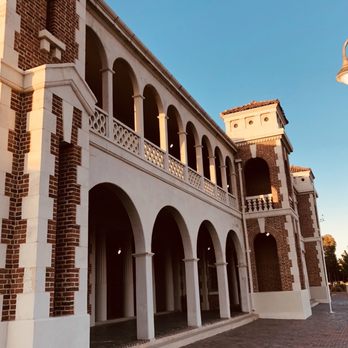


This place is incredible. Not only is a beautiful view back into history but it's also a great look into space: the NASA exhibition. Admission is free and you are always welcomed by a passionate staff. Great place to take the family of all ages and bring a picnic! read more


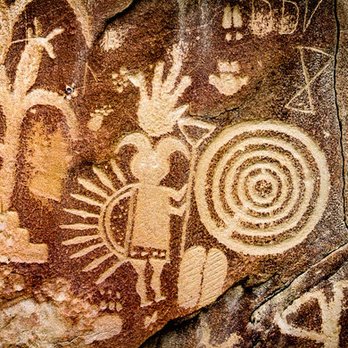


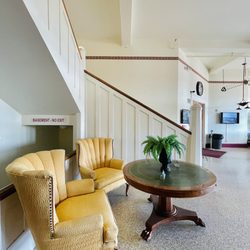
Back in 1876, Fred Harvey opened up a restaurant/hotel in Kansas by the railroad. This was the first of many stops along the rails out to California. Eventually, there were 84 Harvey Houses, roughly every hundred or so miles along the rails. At it's height, the Houses even began serving it's fare on the railroads that ran past it's numerous establishments. The hotels & restaurants were staffed by the infamous 'Harvey Girls.' The ads in the papers of the day that hired such girls requested; "young women, 18-30 years of age, of good character, attractive and intelligent." So....they were effectively the Hooters Girls of their day. The Barstow Harvey house, originally opened in 1911 as the "Casa del Desierto" is no longer a restaurant nor a hotel. It's actually an office building. There's a ballroom that's got some Harvey House artifacts in a case. Some Harvey House photographs hung on the wall. The security guard is obviously well schooled on the Harvey House information, as she was incredibly knowledgeable on the subject. I asked several questions and she easily had the answers. She informed me that this building was originally about twice the size it is now, having lost a significant portion to an earthquake. She also told me that the movie with Judy Garland made in the 1940's was actually a fairly accurate portrayal of a Harvey House. Minus all the singing and dancing. As of my visit over Columbus Day weekend in 2017, one of the current tenants is NASA. In addition to a neat lil space museum they've got here, NASA maintains a colossal deep space satellite in the nearby desert nearby. used to communicate with the Voyager spacecraft. It was simply icing on the cake of the incredibly cool & historic building. So if you're in the area of Barstow, definitely check this place out while they're open. It really is super cool. For more information: https://en.wikipedia.org/wiki/Fred_Harvey_Company For more information: https://voyager.jpl.nasa.gov/ read more


5 years ago

11 years ago
Inspired by a book called Appetite for America, I convinced my wife to accompany me on a trip out to Barstow, to see the best-preserved Harvey House remaining in California. This turns out to be a fine day trip. For most folks, Barstow is a place to stop and get a snack and fill up on gas on the road between Las Vegas and Los Angeles. The Harvey House is a piece of authentic history less than five minutes from the interstate, worth your time on that trip you want to stop and stretch your legs for more than a few minutes. Dot his if it would excite your imagination to think of the glory days of rail transit happening there -- with the Atchison, Topeka and Santa Fe rail cars stopping right there, passengers stepping off to be whisked into the first-class dining room and fed lobster americane and bluepoint oysters, get a fresh newspaper and a cigar, served by the legendary Harvey Girls, the ladies who civilized the West, before the half-hour meal stop ended and they got back on board to continue to their destinations elsewhere. Everything was engineered to create a feeling of elegance, wealth, and hospitality -- from the architecture of the building to the military-grade polish on the silverware to the fresh seafood and the friendly, formal service of the ladies in the black dresses and white aprons moving with military precision to get dozens of tables served top-grade meals, all in half an hour before the train left again. Barstow's Casa del Desierto was one of those places, and it still stands in good repair today. It has a gorgeous two-storied collonade at trackside (it's still an actively-used Amtrak stop) and many interesting architectural touches. I'm assuming that locals are still using it because the locks are in good shape and both the interior visible through the glass and the exterior are maintained, clean, and secured. What seems likely to have been the old dining room is now some sort of civic space, used for presentations with modern carpeting, a projection screen, and other indicators of its use for things like seminars and chamber of commerce mixers. Also in the building and on the nearby grounds are a Route 66 museum, which is interesting if cluttered, and a rail museum. The rail museum is the reason to come out of your way. There are quite a few items of interest from over a hundred years of rail operations in and around the area, from tools and computers to an extensive collection of date nails used to note the days when segments of track were laid. Of particular interest to me was the old Harvey Girl uniform -- a long-sleeved black shirt with a white apron and frock, which would be worn by the servers at the old restaurants. The Route 66 museum had a list of house rules governing the conduct of the Harvey Girls, which when contemplated with the conservative uniform suggests that the whole experience of being a Harvey Girl would have been more than a little bit cloistered and prim: "No makeup. No flirting with the customers. No men in the dormitory, ever." No fun for the Harvey Girls! Yet the hospitality chain had no shortage of applicants and young ladies willing to sign six-month contracts to work ten to twelve hours a day, perform to exacting standards, and to not get married until after their terms were over. The pay must have been good and according to legend, any Harvey Girl who wanted a husband would get multiple marriage proposals. They got them by working in places like Casa del Desierto, which even at a glance was obviously the grandest building in town, serving good food and letting their true personalities and appearances shine through. read more


7 years ago

12 years ago
Having seen the sign Harvey House on the California State Historical Signs for years, even decades, as I would drive between southern California and Las Vegas, I decided today was the day to investigate. What is Harvey House and why is it a California State Historical Landmark 892? The Harvey House is at the Barstow Amtrack Station. As a relic of a time gone by, there were over 80 Harvey Houses between Chicago and Los Angeles. They were train stops to allow travelers a place to sleep and something to eat. The Harvey House in Barstow was built in 1885, and rebuilt in 1906 following a fire. The building is also called Casa del Deseirto. Once with a very long and curving lunch counter, all that remains of the counter is the foundation line in the floor, and also there is a formal diner where no one under 16 was permitted and all patrons were required to dress up to code. There were hotel rooms to sleep upstairs and there is one outfitted to the era. After the Earthquake retrofit the interior is clean and empty, less a few artifacts. The guide was very helpful and knew her history. Quite Informative. After some investigation I think I need to see the Judy Garland Movie Harvey Girls to get my stories clearer about an era that we may speculate about and never really know. read more


11 years ago

9 years ago
More info about Barstow Harvey House
Ask the Community - Barstow Harvey House
Review Highlights - Barstow Harvey House

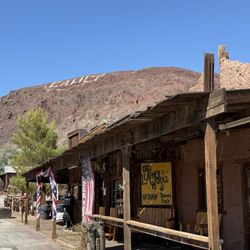












Why does Yelp recommend reviews?
1 review that is not currently recommended
The reviews below are not factored into the business's overall star rating.

3 years ago


