
Duke University Chapel Photos


More like Duke University Chapel
Recommended Reviews - Duke University Chapel
Start your review...


Reviews With Photos
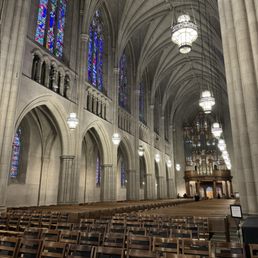

All I can say is wow, what a lovely surprise! I've been in chapels and cathedrals in nearly every continent across the world and the Duke University Chapel ranks right up there near the top. Make sure you spend some time exploring each of the areas inside and outside. It's gorgeous and full of history. Great photo opportunities.


Breathtaking!! I felt like I stepped back in time today while visiting Europe years ago and frequenting many churches. I had no idea something this majestic existed in Durham, much less on Dukes campus. This place is gorgeous. We were so fortunate today as they were having a Christmas concert and the bells were ringing. We were treated to a piano recital and a symphony during a special open house. This was truly special today.


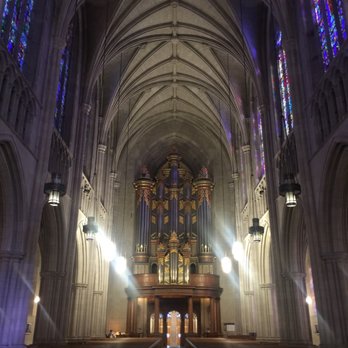
My mom and I were strolling around Duke Gardens when we noticed the signs for the chapel. It was only about 1/3 of a mile from a side entrance to the garden and was well worth the walk. I believe the parking near the chapel might be a bit tricky, especially when the college is in session. I'm not an especially religious person, but I really appreciated the architectural elements inside and outside of this building. What a gorgeous spot and so majestic. The campus itself is very beautiful and has an "Ivy League" feel to it. I marveled at the huge organ in the back of the church on my way out. The stain glass windows are vibrant and stunning as well. If you are on the Duke campus, this is a must see and won't take up much of your time.


We stopped in quickly on a hot day to cool off and enjoy the gothic architecture. It's a beautiful space and the organs are quite lovely. Since no services were happening on this random Friday, we were able to wander around the space as wished. Definitely a lovely spot to visit if you're in the area.

Loved touring this beautiful chapel! It was a short drive from downtown Durham where I was seeing a concert. The grounds are lovely to walk around, including the surrounding buildings and amazing gardens. Be sure to enjoy those places too if you're at the chapel. The place itself had beautiful lighting, allowing you to enjoy the architecture. It really reminded me of my time in England with the structure of the church interiors. The stained glass is beautiful to enjoy. I did not feel that my jeans and tshirt were a problem as one may feel they need to be dressed up to be in this church, the ambiance is inviting and wonderful.


I recommend visiting Duke Homestead before visiting Duke Chapel. It's only about a ten minute drive away, and $2 for the tour. You can see the beginnings of the tobacco and pipe fortune that Washington Duke started, and which his son, James Buchanan "Buck" Duke catapulted enough by selling cigarettes to enable him to donate the equivalent of $30-40 million dollars in today's currency to build the massive Duke Chapel and University. It's quite astonishing to see the difference 60-70 years can make in one's fortune, and the monument that resulted which looks hundreds of years old, bus is only about a century old as it was built between the 1920s and early 1930s. Actually, Duke Homestead was middle class to upper middle class for its time. The tour guide told us Washington Duke came from a middle class family, and had two wives, the second of his was wealthy named Artelia from the Roney family (you'll see a fountain called the "Roney" fountain from the sister or Washington Duke's late wife Artelia--in Duke gardens, and was originally put on Duke campus, but was moved). The main house of Duke Homestead was dedicated to Washington Duke's second wife Artelia, and is more upper middle class for the 1850s-60s, and became even more so as Washington Duke started to have success venturing from tobacco farming to pipe tobacco after the civil war. You can see that in the pricy, massive cast iron stove which was twenty years ahead of its time and which has the word "success" emblazoned on its front. But anyway, you can see what was considered upper middle class for the 1850-60, and what was astoundingly wealthy in one generation. See where the son, Buck Duke lived, and where his family's wealth ended up. It should be said that Buck Duke's mother Artelia was a Methodist, and Duke Chapel is a Methodist church. The tour guide said that Methodist Christianity became very popular perhaps around the time Artelia married his father. I am not sure what religion Buck Duke followed, but his mother died when he was two years old, caring for Buck's eldest brother shortly before the beginning of the Civil War. Duke Chapel adjoins the Duke Gardens, so it is possible to go through a latch key iron gate to pass from one to the next. The gardens is called the Sarah P. Duke gardens, who is the wife of Buck Duke's brother Benjamin, who was largely into charity. About the chapel itself, there is a tour on some days, which I believe is free and open to the public. I did not attend the tour, but I did go to the Evensong choir concert on Palm Sunday. That was also free, but had a sectioned off area for some of the pews. Not sure of the reason. I think perhaps it was the regular Catholic congregation, but I might be mistaken. The concert was about an hour long and had three songs, which tells you how lengthy the numbers were. There was an informational pamphlet distributed which had lyrics and translations for the songs, information about who made the songs and their general song structure. Very collegiate writing, with the feel of technical musical appreciation. There was information about why the hymns were selected, which I discovered I needed as it turns out the hymns were selected exactly because they were "overlooked." They were each fairly modern, from the 1960s-2000s even if one was based on a 1600s poem. I am not that familiar with Catholic hymns, but the description said the songs were modern, and they sounded modern as there was somewhat discordant organ playing and a dark abstraction to the pieces. But with points of ethereal as well as massive choral beauty. Perhaps not popular hymns for a reason, but fitting for the college campus, I suppose. The conductor had silver hair and at times was vigorous and made the better moments of the hymns more passionate. I had information from one of the attendants on another day that there is both Protestant and Catholic service at Duke Cathedral, and for the most part unless noted anyone can attend. It's just that for the Catholic service specifically (and perhaps not the Protestant) it would be better not to take the Communion, which is the symbolic bread and wine for the body and blood of Jesus Christ. I am not sure if there's a difference in this if you are Christian vs non Christian. Maybe? There was also some art prints when I visited Duke Chapel, on the walls.


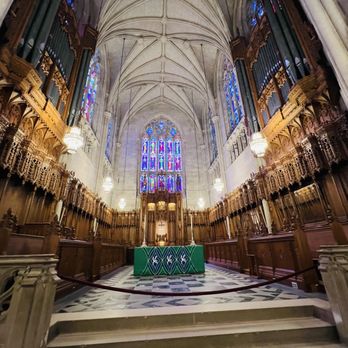
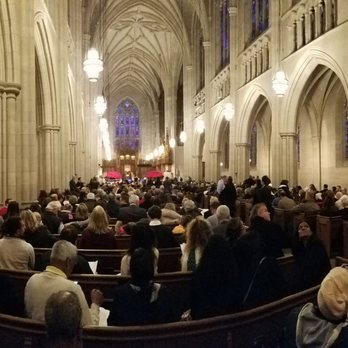
Beautiful old chapel with ornate architecture. Soaring ceiling and stained glass all around. The wonderful pipe organ sounds amazing. The outside of the chapel has that past Gothic look to it, and the steeple rises into the sky. This place is huge and if you're sitting in the back it seems far away from the altar area. We recently attended a graduation ceremony held inside the chapel, but did not have time to explore it more as the place was packed and it was a snowy rainy day. Would love to come back and attend a service, or just walk the grounds and take it all in. Yes, from what we experienced parking can be a bit of a hassle, but we parked in the large enclosed parking garage and had no problems. Yes, there is a fee but it's not too costly.
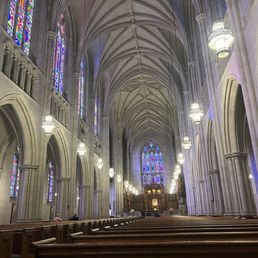


Been a stop on my bucket list since my childhood Didn't expect to be working down the road Definitely recommended for all tourists


We were lucky enough to come here this afternoon for my sons baccalaureate service. We waited in line for 45 minutes before being allowed to enter this gorgeous chapel. Stained glass windows are reminiscent of Chagall and the inside is huge and beautiful! Looking forward to the organ prelude by Johann Sebastian Bach!! Congratulations to all the Duke graduates!!


Absolutely iconic center of Duke University. In my one week residency on campus, I must have came here at least 5 times. It is such a monument of rich history and architecture! Book store, dorms, lecture halls, and sports fields are all just a skip from here.


In any other country, this building would be called a cathedral. It almost seems sacrilegious to call it a chapel. But I digress... Even though I grew up in a neighboring county before moving to the other side of the state for 20 years (and am now temporarily back), I'd never visited the Chapel at Duke University. I was recently reminded of it and attended the Sunday service this past weekend. WOW. What an incredibly beautiful church and service. I really enjoyed myself and plan to go back this Sunday, and probably many Sundays after that. Living in north Raleigh, it's a bit of a drive but I guess it says something that I don't care. The Chapel's website says it's interdenominational, but the service is decidedly Anglican (which suits me fine - just what I was looking for). Be prepared for the goosebumps and spine chills that only a pipe organ in a cathedral of that magnitude can induce. I've visited numerous very old cathedrals in Europe (Koln, St Elizabeth, St Sebastian, St Bartholoma...). While the Chapel at Duke U wasn't built in the 1500s or even the 1200s, it is no less impressive or breathtaking. Even if you're not church shopping as I have been, I highly recommend taking one Sunday just to visit the church and stick around for a tour afterward. Tip: Follow the driving directions on the Chapel's website, NOT Google Maps!


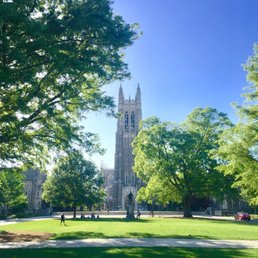
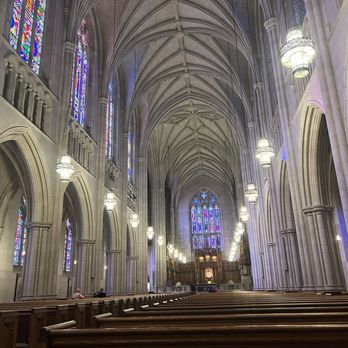
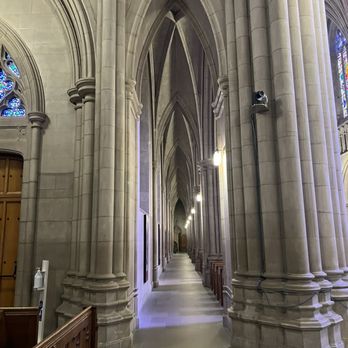
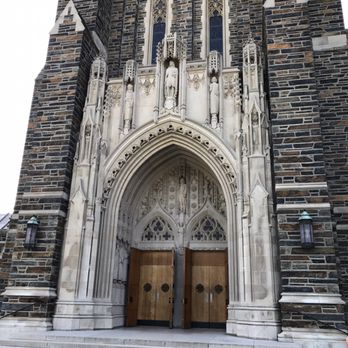
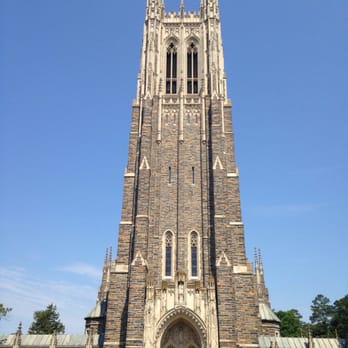
A century ago, it was common for universities in the United States to have some affiliation with a religious denomination and to have a church on campus for students and faculty. The architect for this English Gothic style chapel was Julian Abele, a prominent African-American architect in Philadelphia. The chapel was dedicated in 1935. The tower is 210 feet tall. The interior of the chapel is 291 feet by 63 feet. There are 77 stained glass windows. The stone came from a quarry twelve miles west of Durham. The chapel had a major restoration in 2016. Today, it is awesome! Admission, of course, is free. Brochures are available for a suggested $1 donation. Religious affiliation was Methodist. Thus, you can find sculptures of John Wesley, Thomas Coke, and Francis Asbury. Other sculptures are of Martin Luther, Thomas Jefferson, and others. A statue of Robert E. Lee was removed in August, 2017 (this was the only statue of a military person in the chapel). The chapel tower has a 50 bell carillon, which can be heard weekdays at 5 pm and Sunday mornings after services. The Duke University Chapel is worth seeing if you are in Durham. Also, the Duke Gardens are just a 5 minute walk away. Take a little time to go there too, weather permitting.


I have no idea where I parked, but the "discovery walk" revealing the chapel was actually a fun part of my experience. As it started peaking through the trees on a misty day, the whole scene felt surreal and very goth-romance. Inside, the stained glass is gorgeous, and there's plenty of literature along the way to dive into the history of this iconic site. If you're visiting Duke campus, definitely check it out. read more


Immaculate, gorgeous, and inspirational. Once I walked in through the large doors out front, an immediate reverence came over me. I was sweating from the heat and humidity, but thoroughly enjoyed walking all over the campus beforehand. The stained glass windows, the sheer size, the ornate level of detail with the woodwork, the craftsmanship that went into this, is unreal. Simply gorgeous and amazing, and so happy I came by to check this out. Inside and out, just phenomenal! read more


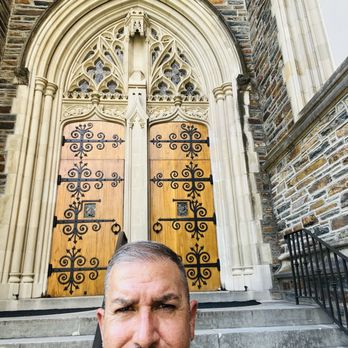


All I can say is wow, what a lovely surprise! I've been in chapels and cathedrals in nearly every continent across the world and the Duke University Chapel ranks right up there near the top. Make sure you spend some time exploring each of the areas inside and outside. It's gorgeous and full of history. Great photo opportunities. read more
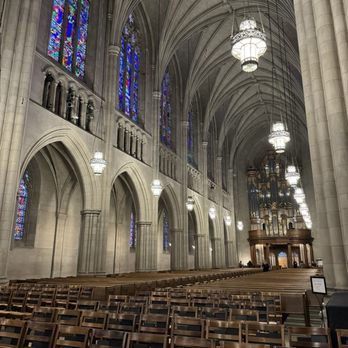


Breathtaking!! I felt like I stepped back in time today while visiting Europe years ago and frequenting many churches. I had no idea something this majestic existed in Durham, much less on Dukes campus. This place is gorgeous. We were so fortunate today as they were having a Christmas concert and the bells were ringing. We were treated to a piano recital and a symphony during a special open house. This was truly special today. read more


My mom and I were strolling around Duke Gardens when we noticed the signs for the chapel. It was only about 1/3 of a mile from a side entrance to the garden and was well worth the walk. I believe the parking near the chapel might be a bit tricky, especially when the college is in session. I'm not an especially religious person, but I really appreciated the architectural elements inside and outside of this building. What a gorgeous spot and so majestic. The campus itself is very beautiful and has an "Ivy League" feel to it. I marveled at the huge organ in the back of the church on my way out. The stain glass windows are vibrant and stunning as well. If you are on the Duke campus, this is a must see and won't take up much of your time. read more


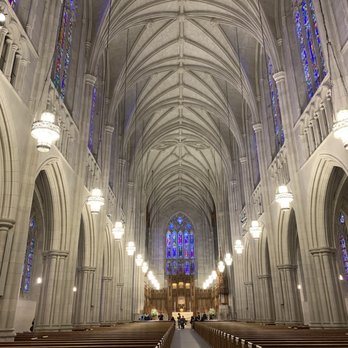


We stopped in quickly on a hot day to cool off and enjoy the gothic architecture. It's a beautiful space and the organs are quite lovely. Since no services were happening on this random Friday, we were able to wander around the space as wished. Definitely a lovely spot to visit if you're in the area. read more


8 years ago
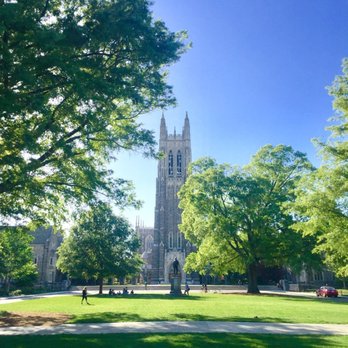
Loved touring this beautiful chapel! It was a short drive from downtown Durham where I was seeing a concert. The grounds are lovely to walk around, including the surrounding buildings and amazing gardens. Be sure to enjoy those places too if you're at the chapel. The place itself had beautiful lighting, allowing you to enjoy the architecture. It really reminded me of my time in England with the structure of the church interiors. The stained glass is beautiful to enjoy. I did not feel that my jeans and tshirt were a problem as one may feel they need to be dressed up to be in this church, the ambiance is inviting and wonderful. read more




3 years ago
I recommend visiting Duke Homestead before visiting Duke Chapel. It's only about a ten minute drive away, and $2 for the tour. You can see the beginnings of the tobacco and pipe fortune that Washington Duke started, and which his son, James Buchanan "Buck" Duke catapulted enough by selling cigarettes to enable him to donate the equivalent of $30-40 million dollars in today's currency to build the massive Duke Chapel and University. It's quite astonishing to see the difference 60-70 years can make in one's fortune, and the monument that resulted which looks hundreds of years old, bus is only about a century old as it was built between the 1920s and early 1930s. Actually, Duke Homestead was middle class to upper middle class for its time. The tour guide told us Washington Duke came from a middle class family, and had two wives, the second of his was wealthy named Artelia from the Roney family (you'll see a fountain called the "Roney" fountain from the sister or Washington Duke's late wife Artelia--in Duke gardens, and was originally put on Duke campus, but was moved). The main house of Duke Homestead was dedicated to Washington Duke's second wife Artelia, and is more upper middle class for the 1850s-60s, and became even more so as Washington Duke started to have success venturing from tobacco farming to pipe tobacco after the civil war. You can see that in the pricy, massive cast iron stove which was twenty years ahead of its time and which has the word "success" emblazoned on its front. But anyway, you can see what was considered upper middle class for the 1850-60, and what was astoundingly wealthy in one generation. See where the son, Buck Duke lived, and where his family's wealth ended up. It should be said that Buck Duke's mother Artelia was a Methodist, and Duke Chapel is a Methodist church. The tour guide said that Methodist Christianity became very popular perhaps around the time Artelia married his father. I am not sure what religion Buck Duke followed, but his mother died when he was two years old, caring for Buck's eldest brother shortly before the beginning of the Civil War. Duke Chapel adjoins the Duke Gardens, so it is possible to go through a latch key iron gate to pass from one to the next. The gardens is called the Sarah P. Duke gardens, who is the wife of Buck Duke's brother Benjamin, who was largely into charity. About the chapel itself, there is a tour on some days, which I believe is free and open to the public. I did not attend the tour, but I did go to the Evensong choir concert on Palm Sunday. That was also free, but had a sectioned off area for some of the pews. Not sure of the reason. I think perhaps it was the regular Catholic congregation, but I might be mistaken. The concert was about an hour long and had three songs, which tells you how lengthy the numbers were. There was an informational pamphlet distributed which had lyrics and translations for the songs, information about who made the songs and their general song structure. Very collegiate writing, with the feel of technical musical appreciation. There was information about why the hymns were selected, which I discovered I needed as it turns out the hymns were selected exactly because they were "overlooked." They were each fairly modern, from the 1960s-2000s even if one was based on a 1600s poem. I am not that familiar with Catholic hymns, but the description said the songs were modern, and they sounded modern as there was somewhat discordant organ playing and a dark abstraction to the pieces. But with points of ethereal as well as massive choral beauty. Perhaps not popular hymns for a reason, but fitting for the college campus, I suppose. The conductor had silver hair and at times was vigorous and made the better moments of the hymns more passionate. I had information from one of the attendants on another day that there is both Protestant and Catholic service at Duke Cathedral, and for the most part unless noted anyone can attend. It's just that for the Catholic service specifically (and perhaps not the Protestant) it would be better not to take the Communion, which is the symbolic bread and wine for the body and blood of Jesus Christ. I am not sure if there's a difference in this if you are Christian vs non Christian. Maybe? There was also some art prints when I visited Duke Chapel, on the walls. read more


Beautiful old chapel with ornate architecture. Soaring ceiling and stained glass all around. The wonderful pipe organ sounds amazing. The outside of the chapel has that past Gothic look to it, and the steeple rises into the sky. This place is huge and if you're sitting in the back it seems far away from the altar area. We recently attended a graduation ceremony held inside the chapel, but did not have time to explore it more as the place was packed and it was a snowy rainy day. Would love to come back and attend a service, or just walk the grounds and take it all in. Yes, from what we experienced parking can be a bit of a hassle, but we parked in the large enclosed parking garage and had no problems. Yes, there is a fee but it's not too costly. read more




3 years ago
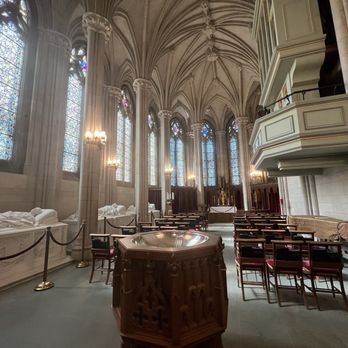
Absolutely gorgeous. We went on a Thursday at 1 to hear the organist play. The deacon gave us the history and that was an added treat. If you enjoy the beauty of a church- this one is a must! read more





6 years ago
Been a stop on my bucket list since my childhood Didn't expect to be working down the road Definitely recommended for all tourists read more


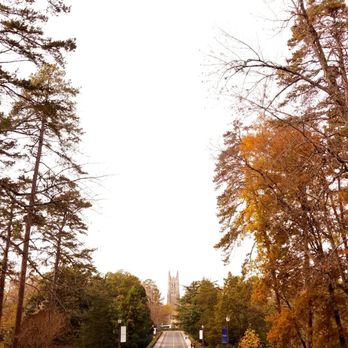


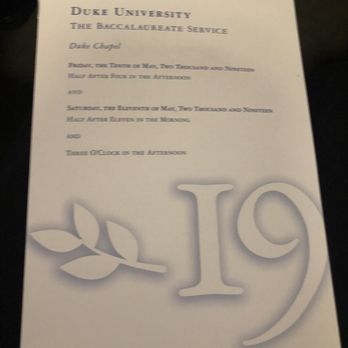
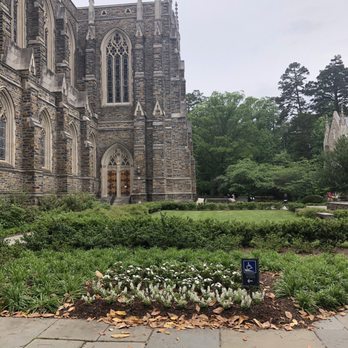
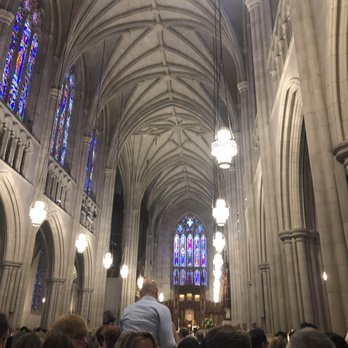
We were lucky enough to come here this afternoon for my sons baccalaureate service. We waited in line for 45 minutes before being allowed to enter this gorgeous chapel. Stained glass windows are reminiscent of Chagall and the inside is huge and beautiful! Looking forward to the organ prelude by Johann Sebastian Bach!! Congratulations to all the Duke graduates!! read more



4 years ago
Absolutely iconic center of Duke University. In my one week residency on campus, I must have came here at least 5 times. It is such a monument of rich history and architecture! Book store, dorms, lecture halls, and sports fields are all just a skip from here. read more


In any other country, this building would be called a cathedral. It almost seems sacrilegious to call it a chapel. But I digress... Even though I grew up in a neighboring county before moving to the other side of the state for 20 years (and am now temporarily back), I'd never visited the Chapel at Duke University. I was recently reminded of it and attended the Sunday service this past weekend. WOW. What an incredibly beautiful church and service. I really enjoyed myself and plan to go back this Sunday, and probably many Sundays after that. Living in north Raleigh, it's a bit of a drive but I guess it says something that I don't care. The Chapel's website says it's interdenominational, but the service is decidedly Anglican (which suits me fine - just what I was looking for). Be prepared for the goosebumps and spine chills that only a pipe organ in a cathedral of that magnitude can induce. I've visited numerous very old cathedrals in Europe (Koln, St Elizabeth, St Sebastian, St Bartholoma...). While the Chapel at Duke U wasn't built in the 1500s or even the 1200s, it is no less impressive or breathtaking. Even if you're not church shopping as I have been, I highly recommend taking one Sunday just to visit the church and stick around for a tour afterward. Tip: Follow the driving directions on the Chapel's website, NOT Google Maps! read more


A century ago, it was common for universities in the United States to have some affiliation with a religious denomination and to have a church on campus for students and faculty. The architect for this English Gothic style chapel was Julian Abele, a prominent African-American architect in Philadelphia. The chapel was dedicated in 1935. The tower is 210 feet tall. The interior of the chapel is 291 feet by 63 feet. There are 77 stained glass windows. The stone came from a quarry twelve miles west of Durham. The chapel had a major restoration in 2016. Today, it is awesome! Admission, of course, is free. Brochures are available for a suggested $1 donation. Religious affiliation was Methodist. Thus, you can find sculptures of John Wesley, Thomas Coke, and Francis Asbury. Other sculptures are of Martin Luther, Thomas Jefferson, and others. A statue of Robert E. Lee was removed in August, 2017 (this was the only statue of a military person in the chapel). The chapel tower has a 50 bell carillon, which can be heard weekdays at 5 pm and Sunday mornings after services. The Duke University Chapel is worth seeing if you are in Durham. Also, the Duke Gardens are just a 5 minute walk away. Take a little time to go there too, weather permitting. read more


I would be hard pressed to find anything at Duke University that isn't 5 stars, but the University Chapel is a defining plateau and staple of the University. Its classic architectural style and steeple that hovers almost into the clouds without a doubt is gorgeous both inside and out. There are major cities that don't have a building that beautiful to call their own. This stands proud in the center of the courtyard surrounded by administration buildings an a grassy mall. With the stone walkways on both sides, you almost feel like you are walking through 18th century Paris or Rome. This is a spectacle to see. Whether you are religious or not and happen to be in the Durham, NC area, make a stop on campus and experience this chapel. read more


Proud symbol of Duke University, and a great place to visit. Though it is undergoing quite a bit construction right now, the chapel is a gorgeous sight both inside and outside. The gothic architecture and stained glass windows are lovely to behold. Up to 2014 they always hdld freshman convocation here where Maya Angelou is the guest speaker, though I have been fortunate enough to perform in the chapel with the Duke Chorale and can attest to the fantastic acoustics of the building. In addition, if you are a Duke student who knows an adult who would chaperone, you can climb the 400+ steps to the top of the chapel for a stunning 360 degree view of campus. Also if you email beforehand you can visit the carrel ringer (he's in charge of ringing the bells every weekday at 5 pm) and watch him perform, which is something on my Duke bucket list. read more


One of the more pictureque churches on the coast. An incredible spot to stop in and just take the place in. Concerts are amazing with an organ that's seriously amazing! Going when the sun is out makes for some incredible pictures inside and out. Worth seeing more than once if you've got the chance! read more


9 years ago
This is a beautiful chapel and the inside has phenomenal architecture and stained glass. It is really peaceful and worth a visit to if you are on Duke's campus. They have a lot of events here as well like music and arts so check that out too. I definitely enjoyed my visit here and would come back again. read more


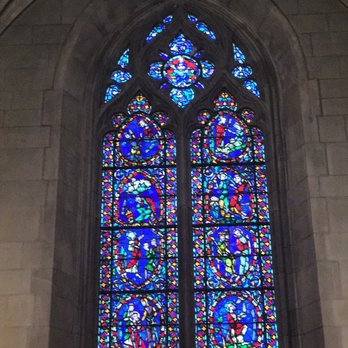

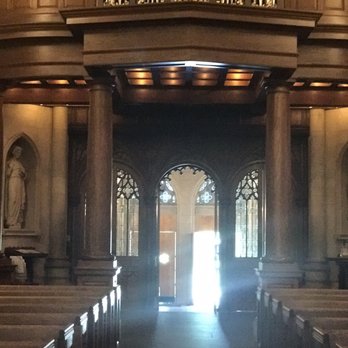
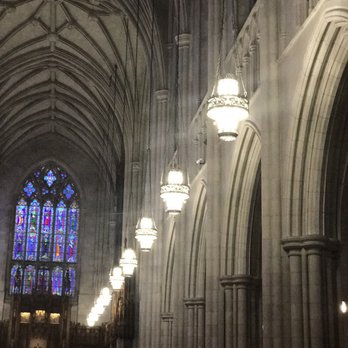


We went here late in the afternoon on a Sunday. This is very beautiful and I only wish we had attended a service here. The pipe organ is gorgeous along with the stained glass windows and the various seating areas and alters. The woodwork is phenomenal. Upon entering, there is a person at a desk ready to answer any questions you may have. We sat and prayed for a bit and enjoyed the beauty and solitude of this beautiful chapel. The surrounding grounds and buildings add to its beauty! read more


11 years ago

12 years ago
A breathtaking space. Gentleman at the information desk was very friendly and extremely knowledgeable about all aspects of the chapel. read more


7 years ago

12 years ago
This place is a must see if you're in the area. It is breathtaking and beautiful both inside and out. They even have a scavenger hint for the kids - see photo :) read more


9 years ago

11 years ago
7 years ago


13 years ago
More info about Duke University Chapel
Ask the Community - Duke University Chapel
Is there a charge to visit?
No charge to visit but good to look up hours before visiting. Parking is not free, might be good to park at the DukeGardens paid lot
Review Highlights - Duke University Chapel






















Why does Yelp recommend reviews?


Duke University Chapel - churches - Updated September 2026
Browse Nearby
BEST of Durham, North Carolina Restaurants near Duke University Chapel
BEST of Durham, North Carolina Coffee near Duke University Chapel
BEST of Durham, North Carolina Things to Do near Duke University Chapel
BEST of Durham, North Carolina Breakfast near Duke University Chapel
BEST of Durham, North Carolina Gyms near Duke University Chapel
BEST of Durham, North Carolina Thrift Stores near Duke University Chapel
Browse Brands
Related Searches in Durham, NC
Best Animal Shelters for Pets in Durham, North Carolina
Best Christian Preschools Available in Durham, North Carolina
Best Kindergarten Schools Located in Durham, North Carolina
Best Religious Schools and Education in Durham, North Carolina
Bible Study Fellowship Options in Durham, North Carolina
Browse Catholic Schools Available in Durham, North Carolina
Discover Charming Historic Homes in Durham, North Carolina
Discover Religious Organizations in Durham, North Carolina
Enjoy the Best Walking Trails in Durham, North Carolina
Experience Gospel Music in Durham, North Carolina
Explore Aa Meetings Available in Durham, North Carolina
Explore Beautiful Parks and Green Spaces in Durham, North Carolina
Explore Children's Museums Near Durham, North Carolina
Explore Community Centers Available in Durham, North Carolina
Explore Free Preschools Near Durham, North Carolina
Explore Landmarks & Historical Buildings in Durham, North Carolina
Explore Local Charities in Durham, North Carolina
Explore Non Profit Organizations Based in Durham, North Carolina
Explore Places of Worship in Durham, North Carolina
Explore Preschools Available in Durham, North Carolina
Explore Private Elementary Schools Near Durham, North Carolina
Explore Senior Centers Near You in Durham, North Carolina
Explore Summer Camps for All Ages in Durham, North Carolina
Explore Top Retreat Centers Near Durham, North Carolina
Explore Top Spiritual Centers Around Durham, North Carolina
Explore Youth Groups in Durham, North Carolina for All Ages
Find Catholic Churches and Services in Durham, North Carolina
Find Catholic Mass Times and Locations in Durham, North Carolina
Find Gospel Choir Performances in Durham, North Carolina
Find Mosques for Worship and Events in Durham, North Carolina
Find Top Private Schools in Durham, North Carolina for Your Family
Find the Best Choirs Performing in Durham, North Carolina
Find the Best Daycares Serving Durham, North Carolina
Get Christian Counseling Services in Durham, North Carolina
Join Fun Vacation Bible School Programs in Durham, North Carolina
Locate a Peaceful Chapel for Events in Durham, North Carolina
Meet at a Christian Cafe in Durham, North Carolina
Plan Meaningful Baptism Ceremonies in Durham, North Carolina
Popular Places to Take Pictures in Durham, North Carolina
Quality Christian Daycare in Durham, North Carolina
Top-Rated Plantation Tours Near Durham, North Carolina
Tour Popular Historical Sites in Durham, North Carolina
Visit Popular Museums in Durham, North Carolina Now
Visit Religious & Spiritual Places in Durham, North Carolina
People found Duke University Chapel by searching for…
Non-Denominational Church in Durham, NC
Churches With Evening Services in Durham, NC
Beautiful Churches in Durham, NC
Homeless Shelters in Durham, NC
Pentecostal Churches in Durham, NC
Spiritual Centers in Durham, NC
Sunday Night Church Services in Durham, NC
Christian Church in Durham, NC
Episcopal Church in Durham, NC
Evangelical Churches in Durham, NC
Orthodox Churches in Durham, NC
Trending Searches in Durham, NC
Apple Orchards near Duke University Chapel
Apple Picking near Duke University Chapel
Barbershop near Duke University Chapel
Bike Shop near Duke University Chapel
Casinos near Duke University Chapel
Consignment Shops near Duke University Chapel
Ear Piercing near Duke University Chapel
Estheticians near Duke University Chapel
Eyebrow Threading near Duke University Chapel
Eyelash Extensions near Duke University Chapel
Hair Braiding near Duke University Chapel
Kids Haircut near Duke University Chapel
Private Schools near Duke University Chapel


