
Gateway Clinics
Services - Gateway Clinics
Individual therapy
Gateway Clinics Photos
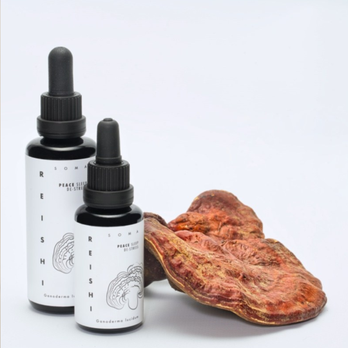


You might also consider


More like Gateway Clinics
Portfolio From The Business
![All About Ketamine Therapy - Visit our website to learn more about ketamine therapy. https://gateway-clinics.com/#ketamine-therapy
The History of Ketamine
Ketamine is a medication, approved in 1970 by the United States Food and Drug Administration [FDA], which has been used predominantly to start and maintain anesthesia but was first used in the treatment of battlefield injuries to American soldiers during the Vietnam War.
First discovered in 1956, and synthesized by Calvin L. Stevens in 1962, ketamine is used to induce a dissociative amnesia which puts patients into a trance-like state, and provides them relief from pain in addition to sedation.
What sets ketamine apart from the rest as an anesthetic is that the patient’s airway and breathing reflexes are preserved, their blood pressure is increased to stimulate heart function, and their bronchodilation is modulated. It is a dissociative drug which intercepts between the brain receptors and chemicals. It relaxes the muscles that are causing pain, and produces visual and auditory distortion which eventually causes detachment from reality. Once the mind is away from reality, it automatically forgets the trauma or any past experience, thus offering a state of complete relaxation.
How it all started
Ketamine was first discovered because of phencyclidine—an anesthetic which would prove to be unsuitable for use on humans. Chemists at Parke-Davis began experimenting, and searching for anesthetic agents in the organic compound known as cyclohexylamine. The main purpose was to find analgesic properties in these agents.
Through different processes and experiments, chemist Maddox discovered a process which led to the synthesis of phencyclidine. Before being synthesized, it was being administered on different animals, including monkeys, pigeons, dogs, and rodents to see the effects it had on pain receptors, and how the different animals’ minds reacted to pain with the help of the chemical compound. Even though the drug did ease their pain and relaxed the muscles, it caused the animals to appear drunk and delirious.
A similar side effect was unfortunately observed in the human patients on whom the drug was tested. They would wake from their amnesia in a state of acute emergence delirium, one that would last long hours even after the operation was completed.
What Happened Next?
Undeterred by the results, scientists and chemists redirected their energy toward other analogs of the drug—those which were short-acting, and began attempts to synthesize them so they could be acceptable for human use. Most of these would prove to have similar anesthetic reactions.
However, in 1962, Dr. Calvin Lee Stevens of Wayne State University managed to synthesize a sequence of phencyclidine derivatives which he hoped would work as short-acting anesthetics. He sent off the different compounds for pharmalogical testing on animals, and one of them—originally titled C1-581—was found to be so successful it was selected for testing on humans. The compound is known today as ketamine: from the ketone and the amine group found in its chemical structure.
The first human dose for anesthetic purposes was administered in 1964 by Dr. Guenter Corssen and Dr. Edward Domino. The professors used the drug on a sample size of 130 patients, and the results concluded that this drug agent could actually have profound analgesia and alters the state of mind of the patients. These effects were short lived but could be increased with an increased dose or repeated administration.
There were minimal side effects of the drug, especially compared to its parent drug phencyclidine, and there was also a complete lack of, or only minimal, emergence delirium. Ketalar became the first preparation of ketamine to be approved, in 1970, by the FDA for human use.
The Present and the Future
Ketamine has been administered clinically over the years, and was used extensively during the Vietnam War as a surgical anesthetic because of its safety. It has been listed on the World Health Organization’s List of Essential Medicines.
More recent research, particularly since 1994, has shown that ketamine, when used properly under medical supervision, can help treat—and even prevent—certain mental distresses, including depression, anxiety, suicidal ideation, obsessive-compulsive disorder [OCD], and post traumatic stress disorder [PTSD]. It is also an effective method of treating several chronic pain syndromes, including burns, migraines, and fibromyalgia. In 2012, ketamine was identified as “the biggest breakthrough in depression research in a half century” by researchers. The introduction of Ketamine IV treatments has streamlined the dosage and onset of ketamine so it can be administered consistently with the guidance of specialists.](https://s3-media0.fl.yelpcdn.com/bphoto/xu0d-wA0oIJIzoqyE4jASQ/l.jpg "All About Ketamine Therapy - Visit our website to learn more about ketamine therapy. https://gateway-clinics.com/#ketamine-therapy
The History of Ketamine
Ketamine is a medication, approved in 1970 by the United States Food and Drug Administration [FDA], which has been used predominantly to start and maintain anesthesia but was first used in the treatment of battlefield injuries to American soldiers during the Vietnam War.
First discovered in 1956, and synthesized by Calvin L. Stevens in 1962, ketamine is used to induce a dissociative amnesia which puts patients into a trance-like state, and provides them relief from pain in addition to sedation.
What sets ketamine apart from the rest as an anesthetic is that the patient’s airway and breathing reflexes are preserved, their blood pressure is increased to stimulate heart function, and their bronchodilation is modulated. It is a dissociative drug which intercepts between the brain receptors and chemicals. It relaxes the muscles that are causing pain, and produces visual and auditory distortion which eventually causes detachment from reality. Once the mind is away from reality, it automatically forgets the trauma or any past experience, thus offering a state of complete relaxation.
How it all started
Ketamine was first discovered because of phencyclidine—an anesthetic which would prove to be unsuitable for use on humans. Chemists at Parke-Davis began experimenting, and searching for anesthetic agents in the organic compound known as cyclohexylamine. The main purpose was to find analgesic properties in these agents.
Through different processes and experiments, chemist Maddox discovered a process which led to the synthesis of phencyclidine. Before being synthesized, it was being administered on different animals, including monkeys, pigeons, dogs, and rodents to see the effects it had on pain receptors, and how the different animals’ minds reacted to pain with the help of the chemical compound. Even though the drug did ease their pain and relaxed the muscles, it caused the animals to appear drunk and delirious.
A similar side effect was unfortunately observed in the human patients on whom the drug was tested. They would wake from their amnesia in a state of acute emergence delirium, one that would last long hours even after the operation was completed.
What Happened Next?
Undeterred by the results, scientists and chemists redirected their energy toward other analogs of the drug—those which were short-acting, and began attempts to synthesize them so they could be acceptable for human use. Most of these would prove to have similar anesthetic reactions.
However, in 1962, Dr. Calvin Lee Stevens of Wayne State University managed to synthesize a sequence of phencyclidine derivatives which he hoped would work as short-acting anesthetics. He sent off the different compounds for pharmalogical testing on animals, and one of them—originally titled C1-581—was found to be so successful it was selected for testing on humans. The compound is known today as ketamine: from the ketone and the amine group found in its chemical structure.
The first human dose for anesthetic purposes was administered in 1964 by Dr. Guenter Corssen and Dr. Edward Domino. The professors used the drug on a sample size of 130 patients, and the results concluded that this drug agent could actually have profound analgesia and alters the state of mind of the patients. These effects were short lived but could be increased with an increased dose or repeated administration.
There were minimal side effects of the drug, especially compared to its parent drug phencyclidine, and there was also a complete lack of, or only minimal, emergence delirium. Ketalar became the first preparation of ketamine to be approved, in 1970, by the FDA for human use.
The Present and the Future
Ketamine has been administered clinically over the years, and was used extensively during the Vietnam War as a surgical anesthetic because of its safety. It has been listed on the World Health Organization’s List of Essential Medicines.
More recent research, particularly since 1994, has shown that ketamine, when used properly under medical supervision, can help treat—and even prevent—certain mental distresses, including depression, anxiety, suicidal ideation, obsessive-compulsive disorder [OCD], and post traumatic stress disorder [PTSD]. It is also an effective method of treating several chronic pain syndromes, including burns, migraines, and fibromyalgia. In 2012, ketamine was identified as “the biggest breakthrough in depression research in a half century” by researchers. The introduction of Ketamine IV treatments has streamlined the dosage and onset of ketamine so it can be administered consistently with the guidance of specialists.")

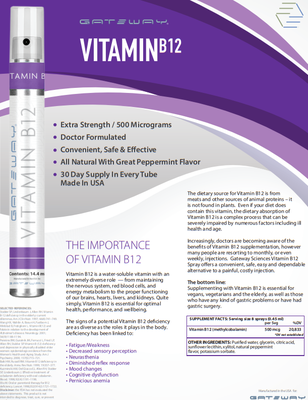
Recommended Reviews - Gateway Clinics
Start your review...


Reviews With Photos
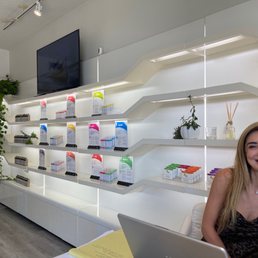
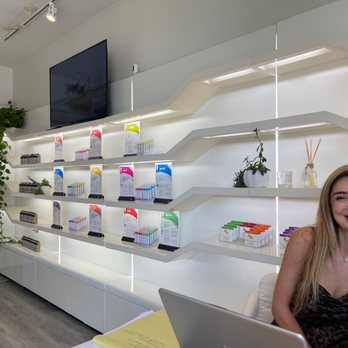
i came across this business and they have wonderful products for wellness, medicinal mushrooms, healthy healing chocolate and very good service to explain their ketamine treatments I got a couple of wonderful products and got all the assistance I needed to under sat and ketamine I highly recommend them

1 month ago
5 months ago

4 years ago

3 years ago

5 years ago

5 years ago

5 years ago
5 years ago
i came across this business and they have wonderful products for wellness, medicinal mushrooms, healthy healing chocolate and very good service to explain their ketamine treatments I got a couple of wonderful products and got all the assistance I needed to under sat and ketamine I highly recommend them read more
3 years ago

4 years ago
3 years ago

5 years ago

4 years ago

5 years ago

5 years ago

5 years ago

5 years ago
5 years ago
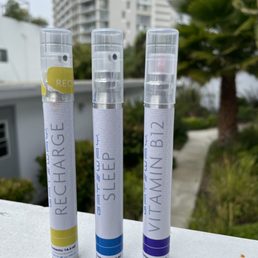
We stopped into this store out of curiosity and we're pleasantly surprised! They have a lot of cool and useful supplements. We decided to try their spray vitamins. I'm usually fatigued and the Recharge and B12 spray vitamin helped me stay active and not tired for my sister's wedding. The sleep vitamin spray helped us fall asleep in a matter of minutes. I love that they're made from all natural ingredients. read more
4 years ago

5 years ago
3 years ago
4 years ago

5 years ago

5 years ago
4 years ago
4 years ago
5 years ago
5 years ago
5 years ago
More info about Gateway Clinics
1205 1/2 Montana Ave
Santa Monica, CA 90403
Directions
(424) 330-0000
Call Now
Visit Website
http://www.gateway-clinics.com
Hours
Other Amenities
From the Business
Ask the Community - Gateway Clinics
Do you treat cancer patients?
Hi Angie, yes we do. Please feel free to contact me directly on 3103887086. Warmest regards, Zohreh
Review Highlights - Gateway Clinics
You might also consider





















Why does Yelp recommend reviews?
14 reviews that are not currently recommended
The reviews below are not factored into the business's overall star rating.
2 years ago
2 years ago
5 years ago
5 years ago
3 years ago
4 years ago
5 years ago
5 years ago
5 years ago

4 years ago

4 years ago
4 years ago
5 years ago
5 years ago
Gateway Clinics - ivhydration - Updated September 2026
Browse Nearby
BEST of Santa Monica, California Coffee near Gateway Clinics
BEST of Santa Monica, California Things to Do near Gateway Clinics
BEST of Santa Monica, California Restaurants near Gateway Clinics
BEST of Santa Monica, California B12 Shots near Gateway Clinics
BEST of Santa Monica, California Botox near Gateway Clinics
BEST of Santa Monica, California Peptide Therapy near Gateway Clinics
BEST of Santa Monica, California Pilates near Gateway Clinics
BEST of Santa Monica, California Hangover Food near Gateway Clinics
BEST of Santa Monica, California Vitamins near Gateway Clinics
Browse Brands
Related Searches in Santa Monica, CA
Access Behavioral Health Services in Santa Monica, California
Addiction Medicine Specialists in Santa Monica, California
Affordable Botox Injections in Santa Monica, California
Affordable Botox and Fillers in Santa Monica, California
Affordable Coolsculpting Options in Santa Monica, California
Best Body Sculpting Treatments in Santa Monica, California
Best Colon Hydrotherapy Treatments in Santa Monica, California
Best Cryotherapy Clinics to Visit in Santa Monica, California
Best Infrared Sauna Experiences in Santa Monica, California
Best Places for B12 Shots in Santa Monica, California
Best Testosterone Replacement Therapy in Santa Monica, California
Best Vitamin IV Drip Services in Santa Monica, California
Book Effective Couples Therapy Sessions in Santa Monica, California
Book Ozone Therapy Treatments in Santa Monica, California
Certified Functional Medicine Doctor in Santa Monica, California
Christian Marriage Counseling Services in Santa Monica, California
Connect With a Licensed Therapist in Santa Monica, California
Connect With a Naturopathic Doctor in Santa Monica, California
Connect With a Top Spine Specialist in Santa Monica, California
Connect With an Adhd Psychiatrist in Santa Monica, California
Connect With an Anxiety Therapist in Santa Monica, California
Consult a Private Practice Doctor in Santa Monica, California
Consult a Skilled Neurologist Near Santa Monica, California
Consult a Skilled Neurosurgeon in Santa Monica, California
Consult an Experienced Adhd Doctor in Santa Monica, California
Discover Effective Hypnosis Services Available in Santa Monica, California
Discover Medical Spas Near Santa Monica, California
Discover the Best Medspa Services in Santa Monica, California
Doctors Who Prescribe Pain Pills
Effective Couples Counseling Services in Santa Monica, California
Effective Dry Needling Therapy in Santa Monica, California
Effective EMDR Treatments in Santa Monica, California
Effective Iv Drip Therapy in Santa Monica, California
Effective Iv Hydration Therapy in Santa Monica, California
Effective Medical Weight Loss Solutions in Santa Monica, California
Effective Psychotherapy Options in Santa Monica, California
Effective Weight Loss Programs in Santa Monica, California
Experience Professional Hypnotherapy Services in Santa Monica, California
Experience Reiki Healing Services in Santa Monica, California
Experienced Back Pain Doctors in Santa Monica, California
Experienced Child Psychiatrist Near Santa Monica, California
Experienced Family Therapist Services in Santa Monica, California
Experienced Hand Surgeon Options in Santa Monica, California
Experienced Orthopedic Surgeon in Santa Monica, California
Experienced Podiatrists Serving Patients in Santa Monica, California
Experienced Primary Care Physician in Santa Monica, California
Experienced Psychiatrists Near Santa Monica, California
Experienced Psychologists Near You in Santa Monica, California
Experienced Rheumatologists Practicing in Santa Monica, California
Experienced Shoulder Specialists Serving Santa Monica, California
Service Offerings Nearby
People found Gateway Clinics by searching for…
Iv Therapy in Santa Monica, CA
Ketamine Therapy in Santa Monica, CA
Ketamine Infusion in Santa Monica, CA
Infusion Center in Santa Monica, CA
Medical Spas in Santa Monica, CA
Nurse Practitioner in Santa Monica, CA
Naturopathic/Holistic in Santa Monica, CA
Medical Group in Santa Monica, CA
B12 Injections in Santa Monica, CA
Lipotropic Injections in Santa Monica, CA
Glutathione Iv in Santa Monica, CA
Adhd Coach in Santa Monica, CA
Osteopathic Physicians in Santa Monica, CA
Sleep Study in Santa Monica, CA
Adhd Doctor in Santa Monica, CA
Iron Infusion in Santa Monica, CA
Trending Searches in Santa Monica, CA
Apple Orchards near Gateway Clinics
Apple Picking near Gateway Clinics
Barbershop near Gateway Clinics
Bike Shop near Gateway Clinics
Child Therapist near Gateway Clinics
Cognitive Behavioral Therapy near Gateway Clinics
Consignment Shops near Gateway Clinics
Counseling & Mental Health near Gateway Clinics
Ear Piercing near Gateway Clinics
Estheticians near Gateway Clinics
Eyebrow Threading near Gateway Clinics
Eyelash Extensions near Gateway Clinics
Hair Braiding near Gateway Clinics
Kids Haircut near Gateway Clinics
Private Schools near Gateway Clinics
Psychiatric Hospitals near Gateway Clinics
Psychologists near Gateway Clinics
Teen Counseling near Gateway Clinics


