Cancel

    Open app

    Search

    Lee Fong Park

    2.0 (2 reviews)

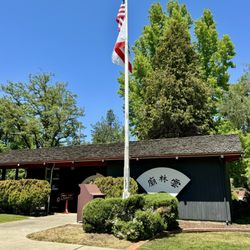
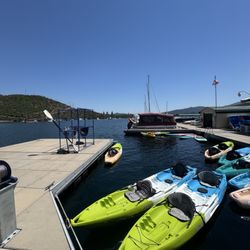
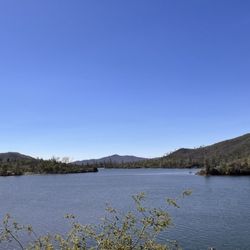
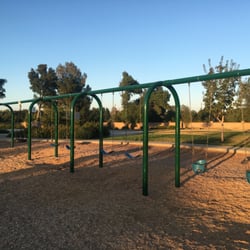
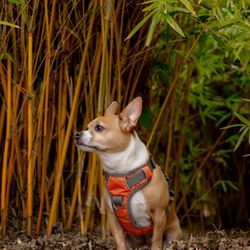
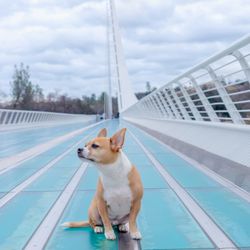
    Lee Fong Park Photos

    You might also consider

    Recommended Reviews - Lee Fong Park

    Your trust is our priority, so businesses can't pay to alter or remove their reviews. Learn more about reviews.
    Yelp app icon
    Browse more easily on the app
    Review Feed Illustration

    1 year ago

    Helpful 0
    Thanks 0
    Love this 0
    Oh no 0

    1 year ago

    Helpful 0
    Thanks 0
    Love this 0
    Oh no 0

    Verify this business for free

    Get access to customer & competitor insights.

    Verify this business

    Weaverville Joss House SHP - 05.26.24 adjoining priest's quarters

    Weaverville Joss House SHP

    4.5(12 reviews)
    0.2 mi

    The "Temple of the Forest Beneath the Clouds," also known as the Weaverville Joss House State…read moreHistoric Park, is a remarkable historical site due to how well it is decorated and preserved. It truly offers a unique glimpse into the lives of Chinese immigrants in early California. In the late 19th and early 20th centuries, a significant majority of Chinese emigration to North America originated from the Sze Yup (The four counties) region of Guangdong province in China. These counties are located on the west side of the Pearl River Delta. This region includes Taishan (Toi Shan), Kaiping, Xinhui, and Enping. Taishan was the largest source of these immigrants. The exodus was caused by severe ethnic wars. The Punti-Hakka Clan Wars were a conflict between the Hakka and the Cantonese people in Guangdong, China between 1855 and 1867. The wars were fiercest around the Pearl River Delta, especially in Toi Shan of the Sze Yup counties. The wars resulted in roughly a million dead with many more displaced civilians. Due to this immigration pattern, Taishanese was the dominant dialect of Chinese spoken in Chinatowns across North America up until the mid-20th century. While related to Cantonese, Taishanese has limited mutual intelligibility with it. Approximately 1.3 million people are estimated to have origins in Taishan. It's noteworthy that there are more overseas Taishanese than those living in Taishan itself, highlighting the significant diaspora. Taishanese immigrants played a crucial role in the development of early California and the United United States. For example, they constituted about 90% of the entire workforce (approximately 12,000 workers) employed by the Central Pacific Railroad to build the transcontinental railroad. They also worked in gold mines, fisheries, and various other labor-intensive jobs, contributing significantly to the state's economy. Even today, many older generations in Chinatowns in major North American cities like San Francisco, Oakland, Los Angeles, New York City, and Boston still speak Taishanese. However, more recent immigration patterns and the increasing prevalence of Mandarin and other dialects have led to a shift in the linguistic landscape of these communities. Despite their immense contributions, Chinese immigrants, including the Toi Shanese, faced severe discrimination and mistreatment in the US, culminating in acts like the Chinese Exclusion Act of 1882, which significantly restricted Chinese immigration for decades. The Weaverville Joss House, as a surviving example of a rural-style Chinese temple of that era, holds immense historical and cultural significance, especially considering that many similar temples in China were destroyed during the Cultural Revolution. Its preservation offers a tangible link to this important period of Chinese American history. I have many Toi Shanese friends, hence my interest in their origins and culture and as to why there are so many of them here in California.

    State Park and Oldest Chinese Temple in California [Weaverville CA]…read more The Temple is located in the heart of Weaverville which is a small community that is some fifty miles west of Redding. When we arrived at the park the 1:00p tour had just started. We were able to catch up outside of the temple. The tour guide/docent was very knowledgeable in its history. He shared a lot of the symbolic exhibits and was informative in describing the Taoism study as we entered the 'Conference Room' first then the Temple itself, which was where we spent the most time. The temple is the oldest in California and has been in continuous use as a place of worship since its construction. At the end of the tour I was able to go back inside the Visitor's Center and take a closer look at the museum collection pieces on display including a beautiful "Chinese Lion Dancer's Headdress" and an old abacus. The park includes a visitor center, parking lot, and the Kuan Yin pool. Park hours are from Thursday to Sunday from 10:00a to 5:00p. The Temple and Visitor Center are open Friday to Sunday from 10:00a to 4:00p. Tours of the Chinese Taoist Temple are offered at 11am, 1pm, and 3pm. Tour fee is $4 adults 18 and older. Review #3457

    Photos
    Weaverville Joss House SHP - 05.26.24

    05.26.24

    Weaverville Joss House SHP - 05.26.24

    05.26.24

    Weaverville Joss House SHP - 05.26.24 Construction of the new temple began in February 1874, and it was dedicated the following April

    See all

    05.26.24 Construction of the new temple began in February 1874, and it was dedicated the following April

    Castle Crags State Park

    Castle Crags State Park

    4.3(70 reviews)
    43.7 mi

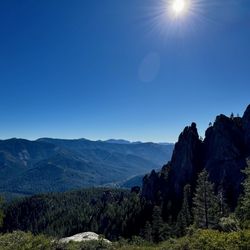
    From the guest services to the camp host this place has excellent amenities and staff. Very clean…read moreand well maintained facilities. The hike to the Crags is a once in a lifetime experience that if you are able to do you should not miss. Beautiful great views of Shasta and Lassen from the top of the Dome at the Crags. Be well rested, hydrated and prepared as it is a hefty hike. Also get to the trail head parking lot early as it fill up quickly! Thank you Christina and Woody!

    I spent the past four nights here, and it was very quiet, dark, and peaceful…read more Quiet with the caveat that there was a TON of train noise. But if you like white noise, that might be a plus. This was the darkest campground I've ever camped at so far. The view of the stars was great. The cold was on another level. I wouldn't recommend tent camping unless you really know what you're doing. Theoretically, this campground has free showers, but they are closed for the season. I couldn't help but notice that the windows have been broken into and boarded back up. There was theoretically potable water, but it tasted a little funky. Most of the pumps were broken, which made it seem like maybe the rest are about to be determined to be broken soon. There was an electric outlet in the bathroom with a sign warning not to leave personal items. In site 25, which is reserved for PCT hikers, I found another sign warning that items are frequently stolen from the bathrooms, and to use the outlets hidden in the amphitheater instead. (There is also a Starbucks about fifteen minutes away in Shasta.) A trail behind site 25 leads to the PCT, but the trail was currently full of fallen trees and hazards. Another trail near Vista Point turned out to be a safer route to the PCT. A 2 mile trail leads from the campground to Vista Point, where you can either keep hiking, or take in the panoramic views of Mt. Shasta, Castle Crags, and the Gray Rocks. I chose site 38 to camp in, which was at the end of the line of sites that are currently open. The first two nights, I paid with the self serve envelope. The rest I purchased from the Ranger Station. Camping was only $25/night, half off with qualifying passes. So it only cost me $50 to stay here 4 nights. The spaces on the main road were huge, and very well spaced. There was a camp host on duty on site 20, and maintenance came through every day to clean the restrooms and empty the trash. I didn't see much wildlife except for a lot of birds. Wildflowers were just beginning to bloom on the trails. There isn't much to do near the campground, but I found this to be a great place to have some relative peace and quiet for a few days.

    Photos
    Castle Crags State Park
    Castle Crags State Park
    Castle Crags State Park - Small rainbow trout

    See all

    Small rainbow trout

    Lee Fong Park - parks - Updated July 2026
    Loading...
    Loading...
    Loading...