NYPL on Leroy street is tucked away on a quiet street in the West Village…read more
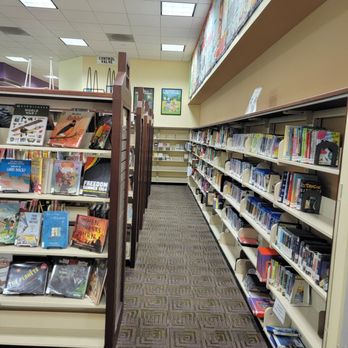
Hudson Park Library is a delightful escape from the city bustle. It might not be the largest branch, or have the biggest collection of books, but what it lacks in size, it more than makes up for in charm and functionality.
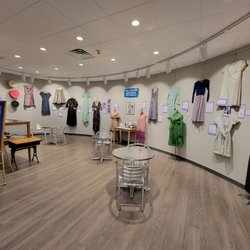
The staff is friendly and helpful. Special thanks to Librarian Emil that shared history, information about the art gallery, as well as assisting me with finding rare books.
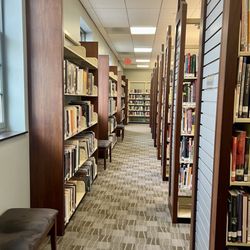
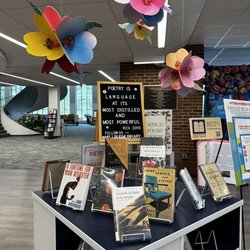
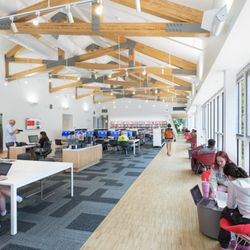
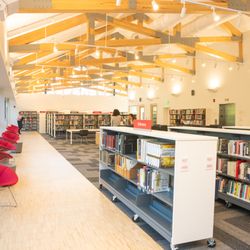
All of the librarians are welcoming and always ready to assist with finding books or helping with computers. The library is well-maintained and has a pleasant, cozy atmosphere, especially with the natural light from the large windows. It is a great spot to get work done or relax with a book.
The physical collection might be curated, but books can be requested from other branches and delivered, which is a perk of the NYPL system. Programs and events are offered for children and adults that are shared on the bulletin board as you enter the library.
There is also a dedicated children's area.
Hudson Park Library is worth a visit if you are looking for a peaceful and well-run neighborhood library with a welcoming vibe.
For those of you that enjoy history. This is the history of Hudson park library.
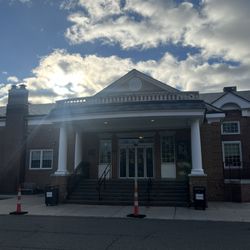
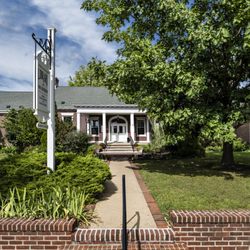
Hudson park library opened in 1906. This location is one of Manhattan's twenty remaining Carnegie libraries.
The library's benefactor was Andrew Carnegie, a Scottish-American businessman. In 1901, Carnegie sold his steel company, Carnegie Steel, to J.P. Morgan for $480 Million. He began using his tremendous profits from the business sale to contribute to civic philanthropy, eventually giving away nearly 90% of his fortune. One civic contribution he is best known for is the Carnegie libraries which he constructed worldwide, first starting in Dunfermline, Scotland, his birthplace. He then constructed libraries across the U.K., Ireland, Canada, and the United States. In New York City alone, he funded 65 libraries, 53 of which still exist today: 17 in Brooklyn, 20 in Manhattan, 8 in the Bronx, 4 in Staten Island, and 4 in Queens (Village Preservation)
Carnegie often chose places to construct a library based on a personal connection, such as Braddock, Pennsylvania, where the Carnegie Steel mills had been located, he chose other locations based on an evaluation. Before Carnegie would construct a library, he used a formula he established to determine the need and viability of a library in a particular town. First, the town or area was required to "demonstrate a need for a library." The town receiving the library was obligated to donate the land required to construct the building. And the town had to "annually provide 10 percent of the cost of the library's construction to support its operation." Though this formula was used for library construction for all civic donations, pools, churches, parks, and universities, he felt the best place to donate was to an area willing and able to help themselves. He believed that municipal funding powered by civic engagement was better than wealthy benefactors funding these public spaces as he feared "cliques" being formed amongst the wealthy and excluding those who needed these resources.
The New York Public Library had only recently been incorporated through the Astor, Tilden, and Lenox libraries in 1895, and construction of the library began in 1902. Before this, libraries were typically small, private, and held within other buildings preventing them from becoming the linchpin of a neighborhood. And the Hudson Park Library, completed in 1906.
From its early days, the library served the community of Greenwich Village in many ways. It contained an auditorium, which allowed the library to serve as a lecture hall for the community. The library was also home to a reading group for young boys, the Societa di Mutuo Beneficio fra le Donne Italiane" (the Mutual Benefit Society of Italian Women), and a mothers club. Marianne Moore, the poet, worked as an assistant in this library from 1921 to 1925.
In 2010, the Hudson Park Library gained landmark protections as part of the Greenwich Village Historic District Extension II proposed and advocated for by Village Preservation. This library, which sits overlooking the James J. Walker Park, is an example of the kind of philanthropy that made our city great at the turn of the century. It is also an example of the wonderful intertwining of great architecture and tremendous cultural history found throughout our neighborhoods (Village Preservation)