Cancel

    Open app

    Search

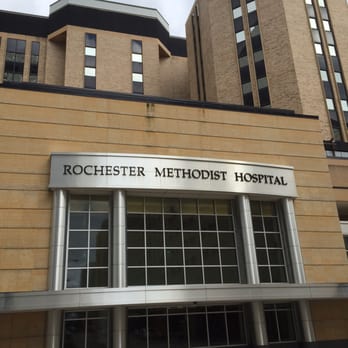
    Rochester Methodist Hospital

    4.0 (6 reviews)

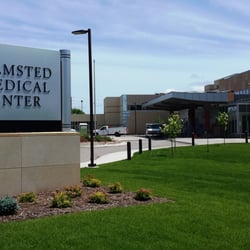
    Rochester Methodist Hospital Photos

    Recommended Reviews - Rochester Methodist Hospital

    Your trust is our priority, so businesses can't pay to alter or remove their reviews. Learn more about reviews.
    Yelp app icon
    Browse more easily on the app
    Review Feed Illustration

    2 years ago

    Helpful 0
    Thanks 0
    Love this 0
    Oh no 0

    7 years ago

    Helpful 1
    Thanks 0
    Love this 0
    Oh no 0

    13 years ago

    Helpful 2
    Thanks 0
    Love this 1
    Oh no 0

    15 years ago

    Helpful 2
    Thanks 0
    Love this 1
    Oh no 0
    Photo of G L H.
    9
    45
    1

    13 years ago

    Helpful 0
    Thanks 0
    Love this 0
    Oh no 0

    9 years ago

    Helpful 0
    Thanks 0
    Love this 0
    Oh no 0

    Ask the Community - Rochester Methodist Hospital

    Verify this business for free

    Get access to customer & competitor insights.

    Verify this business

    Mayo Clinic

    Mayo Clinic

    2.9(373 reviews)
    0.1 mi

    My experience at Mayo Clinic in Rochester has profoundly changed my understanding of what excellent…read moremedical care can look like. I came to Mayo during an extraordinarily difficult period of my life, facing both extramammary Paget's disease (EMPD) and breast cancer after having already been through a brain tumor. I was frightened, exhausted, and trying to navigate multiple specialists and major decisions at once. One of the most important reasons I sought care at Mayo was its highly specialized experience treating EMPD, an extremely rare cancer for which expertise and surgical technique matter enormously. Before coming to Mayo, the options available to me locally were very different. I had been counseled toward wide local excision and came away believing that I should expect recurrence and potentially a devastating long-term prognosis. No one in my area could offer me the highly specialized, multidisciplinary, margin-controlled approach Mayo has developed for this disease. When I researched Mayo's outcomes, I discovered something that gave me hope for the first time: Mayo physicians have helped study a Mohs approach using CK-7 immunostaining in which only 2.3% of primary EMPD tumors in that published series had a local recurrence -- meaning 97.7% had no observed local recurrence. Mayo has continued to refine this approach specifically for female genital EMPD through collaboration among Mohs surgery, gynecologic oncology, plastic surgery, and other specialties when needed. That expertise is ultimately what brought me to Rochester. My own EMPD surgery required an extraordinarily long Mohs procedure, followed by reconstruction, but my team continued until I had completely clear margins. Hearing that I had 100% clear margins after everything I had feared remains one of the most meaningful moments of my life. What distinguished Mayo, however, was not simply the expertise of individual physicians, although that expertise was extraordinary. It was the way the entire system worked together around me. Dermatologic surgery, gynecologic oncology, plastic surgery, breast surgery, medical oncology, radiation oncology, advanced practice providers, and coordinating physicians communicated in a way that made complicated care feel organized rather than fragmented. I repeatedly experienced specialists who understood not only their particular portion of my treatment, but also what I had already endured and what the next member of the team needed to know. Just as importantly, I was treated like a person. My physicians and advanced practice providers took time to educate me, answer questions, respect my decisions, and acknowledge the emotional burden of multiple serious diagnoses. Several called me personally with results or updates. Others sat with me, held my hand before surgery, shared humor or pieces of their own lives, and made frightening experiences feel human and manageable. My breast cancer was treated with a breast-conserving approach that preserved far more than I had expected physically and emotionally. Throughout both cancers, I felt that the people caring for me were thoughtful about not only eliminating disease, but also preserving quality of life, dignity, function, and my ability to make informed decisions about my own body. I have repeatedly found myself thinking that somehow the exact person I needed appeared at the exact moment I needed them. Mayo gave me something I had been struggling to find elsewhere: a genuine sense of safety in medical care. I arrived frightened about what these diagnoses might mean for the rest of my life. I left knowing that I had received care from people who had devoted significant expertise to understanding diseases as rare as mine and who were willing to work across specialties to give me the best outcome they could. I am profoundly grateful for the expertise, compassion, interdisciplinary collaboration, and humanity I experienced there. Mayo Clinic has earned my deepest trust.

    I am 76 years old and have a myriad of health problems. In addition, I live as if I'm 25, which…read morecauses more issues. After living in multiple cities from coast to coast, finding physicians who are medical intellectuals has become next to impossible. Corporate medicine has had an effective coup, and American health care is now mostly about money. The Mayo Clinic is the exception. The physicians at Mayo in Rochester that I have encountered are deep thinkers who find templates demeaning. They see their patients as individuals, treating each one separately from the thousands of others they see. Their support staff absorb this attitude and treat patients with respect. At least, that's what I observe. Sprinkle in "Minnesota Nice," and I always feel a level of security at the Mayo Clinic. I now live in Minneapolis, but for most of my medical needs, I will travel to Rochester.

    Photos
    Mayo Clinic - In the Palmer building at Mayo Clinic one of the Mayo doctors one of the brothers original office preserved

    In the Palmer building at Mayo Clinic one of the Mayo doctors one of the brothers original office preserved

    Mayo Clinic
    Mayo Clinic

    See all

    Saint Marys Hospital - Candied Butternut Squash Salad at the Mayo Clinic/St. Mary's Visitor Cafe

    Saint Marys Hospital

    3.3(32 reviews)
    0.8 mi

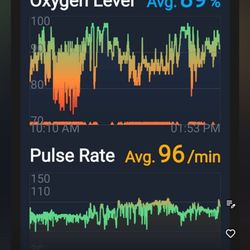
    MUST READ.... I wanted to start the review with…read moreacknowledging just a few of the many exceptional staff we were fortunate to have interacted with. Dr Rachel Neff, Dr Franz, Kimberly Thompson, Dr Matthew Koster, and Eva Carmona are few that come to mind as being extraordinary in their fields of expertise. But unfortunately I feel an overwhelming obligation to share my Moms overall experience with Saint Marys hospital and Doctor Kalra, and Dr Silva. With the intension of hopefully helping others with unique cases like my Moms by sharing what we have learned. We realized early on that my Mom's Autoimmune Pulmonary Fibrosis was extremely sensitive to any types of stress, resulting in flare-ups and repeated hospitalizations. After years of continual monitoring we realized low oxygen even for short periods of time put Her body under a tremendous amount of stress creating inflammation, resulting in increased oxygen needs, elevated resting heartrate, and hospitalization (flare-up). So to extend time between flare-ups we implemented strict oxygen monitoring and titratration to maintain Her oxygen 93-95. Which has proven over the years to be Her healthy range. High enough to avoid an inflammatory response but low enough to not elevate Co2 levels. For us, strict oxygen management was the most impactful treatment validated by the few years of continuous oxygen monitoring data we have stored in the cloud. For Her low oxygen is like treading water, putting Her already weakened system under continual stress resulting in inflammation and increased heartrates. While in the hospital I know I ruffled feathers by continually mentioning this and was told I was worried too much about the numbers and should just go by how you feel. My Mom doesn't get really winded until Her oxygen drops really low, into the low 70s, which we try to avoid because we have repeatedly seen the negative results. Even one crash to the low 70s has doubled Her oxygen flow needs, and increased Her resting heartrates over 100 without the ability to come down without high doses of Prednisone. While dropping to 88 for short periods of time, for a few minutes, usually while recovering from activity doesn't result in any negative effects. Extended periods of time clearly does. It was extremely difficult to have our learned experience be repeatedly dismissed by Dr Karla, and Dr Silva. When bringing my concerns to Dr Kalra He said oxygen levels at 85 for hours isn't dangerous, and that people in the Himalayas have low oxygen their entire lives. As a life long runner, I explained that is actually incorrect. People living at elevation adapt by producing more red blood cells which is the bodies way to maintain healthy oxygen saturation levels similar to us. Which infuriated Him. It was so frustrating seeing my Moms oxygen levels regularly in the mid 80s, and referring to it as weening. The best way to ween my Mom's oxygen is by maintaining 93-95, which is what we returned to after discharge and without that stress on Her system Her flow rate came down on it's own. She returned to Her 4 liter baseline and it has remained that way for the last 2 months. This was the first hospitalization when low oxygen practices were used on Her and was also by far Her longest stay 41 days. She was admitted on 8 liters in the middle of a flare-up and eventually discharged on 7 liters with resting heartrates 90-110, still in flare-up. She also experienced erratic heartrate arrhythmia, chest pain and tightness during Her hospitalization for the first time but hasn't experienced it since discharge. We have the data to prove She was maintained a majority of the time in the 80s from our personal continous oxygen data logger. And daily pictures of our monitor numbers matching their monitor. Theirs was a visio logger that often had a dead battery for hours a day. So She was often unmonitored except for our personal logger. I was continually going to the nurses station begging them to turn up Her oxygen and noticed on their monitor once Her room number showed She was currently 81 oxygen but it wasn't red or in alarm. Apparently they were annoyed by my Mom's oxygen alarm continually going off so turned off Her alarm rather than turn up Her oxygen. Dr Kalara just repeatedly got angry when I attempted to communicate these concerns. Even more concerning is the repeated false reporting in my Moms clinical notes that our data, pictures, and time can prove was false. I was there and maintain meticulous documentation. I even reached out to patient experience with my concerns and realized rather quickly they weren't really interested in ways to improve the safety of patients or the integrity of reporting. More a coordinated effort of further suppressing and covering up legitimate concerns. When they found out I had proof I was told I wouldn't be able to visit in the future. Please stay with your family, advocate, monitor, document.

    A broken bone left me feeling forced to go to the ER. The attending physician was good in that he…read morefound the fracture, even though the radiologist said there was none. They left a resident to set my bone, but he was very sleepy and very poorly trained. He was not supervised while doing it, and he made three major mistakes. Though I didn't realize it at the time, I told him three things that should have prompted him not to make those mistakes, but he made them anyway. I pointed out an area of pain after he finished setting the area, but he just glanced at it and threw his hands up as though he was upset that I mentioned it. Then, he stared at my face, unresponsive. I'd been calm and patient throughout, but bizarre behavior concerned me. I didn't feel safe with his trance-like gaze and lack of response to the pain. I had told him it would have to be fixed before I left, but he refused. He could have called in his attending physician, but he didn't. He was ready to discharge me with an improperly set bone that ignored three significant precautions he should have taken. Since I was exhausted and sleepy, I told him it was fine so I could get out of there and seek care somewhere else. If I had been more rested, I would have insisted that he bring in the attending physician. Instead, I simply let them discharge me with an improperly set bone, in pain, and went home. When I got home, I found the problem. I made e a temporary fix myself, waiting for my family to come home 14 hours later to help me make a better one. Then I returned to the hospital to have the bad splint cut off, with the standard procedures followed, the precautions taken, and the problem fixed. Until I did that, the first one was unsanitary and caused intense itching from bacterial overgrowth as he'd not sanitized the area; there were bloody abrasions in an area not close to the broken bone, and there was swelling from him jamming two body parts tightly together without precautions. The resident clearly had no idea what he was doing, as the situation was not complex. All he had to do was properly sanitize the area, protect a specific area from abrasion after swelling began to subside, and prepare the area so that no collateral damage was caused by the way he set the bone. He did none of that, though I had pointed out those three issues. Instead of getting help to find the cause of the pain, something I was able to do myself at home, he simply wrote that I had experienced a psychological problem. I looked that up, and I had displayed ZERO symptoms of that or any other psychological problem. He just used that as an excuse not to address the pain his very poor performance caused. When I talked to the surgeon about addressing that baseless diagnosis, the surgeon blew it off, though he easily could have told the resident to address it, especially since my having to replace the splint quickly left plenty of evidence that his bad performance was the issue. The surgeon then tried to dismiss me from physical therapy after only one session, though I was unable to use that part of my body, it was mangled-looking, and there was intense pain and immobility in a large area. I did everything as directed. Rather than investigating, the surgeon laughed it off, saying, "No pain, no gain!" He dismissed me without addressing that area and without my having full functioning of my body part. The records said I did, but that was absolutely not true. I had to read medical literature on my own and use kitchen utensils to try to fix the affected areas, and it was painful. Because of the delay in diagnosing the large areas of many thick and painful adhesions (with me having to self-diagnose) and because I'm not a medical professional, there was no way for me to get them addressed well by myself. I did the best I could, but years later, I'm still unable to straighten that area or use it normally. In fact, it caused limited blood flow, and I had to figure out on my own how to improve it. Two areas shriveled over the years due to inadequate blood flow caused by undiagnosed adhesions. To top it off, that surgeon was supposed to send approval for transportation since I couldn't drive with the fracture, but he repeatedly failed to do so, leaving me stranded and suspected of fraud by my insurance company. In one appt, he made grotesque faces and wildly waved his arms while speaking in a nicer tone than usual. That was after a badgeless man who claimed to be a doctor came in his place and asked me inappropriate questions for the situation, claiming the surgeon was not there. To top it off, a surprise phone appointment with the surgeon featured him slurring his words the entire time. Very unprofessional all around. Not exactly what you'd expect from someone paid 7 figures every year.

    Photos
    Saint Marys Hospital
    Saint Marys Hospital
    Saint Marys Hospital

    See all

    Mayo Clinic Hospital - A sippy cup with the Mayo clinic logo on it.

    Mayo Clinic Hospital

    2.6(42 reviews)
    0.8 mi

    My experience at Mayo Clinic in Rochester has profoundly changed my understanding of what excellent…read moremedical care can look like. I came to Mayo during an extraordinarily difficult period of my life, facing both extramammary Paget's disease (EMPD) and breast cancer after having already been through a brain tumor. I was frightened, exhausted, and trying to navigate multiple specialists and major decisions at once. One of the most important reasons I sought care at Mayo was its highly specialized experience treating EMPD, an extremely rare cancer for which expertise and surgical technique matter enormously. Before coming to Mayo, the options available to me locally were very different. I had been counseled toward wide local excision and came away believing that I should expect recurrence and potentially a devastating long-term prognosis. No one in my area could offer me the highly specialized, multidisciplinary, margin-controlled approach Mayo has developed for this disease. When I researched Mayo's outcomes, I discovered something that gave me hope for the first time: Mayo physicians have helped study a Mohs approach using CK-7 immunostaining in which only 2.3% of primary EMPD tumors in that published series had a local recurrence -- meaning 97.7% had no observed local recurrence. Mayo has continued to refine this approach specifically for female genital EMPD through collaboration among Mohs surgery, gynecologic oncology, plastic surgery, and other specialties when needed. That expertise is ultimately what brought me to Rochester. My own EMPD surgery required an extraordinarily long Mohs procedure, followed by reconstruction, but my team continued until I had completely clear margins. Hearing that I had 100% clear margins after everything I had feared remains one of the most meaningful moments of my life. What distinguished Mayo, however, was not simply the expertise of individual physicians, although that expertise was extraordinary. It was the way the entire system worked together around me. Dermatologic surgery, gynecologic oncology, plastic surgery, breast surgery, medical oncology, radiation oncology, advanced practice providers, and coordinating physicians communicated in a way that made complicated care feel organized rather than fragmented. I repeatedly experienced specialists who understood not only their particular portion of my treatment, but also what I had already endured and what the next member of the team needed to know. Just as importantly, I was treated like a person. My physicians and advanced practice providers took time to educate me, answer questions, respect my decisions, and acknowledge the emotional burden of multiple serious diagnoses. Several called me personally with results or updates. Others sat with me, held my hand before surgery, shared humor or pieces of their own lives, and made frightening experiences feel human and manageable. My breast cancer was treated with a breast-conserving approach that preserved far more than I had expected physically and emotionally. Throughout both cancers, I felt that the people caring for me were thoughtful about not only eliminating disease, but also preserving quality of life, dignity, function, and my ability to make informed decisions about my own body. I have repeatedly found myself thinking that somehow the exact person I needed appeared at the exact moment I needed them. Mayo gave me something I had been struggling to find elsewhere: a genuine sense of safety in medical care. I arrived frightened about what these diagnoses might mean for the rest of my life. I left knowing that I had received care from people who had devoted significant expertise to understanding diseases as rare as mine and who were willing to work across specialties to give me the best outcome they could. I am profoundly grateful for the expertise, compassion, interdisciplinary collaboration, and humanity I experienced there. Mayo Clinic has earned my deepest trust.

    I had surgery at the Mayo Clinic Hospital, for a condition that has caused me issues for over a…read moredecade. After months of consulting and scheduling, it was time for my surgery. From a patient perspective, everything was very smooth. Check in was quick and organized, and they pointed me right where to go. I got taken back for prep within about fifteen minutes. Prep itself took about two hours before it was show time. During that time I did intake with the nursing staff, met with the anesthesiologist and a pharmacist, and eventually talked to the surgical team directly. When it was time to go, my bed was wheeled to the operating room, where the staff had a very upbeat attitude that quickly put me at ease. Anesthesia is sort of like time travel, you just wake up finished as if you'd just closed your eyes. When I was coming around, they got me situated in recover after my seven hour surgery. When I was ready they wheeled me to my room where I spent one night. Every single person I interacted with was so wonderful and kind; Truly I have no regrets with choosing this team to handle my care. I've seen other hospitals where the attitude of the staff can project onto the patients, and I saw none of that here. Never once did I feel like a bother, and never once did I not get the care I needed. And I'm healing up nicely!

    Photos
    Mayo Clinic Hospital - One of many charts

    One of many charts

    Mayo Clinic Hospital - Daily occurance

    Daily occurance

    Mayo Clinic Hospital - Google keeps removing my genuine review.

    See all

    Google keeps removing my genuine review.

    Rochester Methodist Hospital - hospitals - Updated September 2026

    Loading...
    Loading...
    Loading...