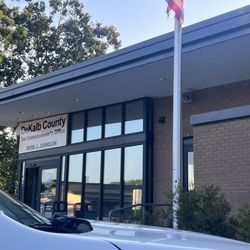
I am very disappointed with how DeKalb County's Property Tax/Tax Commissioner's Office handled a…read morelegitimate penalty dispute following a property-tax appeal.
This was not a situation where we ignored a known bill or knowingly allowed taxes to become delinquent. The original post-appeal adjusted bill was never received. The first notice we actually received was a Late Notice on 8/12/2026, and by then penalties and fees had already been added with an 8/17/2026 payment deadline.
We had checked the online property account, but the adjusted bill was not displayed in the normal Tax Bills/property summary section where a taxpayer would reasonably look for a tax bill. I was later shown that adjusted bills could be found by going into a separate "Make a Payment" function. There were no instructions on the bills or notices telling taxpayers to look there. We also make our property tax payments in person, so there was no reason we would know to search for an unreceived bill inside an online payment function.
From a taxpayer's perspective, there was no reasonable way to know that an adjusted bill we never received had been issued, that it would not appear in the normal Tax Bills section, and that we were instead expected to discover it through "Make a Payment" with no instruction directing us there.
The County's position was that, because an appeal had been filed, the taxpayer was responsible for following the process "A to Z," including locating the adjusted bill and following up with the office. If taxpayers are expected to take specific steps after an appeal, those steps should be clearly documented and communicated before penalties are imposed. "Follow the process A to Z" is not meaningful guidance unless taxpayers are actually told what that requires.
I repeatedly asked the office for four basic things in writing: documentation supporting the mailing/postmark date, the statute governing the supplemental-bill deadline, the authority for the penalty assessed, and an exact itemization of the penalties and fees. Those questions were never fully answered.
I eventually spoke directly with Christy A. Huiel, Director of Property Tax. She showed me an internal screenshot containing a "Print Date" and stated that, internally, those dates represented when the bills were printed and mailed. However, a print date is not proof of the actual postmark date, and no separate postmark or mailing documentation was provided to me.
I also repeatedly asked for the specific Georgia statute governing the supplemental-bill process, deadline, and penalty. I was told that the Director could not provide the statute because she is not an attorney and that I would need to research it myself or have an attorney contact the County's attorney.
That response was especially concerning. I was not asking for legal advice. I was asking the office administering and enforcing the property-tax process to identify the statutory authority it was relying on. A taxpayer should not have to hire an attorney simply to learn which law a government office says it is enforcing.
After months of emails, follow-ups, escalation, and review by the Tax Commissioner, the refund was denied. Even after I specifically asked multiple times for the four outstanding questions to be addressed in writing, the final response simply stated that the penalty would not be waived and did not substantively answer them.
My position remains straightforward: we did not refuse to pay taxes, ignore a known bill, or knowingly miss a deadline. The original adjusted bill was never received, it was not displayed in the normal online tax-bill section we checked, there were no instructions telling us to locate it through "Make a Payment," and once we actually received notice of the balance, we addressed it.
For a taxpayer-funded public office, I expected clear notice, accessible billing information, consistent explanations, documentation supporting the penalty, and a transparent written explanation of the basis for the decision.