History
Founding and Early Years
Librairie de France was founded in 1928 by Isaac Molho and Vitalis Crespin, immigrants who had arrived in the United States during the 1920s as part of a wave of Europeans fleeing economic and political instability in the interwar period.[3] Molho, originally from Salonika (now Thessaloniki, Greece), received his education at the Lycée Français in Athens, which instilled in him a deep appreciation for French culture and language.[4] He immigrated to New York in 1924, bringing with him valuable connections to major French publishers, including Hachette in Paris, forged through his earlier travels and studies.[5] Crespin, from Turkey, shared a similar Sephardic heritage and complemented Molho's expertise in the book trade; he co-founded the initial mail-order operation but left the business before its expansion to a physical store.[3][6]
The partnership began modestly, with the duo establishing the business as a mail-order operation specializing in French-language books and magazines, catering to a niche audience of Francophiles in America at a time when demand for imported European literature was growing but supply chains were limited.[6] Operating independently without financial backing from government entities or large corporations, Molho and Crespin faced significant hurdles, including sourcing materials across the Atlantic and building a customer base amid economic uncertainty in the late 1920s.[3] Their venture relied on personal networks and entrepreneurial grit, positioning Librairie de France as a cultural bridge for French expatriates and enthusiasts before it expanded into a physical retail presence.
By the early 1930s, the company's reputation had grown sufficiently to attract attention from influential figures, leading to an invitation to establish a storefront in the developing Rockefeller Center complex.[1]
Establishment at Rockefeller Center
In 1935, the Librairie de France received an invitation from the Rockefeller family, particularly through the influence of David Rockefeller, to occupy retail space within the newly developing Rockefeller Center, as part of an effort to create an international cultural hub in Midtown Manhattan. This invitation aligned with the center's vision of fostering global exchange by dedicating sections to European enterprises, with the French bookstore selected to represent French literary and artistic traditions in one of the designated European pavilions.
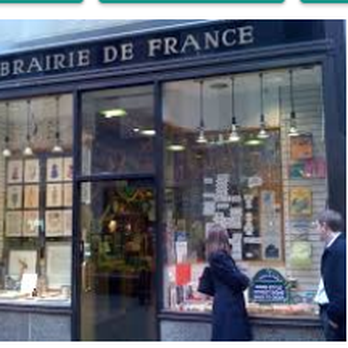
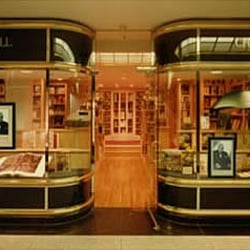
The store officially opened on September 1, 1935, at 610 Fifth Avenue in the La Maison Française building, marking a pivotal expansion from its earlier mail-order operations to a prominent physical presence in New York City. Housed in the Art Deco structure designed by architects Wallace K. Harrison and J. André Fouilhoux, the location was strategically chosen to complement the building's facade adorned with French motifs, including bas-reliefs by Alfred Janniot depicting themes from French history and culture.
As one of the inaugural tenants in Rockefeller Center's European retail cluster, Librairie de France played an early role in establishing the complex as a symbol of cosmopolitanism, underscoring French cultural influence amid the center's innovative architecture and multinational ethos. The opening event drew notable figures from diplomatic and literary circles, highlighting the bookstore's immediate significance in bridging French and American intellectual communities.
World War II and Postwar Period
During World War II, Librairie de France emerged as a vital cultural hub for French expatriates in New York, serving as a voice for Free France amid the Nazi occupation of Europe. The bookstore provided essential news updates on the Free French Forces, stocked books by exiled authors who had fled the homeland, and offered morale-boosting materials to the diaspora, including contraband publications smuggled from occupied France.[7] Its publishing arm, La Maison Française, played a key role by printing works of over 200 displaced French writers, such as André Maurois, Jules Romains, and Antoine de Saint-Exupéry (including his 1942 book Pilote de guerre, though Saint-Exupéry's The Little Prince was published separately by Reynal & Hitchcock in 1943).[8][5] This effort not only sustained French literary expression but also aligned with Gaullist propaganda to rally support for the resistance.[1]
In October 1944, following the Allied liberation of France, philosopher Jacques Maritain publicly commended the bookstore's wartime contributions in a letter, praising its directors for upholding French culture and Franco-American solidarity during four years of exile and darkness. This recognition underscored Librairie de France's role in bridging the oppressed voices of occupied France with the free world, facilitating the dissemination of resistance-related publications and heroic clandestine editions.[7]
In the immediate postwar years of the late 1940s and 1950s, the b read more