Cancel

    Open app

    Search

    Memphis National Cemetery Photos

    You might also consider

    More like Memphis National Cemetery

    Recommended Reviews - Memphis National Cemetery

    Your trust is our priority, so businesses can't pay to alter or remove their reviews. Learn more about reviews.
    Yelp app icon
    Browse more easily on the app
    Review Feed Illustration
    Photo of Dani C.
    289
    286
    3340

    5 years ago

    Helpful 2
    Thanks 0
    Love this 2
    Oh no 0

    Verify this business for free

    People searched for Landmarks & Historical Buildings 365 times last month within 5 miles of this business.

    Verify this business

    Tupelo National Battlefield

    Tupelo National Battlefield

    5.0
    (1 review)

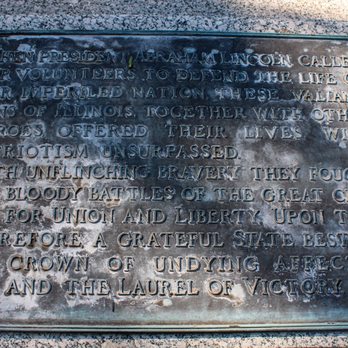
    Sooo much history on such a small plot of land. I'm so glad this history is kept alive for others…read moreto study. Battle of Tupelo, MS (July 14-15, 1864) -Also known as the Battle of Harrisburg -This engagement helped the success of Sherman's Atlanta Campaign by diverting the attention of the Confederacy's "Wizard of the Saddle," Nathan Bedford Forrest. Union General William Tecumseh Sherman ordered Major General A.J. Smith, to march south from Memphis and "follow Forrest to the death, if it costs 10,000 lives and breaks the Treasury." He also had secondary ordered to destroy the Mobile & Ohio Railroad and all farms along the way. Smith and his 14,000-man army started their march into northern Mississippi from La Grange, TN on July 5, 1864. Forrest, believing that Smith was sure to attack, chose to make a stand at Okolona; however, on July 13th after learning that Harrisburg and Tupelo had been abandoned, Smith decided to make his stand here with his 14,000 troops forming a column 15 miles long. By nightfall, Smith's defenses were in Harrisburg while the Union cavalry, under General Grierson, occupied Tupelo with the intent of destroying the railroad there. The Union troops now waited for a Confederate attack the next day. An attack on Harrisburg would mean having to charge across up to 1,000 yards of open fields against a well fortified Union line, all the while being outnumbered by nearly 2-to-1. Despite the overwhelming odds of success, Confederate General Stephen D Lee still decided to go on the offensive. On July 14th at 7:30 AM, the South attacked these positions; however, the tactics at Tupelo were out of character for Lee and Forrest because they were uncoordinated and the assault points poorly selected. The Southern army was badly bloodied, and Forrest himself was wounded in the fighting. General Smith, despite easily defending his position and clearly being the victor of the day's fighting, chose to retreat the next day. His ammunition and food were running low and the heat had gotten to his men. Thus, around 10 AM on July 15th, the Union army began a retreat north back to Memphis.

    Memphis National Cemetery - landmarks - Updated June 2026

    Loading...
    Loading...
    Loading...