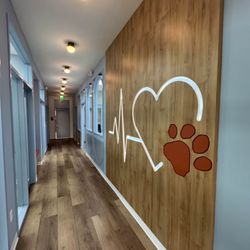
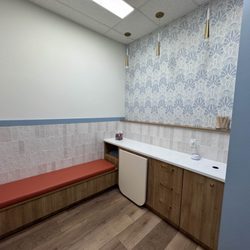
I struggled with whether to write this review because the vet and vet techs were genuinely very…read morenice, and the facility itself is clean, modern, and convenient. However, after discussing my experience with other ER vets and experienced cat owners, I feel it's important to share what happened, especially for pet owners who may not know what is or isn't appropriate handling during stressful procedures.
I brought my 11-year-old cat, Donut, in because he had been vomiting, crouching, and had not had a bowel movement for several days. They recommended bloodwork, urinalysis, and X-ray, all of which I agreed to.
My biggest concern was how my cat was restrained, man-handled, and hog-tied (flipped over and held aggressively and tied with both hands and feet) during these procedures. Donut became extremely distressed during bloodwork and was aggressively pinned down. During the urinalysis and ultrasound, he was restrained by his legs and body and held down while crying, kicking, screaming, and struggling. I was upset, and asked whether this was normal, and I was told that it was. He was then taken out of the room for X-rays, where I could hear him crying, kicking, and screaming from down the hallway.
The blood draw also had to be repeated because the first sample was apparently spilled, meaning he went through the procedure again while already extremely distressed.
The X-ray showed constipation, so they recommended injecting fluids, an anti-nausea injection, and an enema injection (in the butt). During the treatment, he was again heavily restrained, hog-tied, and aggressively pinned down. I also noticed blood around his anus before the enema injection and asked whether it was safe to proceed. I was told it was likely from straining, and the enema was performed anyway.
Afterward, Donut passed the enema solution, some blood, and only a very small amount of stool. That night, he developed bloody/brown mucus brain like discharge and remained in extreme pain, restless, and crouching. The bloody/brown mucas brain-like discharge was likely caused from the extreme stress and enema injection they shoved up in his butthole that appeared to have not been done that gently. He barely slept for days afterward. He was later evaluated at another ER and diagnosed with pancreatitis.
What concerns me most is that all of this happened within roughly 1-1.5 hours: bloodwork (twice), urinalysis, ultrasound, X-ray, fluid injection, anti nausea injection, and an enema injection, while he was experiencing EXTREME fear, distress, trauma throughout much of the process.
I understand that veterinary procedures aren't always comfortable and that restraint is sometimes necessary. My concern is the degree of restraint (man-handling, aggressive pin-down and hog-tying) and the lack of effort to reduce his anxiety before and during the procedures. My regular vet had previously recommended gabapentin (mild anti-anxiety sedative) before stressful situations such as car rides and veterinary procedures because Donut becomes extremely anxious. I wish this had been discussed before putting him through so many stressful procedures.
The experience had a lasting effect on him. For weeks afterward, he was extremely fearful and had difficulty settling or sleeping. Even now, seeing his carrier or getting into the car can trigger significant anxiety because he associates it with that experience.
The next day, I took Donut to VCA Animal Specialty Group in Glendale, where he received additional ER care and follow-up with an internal medicine vet. The difference in my experience was significant. The wait was much longer, but the vets took the time to explain options, discuss his anxiety and condition, and communicate with me afterward. I also shared what happened at UrgentPaws with the vets there and my experienced pet friends, and they expressed concern about the level of restraint I described.
To be fair, there are positives: the facility is very clean, there was essentially no wait (but the no wait speaks volume as I've never been to a vet or ER vet with no wait or patients..), the staff were friendly, and the open-concept setup allows owners to see much of what is being done. However, for me, those positives do not outweigh what my cat experienced during the visit.
I am sharing this because I wish I had known more beforehand. If you are taking your pet in for multiple diagnostic procedures, I strongly recommend asking how they plan to minimize fear and what anxiety-management options are available before consenting to the procedures.
Most importantly, I regret not knowing enough at the time to recognize how distressed Donut was and advocate more strongly for him. I hope other pet owners can learn from my experience and ask questions before their pets go through something similar.