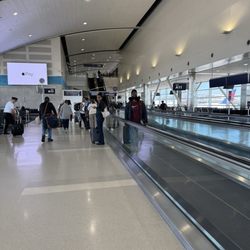
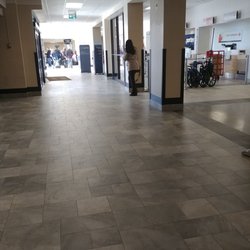
I arrived early at Cleveland Hopkins International Airport. Even though it is a large airport, it…read morewas easy to navigate. Rather than downloading the mobile application for American Airlines--the airline I was flying with--I visited their website to check in early and took a screenshot of my boarding pass. Since I only had a carry-on bag, this allowed me to head straight to TSA security instead of waiting to see an agent.
As for my airport experience, TSA was not crowded at all with it being Cleveland Hopkins International Airport. Even with that, I always dread going through security because of the possibility of being screened heavily, but all went smoothly! The only things I removed from my body were my jacket, backpack, and Rock & Roll Hall of Fame Half Marathon medal placing each item inside either the bin, or my jacket pocket. After a light screening of my Garmin Instinct GPS watch on my wrist, I was well on my way to locate the gate within the terminal, which was not a hard find.
While en route to the gate, the first thing I admired in the terminal was a public art piece from the 'GuitarMania' project. It featured a blue and white decorative guitar headstock wall display with the word 'Cleveland' in script. Even though I was not hungry, I took notice of some food and snack options within the terminal. These included The Pub, Dunkin', Currito, Chick-fil-A, Shake Shack, Bruegger's Bagels, Bar Symon, and Auntie Anne's. Furthermore, I was relieved to find postcards to add to my travel collection. They were pricey, as most seem to be now. The airport shops I found that sold postcards were the Rock & Roll Hall of Fame Airport Store and Hudson. Hudson also carried fan apparel for college sports teams in Cleveland and throughout Ohio. I was also able to buy keychains and magnets for my coworkers at Hudson, right outside the TSA screening area.
Oh my God! The lingering scent of Auntie Anne's pretzels lured me back to the area once I located my gate, where I caved and purchased bite-sized cinnamon rolls from Cinnabon instead! This Cinnabon was literally right next to Auntie Anne's, which did terrible things to my willpower. Being inside an airport always reminds me how people cannot walk in a straight line because there is always someone walking in your direction. I always find myself maneuvering around like the spaceship in the Asteroids arcade game, avoiding collisions. This airport visit was no different, except for me overhearing "Love Me Two Times" by The Doors playing in the background.
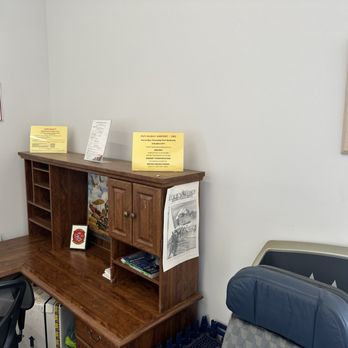
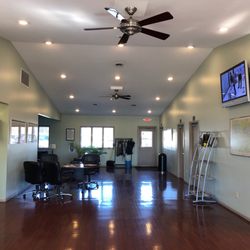
The American Airlines gate I flew out of appeared professional, with a very well-maintained seating area compared to other airlines I have flown out of. I rarely encounter boarding areas with clean seats and no trash left behind, which is hard to unsee. Within certain airline gates, there were workstations as well as seats with charging outlets, giving me the chance to charge my cell phone before boarding my flight. Although the flight back to Chicago was delayed, I was updated via email and Google on the flight's status, and thankfully it was held up for no longer than an hour. Even with the delay, the boarding process was very organized and professional, which is all I can ask for.
In closing, safe travels, and blessings to all that read this review of Cleveland Hopkins International Airport.
~Escape the ordinary. ~
Thomas G