Sound Transit - Link Light Rail
Sound Transit - Link Light Rail Photos


You might also consider


More like Sound Transit - Link Light Rail
Recommended Reviews - Sound Transit - Link Light Rail
Start your review...


Reviews With Photos


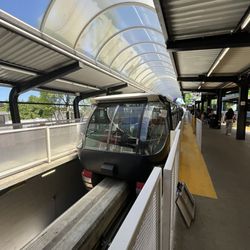
Took the Link Rail from downtown Seattle by Pikes Place Market to the Sea-Tac Airport and it was a piece of cake. Very easy to navigate and get from one place to another. The stations and rail car themselves are very clean and well kept. Busy enough that you feel safe. Only took us about 35-45 minutes to get from Pikes Market to the airport, and it only cost us $3 per passenger one way! What a bargain. Can also go the other direction, from the airport to wherever you need to go. Highly recommend!
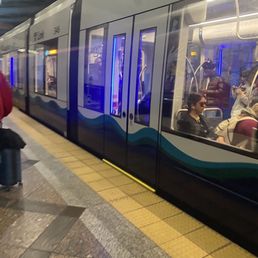

We utilized this transportation service to travel from SeaTac airport to near our hotel when we arrived in Seattle. Very convenient, affordable, fast, and user-friendly. Glad we didn't need to bother with a rental car or ride share service to easily accommodate our travel group of 5 people. Would be happy to repeat the experience.


I used Seattle's Light Rail for the first time after arriving at SeaTac on the morning of the 30th. There is ample signage to direct one to the terminal and purchasing a ticket is easy. Why didn't Honolulu use this system as a model for its Skyline system? The cars are fast, quiet and the line runs above ground, on the ground and underground as needed. I was impressed on my first ride and more so on my second. On September 3, my train malfunctioned heading into Sodo Station so we all had to get off and wait for a replacement. It didn't take long, and we were on our way in less than 10 minutes. Three dollars for a one-way ticket ... It's a steal.


I've taken NYC metro, SF Bart/Muni, and Mexico City Metro; those cities are much larger and have had their systems for decades, gotta say Link holds its own and is smaller but very mighty. I've taken the new 2-line and 1 Line to and from the airport. I really hope they build it out to completion! 100% Clean and safety officers on 90% of the rides I've taken so far.
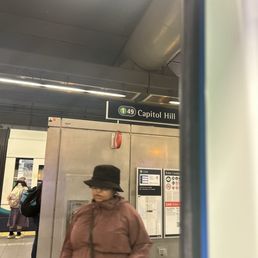

There's a lot to unpack here! The Link is a convenient mode of transportation, and the prices for a round trip from Angle Lake to Lynnwood are reasonable. The trips and stops are quick, which can be both good and bad. However, I am concerned about its cleanliness. Its popularity is understandable, especially if you don't mind the presence of homeless individuals. There's also a very distinctive, unpleasant odor that pervades the area, so be cautious of that. Additionally, the schedule is often affected by mechanical issues, resulting in wait times that can range from 15 to 45 minutes. The fare ambassadors are very active, so make sure you've paid before boarding. Overall, using the Link gets you to your destination without the hassle of sitting in traffic, saving both time and money.


CONVENIENT $3 TICKET (4.25 stars) Seattle... not bad! For their first light rail built up I do feel local tax dollars have gone to good use. Although not as developed and comparable as other major cities public transportation, it will do! Instead of paying $30+ to get from downtown to the airport, everyone and their mama suggested taking "the link" to the airport for $3... YES, $3!!! :: DOWNTOWN TO SEATAC AIRPORT :: - Take the "Angle Lake" line (south) - Frequent departures and arrivals - $3 ticket to the airport - 12 stops - Drop off at the airport but on the other side of parking structure and only a few minute walk What I've learned... 1) You cannot buy tickets in advance at the machine as those tickets are ONLY GOOD FOR 2HRS. 2) There are websites and apps to find schedules but Google Maps had everything. I selected the route via light rail and it gave me all the details 3) Westlake Stop didn't have escalators doing down, only up in the morning hours. Only way down was by steps or elevator. Mind you, elevator smells horrific. Urine, poop, what have you. Not much choice if you have luggage. 4) it's about a 40 minute ride BUT why did it only feel like 15 minutes. Time on the lightrail goes by quick and you enjoy the view through downtown, Chinatown, sodo, and south Seattle areas. 5) Nobody checked my ticket. There was no gate that reads your ticket entering the station or exiting. It wasn't very well regulated. It was pointless to buy a ticket - might as well ride for free. Hope they expand with more lines. I think this is a great addition to Seattle especially that Seattle blew up from what I remember this city to be.


Let's see: a ride from the airport to downtown (or from downtown to the airport) cost me $3 one way. Not $30. 3 dollars. The train was clean, quiet, and fairly quick. I think the ride to Pioneer Square, just south of downtown, took about 35 to 40 minutes. For 3 whole dollars. It's a fairly scenic ride, too. I didn't need to take an Uber. I didn't need to rent a car. Purchasing a ticket was simple. In most cities, you must drive to the airport and then pay ridiculous prices for parking. Or you take an Uber or taxi for a hefty fee. You don't know how good you have it if you have luggage and can train it to and from the airport. For 3 bucks.


16 years ago

12 years ago

10 years ago

17 years ago


16 years ago

17 years ago

16 years ago

13 years ago

4 years ago

8 years ago

17 years ago


8 years ago

14 years ago

9 years ago

9 years ago


14 years ago

9 years ago


9 years ago

12 years ago
14 years ago

12 years ago
7 years ago

11 years ago

14 years ago
7 years ago
11 years ago
15 years ago


More info about Sound Transit - Link Light Rail
401 S Jackson St
Seattle, WA 98104
Pioneer Square
Directions
(206) 398-5000
Call Now
Visit Website
http://www.soundtransit.org/
Hours
Other Amenities
From the Business
Sound Transit - Link Light Rail Reviews in Other Languages
Ask the Community - Sound Transit - Link Light Rail
Review Highlights - Sound Transit - Link Light Rail
You might also consider


















Why does Yelp recommend reviews?
17 reviews that are not currently recommended
The reviews below are not factored into the business's overall star rating.
14 years ago
16 years ago

10 years ago
6 months ago

3 years ago

17 years ago

13 years ago
10 months ago
2 years ago

3 months ago

10 years ago
3 years ago

14 years ago

12 years ago

15 years ago


9 years ago


