
Order Mandu Takeout or Delivery
Mandu Photos


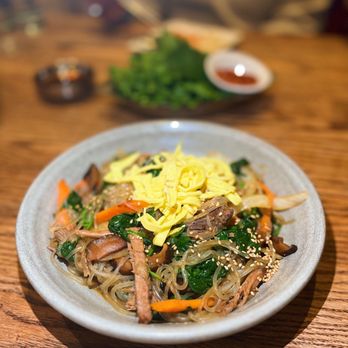
Mandu Popular Dishes


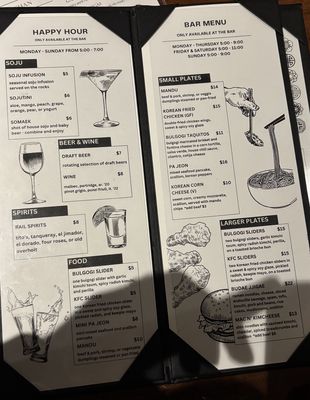


MANDU ATMOSPHERE


You might also consider


Recommended Reviews - Mandu
Start your review...


Reviews With Photos


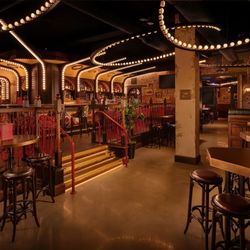
Food: I tried Gaji Bokum & Dak Jjim. They both were well seasoned and delicious. Dak jjim is a bit spicy. Just a heads up. ;) Service: I received an incorrect order by an accident, and when I went back, they fixed the mistake quickly. Staff were friendly even though I arrived there after their closing hour. Ambiance: there is a bar area, left side when entered the restaurant, and a dining area on the right. Both parts are well spaced out to have a meal comfortably.


I've recently rediscovered this restaurant and am impressed again. The happy hour is great. We had a slider and a full assortment of mandus, steamed, fried, shrimp, meat, veg. All were delicious. They seem to specialize in an upscale Korean street food. I wasn't sure if these were American or Korean creations. The bartender assured me they were really Korean and explained their back stories. The menu is changing and evolving. Their drink selections are special and unique. The servers have always been friendly. The bar and restaurant are both comfortable and relaxing. I'm looking forward to returning again to try some of their other unique menu items. One bit of advice, this place always looks closed. I think it's the lighting. If it looks closed, just check the door. It's probably not closed.


I've been to Mandu a few times over the years and I'm sorry to say my most recent visit didn't hit the mark. I visited on a Friday around 6:30 PM and sat at the bar to catch the end of happy hour (Mon-Sun 5-7 PM). The bar was empty at the time, but a few other people showed up later. The dining room had a handful of tables occupied. In short, easy to get a seat. Drinks were good. I like the Somaek ($6) which is a small beer and a shot of soju. Beer ($7) was beer. We got some beef and pork mandu (dumplings) that were pretty good. 6 pieces for $10 on HH. We got two entrees, the Ddukbokgi ($28) and Yukgaejang ($29), which came with four banchan. Ddukbokgi is chewy rice cakes, gochujang, onion, and bulgogi. We thought it was only ok -- we've had better, including at Mandu in the past. Yukgaejang was a new dish for me. The menu described it as a "spicy beef stew, brisket, noodles, shiitake, bean sprouts, and egg." I expected the brisket to be sliced and recognizably brisket, but it was pulled -- it looked and tasted more like pulled pork. The dish also didn't have any noodles in it. I didn't like it. The banchan was seaweed, bean sprouts, kimchi, and cucumbers. It was okay. Service at the bar was fine.


I went to Mandu during their HH. Their HH assortment had the right stuff I was going for - Mandu, sliders, drinks all at affordable prices. When the food came, it was above average in my opinion. I think I wouldn't come back for their HH items but their actual entrees. What sealed the deal for me is the quality of service. It was empty when I walked in, but enjoyed conversing with the bartender and we both shared our go to places within DC. Despite the quiet environment, I'm glad I had company to talk to.


Decided to try some Korean food here while visiting DC area. Unfortunately, I forgot got to take photos od the KFC appetizer and Kimchi Bokum Bap that I ordered. Both were delicious and portion size was generous. And the side dishes of cucumbers, kimchi, bean sprouts and seaweed that accompanied the main dish were great. The atmosphere here was nice, and staff friendly, attentive and helpful with my menu questions. Overall, my experience was very good.


I didn't know much about Korean food before this spot, so I just ordered what I heard was popular ( Jajangmyeon, and chicken dumplings, and the pancakes). Everything was fantastic and made me obsessed with Korean cuisine. The dumplings were the perfect balance of fried, meaty, tender, and not too oily. The noodles were a completely new thing for my taste pallette (so many new seafood) but I really enjoyed it!


There are a lot of constraints when it comes to making authentic food in DC, so I think Mandu accomplishes in bringing a lot of Korean flavors to the table. There is an elevated element to the restaurant in terms of plating and ingredient range, so this also becomes evident in the price and some of the dish choices. My concensus is that it was okay for Korean food, but one of the better restaurants for American audiences to try. Pa Jeon arrived on a sizzling plate, which wouldn't be my first choice since it's a dish where you have to cut the pancake and risk burning yourself. The pancake we received had a good seafood flavor, but there weren't a lot of indistinguishable seafood pieces to find. The overall mouthfeel of eating the pancake was a bit chewy to rubbery which enhanced the soft just-cooked batter in the middle. The choice to use sliced scallions makes the dish more akin to a familiar savoy pancake- okonomiyaki. In staying true to distinguishing this as a Korean restaurant, I would suggest cutting the scallions into matchsticks for better presentation and to liken their techniques to match Korean cuisine better. Pa Jeon is a difficult dish to pull off even though it's a common appetizer. Despite being on the sizzling plate, it was not crispy. The thickness of the pancake is a good indicator of how well the maker understands what Pa Jeon is supposed to be, where the batter is a thin, crispy, and simply fills the gap of the toppings to hold it together. Poached Pear Salad we received was very small. The poached pear, but it was waterlogged, and cut too large so it would fall to the bottom of the salad. The addition of raw daikon slices offered a crispy and fresh bite. I was interested in the unique leaf ingredients like perilla and radicchio, but it was lost since the daikon slices dominated the salad portion of the dish.The dish is topped with popped black rice, but in our case, the rice kernels were barely popped so it felt like we were just eating raw uncooked purple rice. The dressing leaned quite acidic would have likely paired better meats or heavy stews. I wouldn't suggest it to be a stand-alone salad. Yukgaejang was a favorite soup, all the toppings paired well together and the broth was thin enough to share amongst guests. The meat was tender and evidently shredded in the dish. Very comforting. And while I appreciate the overall flavor of the Gamjatang. Notably, the meat was tender and it was easy to remove the meat from the pork bones. However, the potatoes of the soup had broken down too far into the dish so it was more or less a stew, or a very flavorful paste. This is probably from the starches gradually thickening up the soup if they batch-prepared this dish. To break down the banchan, Seaweed salad was a table favorite. Seaweed can easily turn soft, but this was served cold and retained its firm texture while being well-dressed in a combination of sesame and garlic. We were told kimchi was made in house, but we received an old batch so it was quite sour. Bean sprouts were a bit too waterlogged to retain the seasonings so it seems to have sunk to the bottom, but crunch is there. Cucumbers were simply pickled, the gochugaru that coats them didn't add any spice or distinct flavor profile. Overall, these were refreshing bites to take inbetween and pair with other dishes. Our waiter was very attentive and friendly. They made sure to explain each dish and check up on our waters. The overall vibe of the restaurant is also quite great, it mixes a lot of modern pieces and fixtures so it's definitely communicated that this is an elevated Korean restaurant.
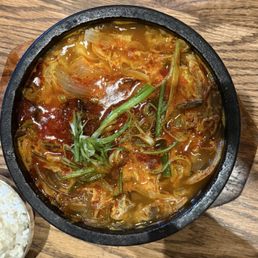

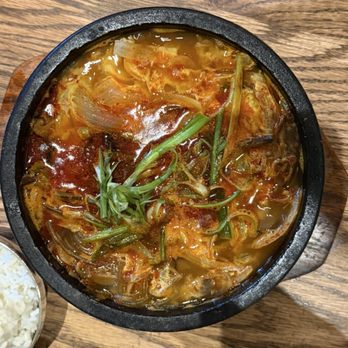
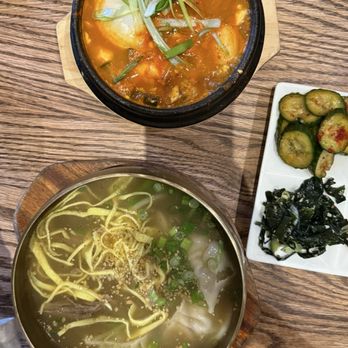
Cute, clean, and chic Korean venue with authentic Korean food in the heart of Washington DC. Vacationing out here with parents who came out from Korea. Let me tell you this place is a legit Korean restaurant approved by my parents We had the following three dishes: 1. Dduk Mandu guk: rice cake and dumpling soup (beef based broth) that was garnished with green onion and egg strips. This is a dish we usually have on New Year's Day. 2. Yukgaejang: spicy beef broth boiled hot with onions , green onion strips, and clear noodles. Sooo delicious. 3. Soon dobuw(spicy tofu soup: better than bcd. Spicy tofu soup with seafood. Overall a 5 across the board for food quality, portions, and service. Highly recommend this place to Korean natives looking for authentic Korean food to satisfy craving and to others that may be looking to try good Korean food.


Fabulous! A 5/5 star restaurant! The service was great, the bartender in particular on this night was fantastic, he gave great recommendations and the food was phenomenal. A great Korean spot with a great environment!


The service was attentive and the ambiance was very warm and inviting, but the food definitely left something to be desired. The seafood pajeon was way too soft and not crispy at all, the dipping sauce made up for it, but the texture was definitely not what I was expecting. Also got the sundubu and the Korean fried chicken and both were just so mid. Works in a pinch but I think if you look around a little more you can probably find better Korean food elsewhere.


I was very excited to try Mandu after reading the reviews! We made a reservation for a party 5 about a week in advance. The food was delicious. We started with some appetizers, including the KFC, assorted dumplings and the seafood pancake. Everyone especially loved the pancake. It was delicious and flavorful. The fried chicken was spicy and sweet. Everything we tried was awesome! I am also a big fan of the pickled cucumbers and bean sprouts that they bring out for everyone to share! The kimchi was great, as well. For my main, I had the Yukgaejang (spicy beef stew with noodles). It came out sizzling and I had to wait for it to cool off to eat it. It was delicious and very filling. The portions are generous. My favorite thing I tried was the Duru jjigee. It was a platter with pork, tofu, chewy rice cakes and veggies. This was the star of the show. I'm so happy we tried Mandu. The food was great! The service was attentive. There were not any long waits. It was overall 5/5.


Happy hour sojutinis were fantastic here! Mandu is a Korean restaurant located in DC's Chinatown. We came here for their happy hour, and we had to sit at the bar to both order and eat/drink to get the deals. The service at the bar was very good, and I think it was partly because we were the only ones seated there. We ordered the mandu, which is a plate of six dumplings with your choice of filling. We chose shrimp, and these were tasty. The other appetizer we ordered was the pa jeon, which is a seafood scallion pancake. This was sooooo good, and I wish it were bigger. For our entree, we shared the dolsot bibimbap. I felt like the ratio of ingredients was a bit off in the bibimbap. While I really enjoy vegetables, it felt like there wasn't enough rice compared to the volume of vegetables, which would be an easy fix. We shared these three dishes amongst the two of us, and we could not finish it all. The sojutinis were strong and good drinks. My friend and I both liked the yogurt sojutini the most. The aloe one tasted the strongest as the aloe flavour couldn't mask the taste of the alcohol that well. I also had the peach sojutini, which was strong as well.
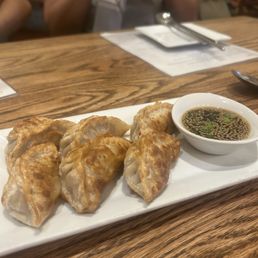

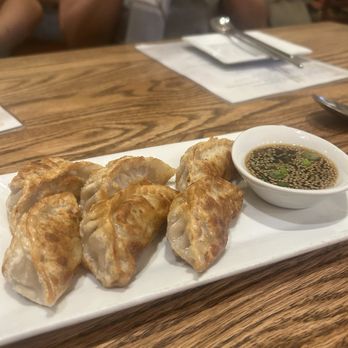
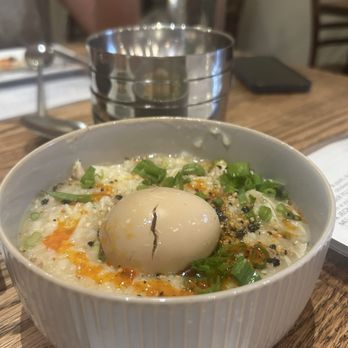
Another amazing meal here!! We all got sojutinis (highly recommend the yogurt flavor), and split food among the table. The fried chicken is AMAZING and we also split the beef pork pan friend dumplings, rice porridge, and then got ddukbokgi to split. Great amount of food for three people and it was delicious! Repeat visit here so we're big fans! Love the yogurt sojutini, fried chicken and would probably try some other things on next visit otherwise but those would repeat over and over again!


4 days ago
The restaurant was very busy when we arrived, but service was still smooth and swift. I wouldn't say the Korean food is particularly authentic, but it was a decent American twist on Korean cuisine and still tasty. The tteokbokki came with additional vegetables and mushrooms, and their banchan were quite good. The mandu was meaty which I appreciated too. I wouldn't come back because I didn't feel the value was quite there (very pricey) but it was still an enjoyable meal overall. The ambiance was nothing special, and I do wish the bathroom had been cleaner. read more


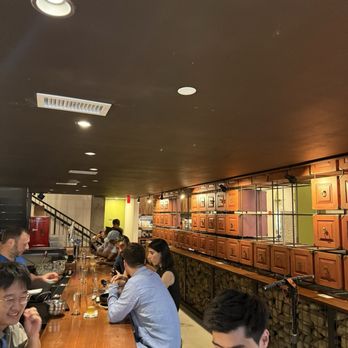


26 days ago
This is our first time visiting Washington DC, and we haven't found many great dining options near our hotel. We discovered this spot on Yelp. The moment the banchan (Korean side dishes) arrived and we took our first bites, we knew we'd stumbled upon an outstanding Korean restaurant. Every side dish is prepared authentically and tastes fantastic. Our first main dish to come out was kimchi fried rice with beef. While it isn't made using a fully traditional Korean method, it was absolutely delicious -- easily the best kimchi fried rice I've had in the past few years. We also ordered their signature pork and potato stew. It was excellent; the chili flavour was smooth, and every ingredient was wonderfully seasoned. Our server was incredibly polite and friendly, and we were happy to leave a tip for them. We plan to come back tomorrow evening, but unfortunately, our server told us they might not be working then. This Korean restaurant is highly recommended. If you're staying nearby or travelling in Washington DC, I'd strongly suggest stopping by to enjoy their wonderful Korean food. read more


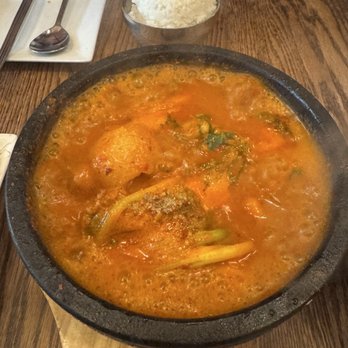

My girlfriend and I were visiting Washington, DC and decided to give Mandu a try. The restaurant itself is modern, clean, and nicely decorated, making a great first impression. However, when we walked in and saw only a couple of tables occupied, I had a feeling it might not live up to its appearance. Unfortunately, that feeling turned out to be justified once we looked at the menu and tasted the food. Overall Ratings Atmosphere - 4/5 Service - 3/5 Food - 1/5 Parking - Street Parking Atmosphere - The restaurant is modern, clean, and well maintained. The dining room is attractive and comfortable, and it feels much more upscale than your average Korean restaurant. Service - Service was adequate. Nothing stood out as particularly good or bad. The staff took our order, brought out the food, and checked on us occasionally. What We Ordered - -Galbi - At over $40, this was by far the most disappointing dish of the meal. I've had galbi at countless Korean restaurants, many of which charge under $30 while delivering significantly better flavor and quality. The seasoning was noticeably different from what I'm accustomed to, and not in a good way. For the price, it felt extremely underwhelming. -Pa Jeon - Just okay. It was a standard Korean pancake that didn't stand out in any particular way. -Tofu Stew - We ordered it mild, but it was surprisingly spicy and excessively salty. The saltiness overwhelmed most of the other flavors in the dish. -Korean Fried Chicken - Unfortunately, this suffered from the same issue. The chicken itself was decent, but it was far too salty, making it difficult to enjoy. Final Thoughts - The biggest issue for me was the value. Nearly every dish felt overpriced for the quality being served, and the excessive saltiness across multiple items made the meal even more disappointing. While the restaurant looks great and has a modern atmosphere, the food simply did not justify the prices. Considering how many excellent Korean restaurants I've been to over the years, this was one of the more disappointing experiences. Unfortunately, I wouldn't return. read more


Food: I tried Gaji Bokum & Dak Jjim. They both were well seasoned and delicious. Dak jjim is a bit spicy. Just a heads up. ;) Service: I received an incorrect order by an accident, and when I went back, they fixed the mistake quickly. Staff were friendly even though I arrived there after their closing hour. Ambiance: there is a bar area, left side when entered the restaurant, and a dining area on the right. Both parts are well spaced out to have a meal comfortably. read more

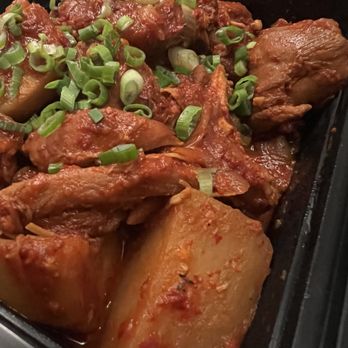

I've recently rediscovered this restaurant and am impressed again. The happy hour is great. We had a slider and a full assortment of mandus, steamed, fried, shrimp, meat, veg. All were delicious. They seem to specialize in an upscale Korean street food. I wasn't sure if these were American or Korean creations. The bartender assured me they were really Korean and explained their back stories. The menu is changing and evolving. Their drink selections are special and unique. The servers have always been friendly. The bar and restaurant are both comfortable and relaxing. I'm looking forward to returning again to try some of their other unique menu items. One bit of advice, this place always looks closed. I think it's the lighting. If it looks closed, just check the door. It's probably not closed. read more


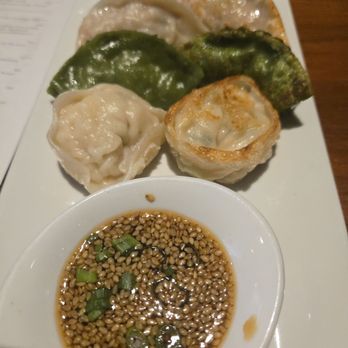


I've been to Mandu a few times over the years and I'm sorry to say my most recent visit didn't hit the mark. I visited on a Friday around 6:30 PM and sat at the bar to catch the end of happy hour (Mon-Sun 5-7 PM). The bar was empty at the time, but a few other people showed up later. The dining room had a handful of tables occupied. In short, easy to get a seat. Drinks were good. I like the Somaek ($6) which is a small beer and a shot of soju. Beer ($7) was beer. We got some beef and pork mandu (dumplings) that were pretty good. 6 pieces for $10 on HH. We got two entrees, the Ddukbokgi ($28) and Yukgaejang ($29), which came with four banchan. Ddukbokgi is chewy rice cakes, gochujang, onion, and bulgogi. We thought it was only ok -- we've had better, including at Mandu in the past. Yukgaejang was a new dish for me. The menu described it as a "spicy beef stew, brisket, noodles, shiitake, bean sprouts, and egg." I expected the brisket to be sliced and recognizably brisket, but it was pulled -- it looked and tasted more like pulled pork. The dish also didn't have any noodles in it. I didn't like it. The banchan was seaweed, bean sprouts, kimchi, and cucumbers. It was okay. Service at the bar was fine. read more


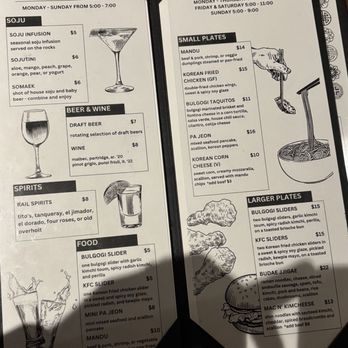


I went to Mandu during their HH. Their HH assortment had the right stuff I was going for - Mandu, sliders, drinks all at affordable prices. When the food came, it was above average in my opinion. I think I wouldn't come back for their HH items but their actual entrees. What sealed the deal for me is the quality of service. It was empty when I walked in, but enjoyed conversing with the bartender and we both shared our go to places within DC. Despite the quiet environment, I'm glad I had company to talk to. read more


Decided to try some Korean food here while visiting DC area. Unfortunately, I forgot got to take photos od the KFC appetizer and Kimchi Bokum Bap that I ordered. Both were delicious and portion size was generous. And the side dishes of cucumbers, kimchi, bean sprouts and seaweed that accompanied the main dish were great. The atmosphere here was nice, and staff friendly, attentive and helpful with my menu questions. Overall, my experience was very good. read more


3 months ago
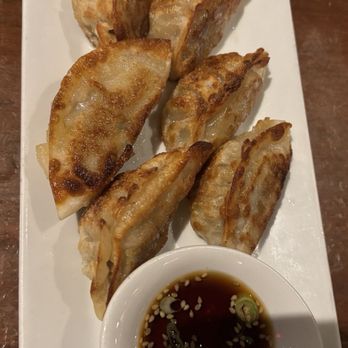
I didn't know much about Korean food before this spot, so I just ordered what I heard was popular ( Jajangmyeon, and chicken dumplings, and the pancakes). Everything was fantastic and made me obsessed with Korean cuisine. The dumplings were the perfect balance of fried, meaty, tender, and not too oily. The noodles were a completely new thing for my taste pallette (so many new seafood) but I really enjoyed it! read more



9 months ago
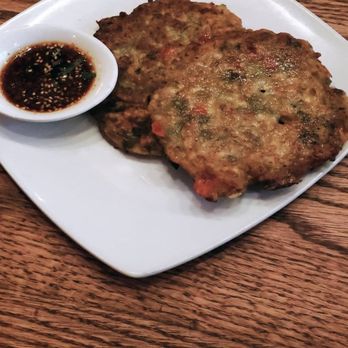
There are a lot of constraints when it comes to making authentic food in DC, so I think Mandu accomplishes in bringing a lot of Korean flavors to the table. There is an elevated element to the restaurant in terms of plating and ingredient range, so this also becomes evident in the price and some of the dish choices. My concensus is that it was okay for Korean food, but one of the better restaurants for American audiences to try. Pa Jeon arrived on a sizzling plate, which wouldn't be my first choice since it's a dish where you have to cut the pancake and risk burning yourself. The pancake we received had a good seafood flavor, but there weren't a lot of indistinguishable seafood pieces to find. The overall mouthfeel of eating the pancake was a bit chewy to rubbery which enhanced the soft just-cooked batter in the middle. The choice to use sliced scallions makes the dish more akin to a familiar savoy pancake- okonomiyaki. In staying true to distinguishing this as a Korean restaurant, I would suggest cutting the scallions into matchsticks for better presentation and to liken their techniques to match Korean cuisine better. Pa Jeon is a difficult dish to pull off even though it's a common appetizer. Despite being on the sizzling plate, it was not crispy. The thickness of the pancake is a good indicator of how well the maker understands what Pa Jeon is supposed to be, where the batter is a thin, crispy, and simply fills the gap of the toppings to hold it together. Poached Pear Salad we received was very small. The poached pear, but it was waterlogged, and cut too large so it would fall to the bottom of the salad. The addition of raw daikon slices offered a crispy and fresh bite. I was interested in the unique leaf ingredients like perilla and radicchio, but it was lost since the daikon slices dominated the salad portion of the dish.The dish is topped with popped black rice, but in our case, the rice kernels were barely popped so it felt like we were just eating raw uncooked purple rice. The dressing leaned quite acidic would have likely paired better meats or heavy stews. I wouldn't suggest it to be a stand-alone salad. Yukgaejang was a favorite soup, all the toppings paired well together and the broth was thin enough to share amongst guests. The meat was tender and evidently shredded in the dish. Very comforting. And while I appreciate the overall flavor of the Gamjatang. Notably, the meat was tender and it was easy to remove the meat from the pork bones. However, the potatoes of the soup had broken down too far into the dish so it was more or less a stew, or a very flavorful paste. This is probably from the starches gradually thickening up the soup if they batch-prepared this dish. To break down the banchan, Seaweed salad was a table favorite. Seaweed can easily turn soft, but this was served cold and retained its firm texture while being well-dressed in a combination of sesame and garlic. We were told kimchi was made in house, but we received an old batch so it was quite sour. Bean sprouts were a bit too waterlogged to retain the seasonings so it seems to have sunk to the bottom, but crunch is there. Cucumbers were simply pickled, the gochugaru that coats them didn't add any spice or distinct flavor profile. Overall, these were refreshing bites to take inbetween and pair with other dishes. Our waiter was very attentive and friendly. They made sure to explain each dish and check up on our waters. The overall vibe of the restaurant is also quite great, it mixes a lot of modern pieces and fixtures so it's definitely communicated that this is an elevated Korean restaurant. read more

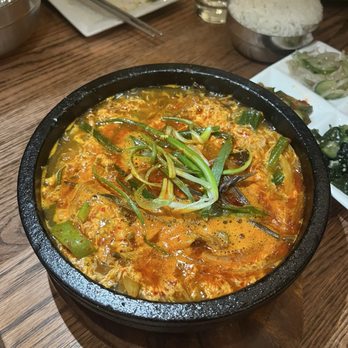


Cute, clean, and chic Korean venue with authentic Korean food in the heart of Washington DC. Vacationing out here with parents who came out from Korea. Let me tell you this place is a legit Korean restaurant approved by my parents We had the following three dishes: 1. Dduk Mandu guk: rice cake and dumpling soup (beef based broth) that was garnished with green onion and egg strips. This is a dish we usually have on New Year's Day. 2. Yukgaejang: spicy beef broth boiled hot with onions , green onion strips, and clear noodles. Sooo delicious. 3. Soon dobuw(spicy tofu soup: better than bcd. Spicy tofu soup with seafood. Overall a 5 across the board for food quality, portions, and service. Highly recommend this place to Korean natives looking for authentic Korean food to satisfy craving and to others that may be looking to try good Korean food. read more



7 months ago
Fabulous! A 5/5 star restaurant! The service was great, the bartender in particular on this night was fantastic, he gave great recommendations and the food was phenomenal. A great Korean spot with a great environment! read more


The service was attentive and the ambiance was very warm and inviting, but the food definitely left something to be desired. The seafood pajeon was way too soft and not crispy at all, the dipping sauce made up for it, but the texture was definitely not what I was expecting. Also got the sundubu and the Korean fried chicken and both were just so mid. Works in a pinch but I think if you look around a little more you can probably find better Korean food elsewhere. read more


I was very excited to try Mandu after reading the reviews! We made a reservation for a party 5 about a week in advance. The food was delicious. We started with some appetizers, including the KFC, assorted dumplings and the seafood pancake. Everyone especially loved the pancake. It was delicious and flavorful. The fried chicken was spicy and sweet. Everything we tried was awesome! I am also a big fan of the pickled cucumbers and bean sprouts that they bring out for everyone to share! The kimchi was great, as well. For my main, I had the Yukgaejang (spicy beef stew with noodles). It came out sizzling and I had to wait for it to cool off to eat it. It was delicious and very filling. The portions are generous. My favorite thing I tried was the Duru jjigee. It was a platter with pork, tofu, chewy rice cakes and veggies. This was the star of the show. I'm so happy we tried Mandu. The food was great! The service was attentive. There were not any long waits. It was overall 5/5. read more


Happy hour sojutinis were fantastic here! Mandu is a Korean restaurant located in DC's Chinatown. We came here for their happy hour, and we had to sit at the bar to both order and eat/drink to get the deals. The service at the bar was very good, and I think it was partly because we were the only ones seated there. We ordered the mandu, which is a plate of six dumplings with your choice of filling. We chose shrimp, and these were tasty. The other appetizer we ordered was the pa jeon, which is a seafood scallion pancake. This was sooooo good, and I wish it were bigger. For our entree, we shared the dolsot bibimbap. I felt like the ratio of ingredients was a bit off in the bibimbap. While I really enjoy vegetables, it felt like there wasn't enough rice compared to the volume of vegetables, which would be an easy fix. We shared these three dishes amongst the two of us, and we could not finish it all. The sojutinis were strong and good drinks. My friend and I both liked the yogurt sojutini the most. The aloe one tasted the strongest as the aloe flavour couldn't mask the taste of the alcohol that well. I also had the peach sojutini, which was strong as well. read more


Another amazing meal here!! We all got sojutinis (highly recommend the yogurt flavor), and split food among the table. The fried chicken is AMAZING and we also split the beef pork pan friend dumplings, rice porridge, and then got ddukbokgi to split. Great amount of food for three people and it was delicious! Repeat visit here so we're big fans! Love the yogurt sojutini, fried chicken and would probably try some other things on next visit otherwise but those would repeat over and over again! read more



3 years ago
Hefty prices for okay Korean food and slightly larger-than-normal portions. Dishes came out slowly, but our waiter was incredibly friendly and attentive. I liked the KFC the most - It's satisfyingly crunchy with a yummy sweet and savory glaze. The restaurant is a bit small, so def make a reservation if you have a large group. read more


7 months ago
Some of the best Korean food in dc!! Was all super yummy!! Served fresh and super hot!! Ambience is incredible, great servers as well. I highly recommend the Dduk Mandu Guk, such a rich and refreshing north read more
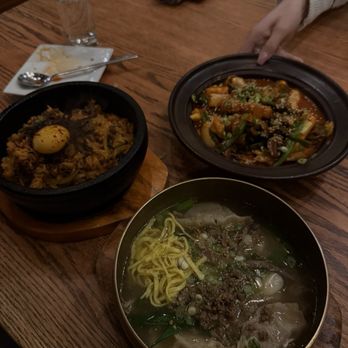


Wow, the food here is stellar. From well-crafted cocktails, exceptionally flavored crispy chicken, and some of the best Bulgogi I've ever tasted, I cannot stress how delicious the food is. Their dessert croiffle (croissant waffle) was delicious, although it was a little on the sweet side, but still superb. However, the pricing for their entrees is on the more expensive side. It's $37 for one portion of Bulgogi and even though it comes with lettuce to make wraps ("ssam") and a side of grilled veggies, the price is higher than I think it should be. I'd recommend splitting the Bulgogi between 2 people and ordering 1-2 appetizers for a satisfying meal. Their menus are all digital and publicly available on their website. The staff are all very friendly and the atmosphere is quite spacious with a unique design. The restaurant is split into two sections: a bar and a restaurant. Unfortunately, the Happy Hour deals are only offered at the bar. read more


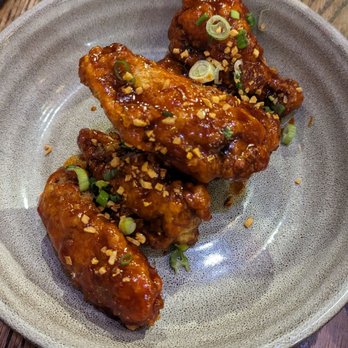


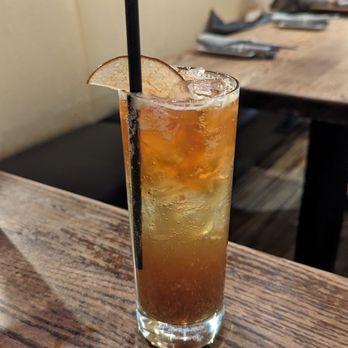


Yo this place is absolutely poppin' so make sure you have a reservation. Me and my party of 4 arrived around 7:00 PM on a Friday night. Thankfully a table was just being cleared and we came at the right time. Our server was super kind and answered any questions we had about the menu. I loved my soondubu and was absolutely stuffed afterwards. The portions are large and you will probably have some leftovers. The only thing I wasn't crazy about was the temperature inside. It might have been because we went during the heatwave but the AC didn't feel that strong and I was just sweating sitting there. Other than that, I definitely want to come back in order to try something else on the menu. read more


Food was pretty good - they work very hard on presentation and it showed. I ordered soon tofu - the bottom half was hot (as it should be) the top was kinda still cold. Minus a star. There was a good amount of seafood in it too which was nice. I also ordered the pajun. It was good. Sauce was good too. Could have been crispier. read more


Excellent Korean restaurant in the heart of DC. Can you find better Korean food in the suburbs of the DMV? (Think Annandale, Ellicott City) No doubt. But for the location this is a hidden gem. I will also say Gamjatang (pork bone soup) is not a common item on most Korean restaurant menus, even in very authentic Korean restaurants in the suburbs, so savor it here. (If anyone knows of another spot, I'm all ears.) Yes it is pricey. Yes it is a little bougier than your typical mom and pop Korean restaurant and a little smaller than your bustling Kbbq joint. But come here for the Gamjatang and you will be dreaming of your next visit before you leave. read more

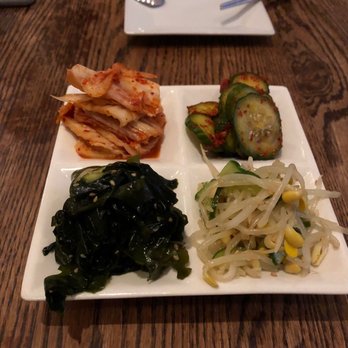

10 months ago

3 years ago
Inside was a bit cozy and the decorations were super cute! We had seating inside, we made a reservation but since it was a Monday night I don't think it was even needed. Staff was very polite and helpful. We ordered three different appetizers because they all sounded so yummy, and they were! The Korean Fried Chicken had a sweet and spicy sauce but it really wasn't too spicy at all. The seafood pancake ended up being a little spicy, and it had a perfectly crunchy texture! The mandu dumplings were also a great choice, we ordered beef & pork and steamed. For our entrees, we ordered a variety of food and I had the bibimbap. The dish was sooo hot when it came out, and it was delicious! Everything was great and everyone was fully stuffed at the end of our meal. Thank you Mandu! 5/5! read more


Things I love: weekend drinking and happy hours. Things Mandu has: happy hour on the weekends. A serious plus. Started and finished with some sojutinis which were great. Also happy hour price of $5!! Tried the mango and peach. We got there toward the end of happy hour so I would have for sure ordered more if I had the time. The bartender was super friendly and made the drinks perfectly. We sampled the mandu and the croquette. Both were great especially for the price. May be my weekend happy hour spot read more


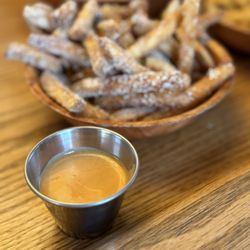
I keep trying this place every time I'm in town cuz it's within walking distance to the hotel and every time, there is good and bad. This time, I had the gajibokkum and kkwabeghi. The eggplant was good, but the twisted donut was not cooked fully in the middle and it was too vinegary. Would have preferred it to be a light dusting of sugar, like the OG in Korea. And the dip was not needed. Already sweet and it added nothing. read more


11 months ago

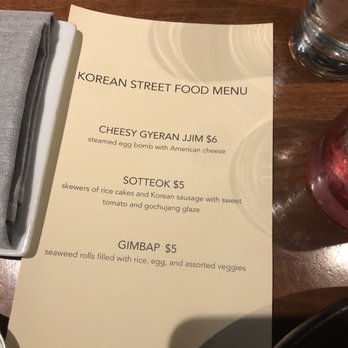
REVIEW OF HAPPY HOUR AND SPECIAL EVENT I learned about the pop up Korean street food event from a page I follow on Instagram. I intended to get here right at 5, but metro rail had other plans. The egg dish was arguably the hottest eggs I've ever eaten. I also had the sushi dish, gimbap, but I was so full after eating the eggs that I had to ask for a to go box and just finished the gimbap for dinner tonight. Next time this pop up is offered I will try the sotteok. I also enjoyed the soju infusion cocktail. So this is a good place to enjoy happy hour or after an event at the convention center nearby. read more


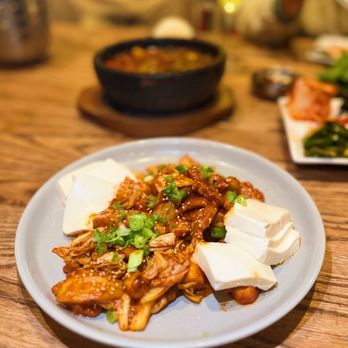
My friends and I were starving so we stopped by Mandu for dinner after reading all the great reviews. Everything was delicious but the service was slow. Banchans all delish and flavorful Mandu (Fried): We got a combination of all three flavors and they were all really flavorful! Pa Jeon: Fluffy seafood pancake that was soft but also crispy. We could really taste the shrimp and squid. Chap Chae: Noodles were perfectly seasoned and al dente. We could taste the sesame oil. Galbi: Tender and smokey. Duru Jjigee: Pork belly with kimchi, tofu, and rice cake. Yakgaejang: Tender brisket that melts in the mouth. read more


4 years ago
A great Korean place in DC! It probably isn't the most authentic, but they have great vegetarian options! They can make almost everything on their menu vegetarian as well! Got a sojutini, which was good! They have lots of flavors, but decided on mango! We also go the cauliflower as an appetizer which was delicious! We got the jap Chae, also vegetarian, which was good. It just needed something else sauce wise or something. We also got the Tteokbokki, which was great and they also made it vegetarian with some tofu in it! I've never had it with tofu before, I would recommend it!! Overall, a solid Korean place! Parking in the area is a little difficult, but we found some, paid, a couple blocks away. Enjoyed the interior, they keep it clean. read more


1 year ago

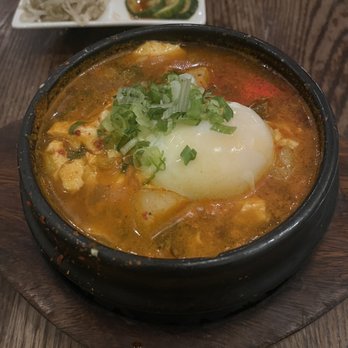
Overall good food and I would come back again. We didn't make a reservation for a Saturday night and we got seated quickly. I ordered the soon doobu and the donut for dessert. The soon doobu was good. It wasn't anything amazing but it had good flavor. I wish it had a richer broth and more seafood but overall good tasting. The donut was just an average fried donut with fruit sauce. I don't know what I was expecting but just don't get it, it's nothing special. Now the real stars of the show are the side dishes. These were EXCELLENT. They were some of the best tasting Korean side dishes I've had. So much flavor and so delicious. I'd come back just to get the side dishes. Service was good. Our server was attentive and gave good recommendations. read more



1 year ago

Mandu is one of my favorite places in DC but it is certainly for a pretty penny. I also think there are better places in Annandale if you can get out there. For DC Korean food, I feel like this is pretty good. Some of our favorite dishes: duru jjigee, soon doobu, galbi jjim. All of our favorite dishes are pretty flavorful. The duru jjigee and galbi Jim are so flavorful and the meat is soo tender, I recommend! The soon doobu is very comforting but isn't as flavorful as other soon doobus. The banchan, mandu, and seafood pancake is just okay if you are feeling it. The restaurant has limited seating especially as they follow covid regulations. Definitely make reservations or go during less busy times. read more


Page 1 of 24
More info about Mandu
Mandu Reviews in Other Languages
Ask the Community - Mandu
You might also consider














Why does Yelp recommend reviews?
40 reviews that are not currently recommended
The reviews below are not factored into the business's overall star rating.

9 years ago

15 years ago

13 years ago
13 years ago

15 years ago

10 years ago

7 years ago

12 years ago
13 years ago

14 years ago

4 years ago

9 years ago

10 years ago

9 years ago
11 years ago
13 years ago

15 years ago

7 years ago

15 years ago
Mandu - korean - Updated August 2026
Best of Washington, DC
Browse Nearby
BEST of Washington, DC, District of Columbia Restaurants near Mandu
BEST of Washington, DC, District of Columbia Coffee near Mandu
BEST of Washington, DC, District of Columbia Desserts near Mandu
BEST of Washington, DC, District of Columbia Things to Do near Mandu
BEST of Washington, DC, District of Columbia Parking near Mandu
BEST of Washington, DC, District of Columbia Sushi near Mandu
BEST of Washington, DC, District of Columbia KBBQ near Mandu
BEST of Washington, DC, District of Columbia Ramen near Mandu
BEST of Washington, DC, District of Columbia Mall near Mandu
BEST of Washington, DC, District of Columbia Escape Room near Mandu


