Peterson Winery Photos


You might also consider


More like Peterson Winery
Recommended Reviews - Peterson Winery
Start your review...

Reviews With Photos


Peterson is an award-winning, family owned and operated Dry Creek Valley winery known for its artistic animal-inspired labels and deep, multilayered, and soulful red wines, with a smaller production of white and seasonal rosé as well. The tasting room and winemaking facilities are located in a sort of vintner's collective (Timbercrest Farms) just off of Dry Creek Road, somewhat reminiscent of wine "ghettos" I enjoy visiting in Lompoc (Santa Barbara) and Templeton (Paso Robles). Peterson is not a newcomer to the Dry Creek Valley, however, and its community ties run deep. The founding father, Fred P., releases a Zinfandel each fall to help raise money for local and state firefighter associations, and he is a member of the Geyserville volunteer fire department, whose services in a drought-stricken state like California are invaluable. Other members of the family (Jamie P. and Emily P.) take care of day-to-day winemaking and marketing alongside a very small team of assistants and tasting room staff. It feels authentically human scale here, and the tasting experience is casual and fun, even if many of the wines have real depth and profundity. You can choose a Bradford Mountain estate only flight or sample a mix of wines sourced from vineyards in Sonoma and Mendocino Counties. I came with a friend and we sampled from both, plus a few bonus pours. My personal favorite was a 2013 estate GSM blend brimming with bright Grenache flavors wrapped up with Syrah spice and Mourvèdre earthiness. Delicious! The range of old vine Zinfandels is also impressive and fits in well with other local wineries who specialize in this heritage varietal. Since Peterson makes almost 25 different wines, often in productions of 100 cases or less, you never know what you'll discover. All the more reason to return again for a follow up visit!


Remarkable wines especially when one considers the price - real value for quality. We bought 2009 Zero Manipulation for $15. How can one pass on a wine with a Jackalope on the label? Inside the bottle is a great Wednesday wine, maybe even a Friday wine. Whitey, the 15 year old giant cat, is the star animal of our winery tasting travels. Friendly and loveable. Also, helps you pick the wines. The Dry Creek wineries produce a wider variety of wines and styles of wines than the traditional PN and Zin crowd along the Russian River. This area of the Alexander Valley is surprisingly good. We prefer it to most of the samples we tried along the Russian River. Tasting room location is in the same parking lot as 10 other wineries tasting rooms - right off Dry Creek Road. Stop at this ONE location and you will be able to taste wines from Amphora, Collier Falls, Dashe, Forth, Philip Staley, Peterson, Lago di Merlo, Kokomo, Mietz and Papapietro. Easy peasy.


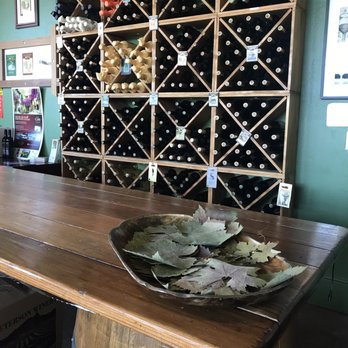
Sooooo many wineries! How the hell do you know which one is a decoy and which is the real deal? Yelp may help - but in this case, a reference from Trentadue after we told her we like reds. Peterson is the real deal!! What is good about Peterson Winery? Certainly not the facility which is in a cluster of tasting shops on a hill off the main road. The tasting room is nice - don't get me wrong! It's just not in a bucolic setting of oaks and carefully tended gardens. It is all about: the wine! They have blends and 100% wines. Sofie and I liked the 2012 Il Granaio Sangiovese the best... we bought two bottles yesterday... and drank them both last night with 1" thin rib eyes. The wine was full of flavor and smooth as a kitten's belly. Oh... we had help from son and daughter-in-law as Sofie and I do not each normally drink full bottle of wine with our dinner. They have a "Bradford Zinfandel" - which amused me because I have a case of the VML Bradford Zin which I like very much. Their Zin was not much different. The grapes came from Bradford Mountain in the distance - more of a respectable hill than a mountain in my opinion - but they call it a mountain and I'm good with that. If my name were Brandford and I had the choice of being called a mountain or a hill - you can be certain I would be a mountain. I liked their Bradford Mountain Cabernet best and bought a bottle of that I mouthed off to our wine guide (Chris Rush) about how I favor blends to the pure grape wines - touting my recent expedition to Bell Winery in Yountville. I was stroked by his agreement and that he had been to Yountville just that day! I asked him, "Why are the wines over there so damn expensive? I mean, I can't taste much difference between Sonoma County wines and Napa?!" His answer made a lot of sense to me: real estate prices! Yep! Napa county land values are much higher than Sonoma county - and believe me - paying a 1% value of land value in taxes each year has everyone scrambling to make their land pay!! Why do people cut down the trees on their land or grow pot? You gotta pay the annual tax. Where's the money going to come from? Peterson Winery is the most unpretentious winery I have visited in a long time - and it has honest wines. What is an honest wine? One that can stand on it's own without some guy behind the counter talking it up like it was the cure for cancer. The guy our counter was Chris Rush. He is kind of like Rasputin in appearance and charisma - a full beard, penetrating eyes and a captivating flow of interesting information on every subject that came up. I began talking about the growth rings of the fine grained douglas fir in the table top (this was my second tasting adventure and I was drinking - not driving ) and he said, "...oh yes! I studied dendrology in college..." and off he went on another interesting and informative dissertation of microclimate influences on viticulture. His knowledge of wine, growing grapes and local lore is inexhaustible! I am building a list of "Best Sonoma Wineries" - this will be included. Want to experience the best of Sonoma Wineries - add this one to your list. Bonus! They give away wine labels. Take as many as you wish and paste them wherever you want. I put mine on my computer so people can see, "Oh wow! He's so cool with the wine sticker on his laptop!" Yeah! See attached photo.


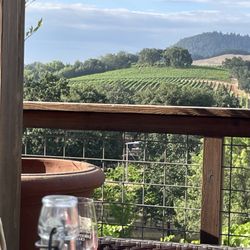
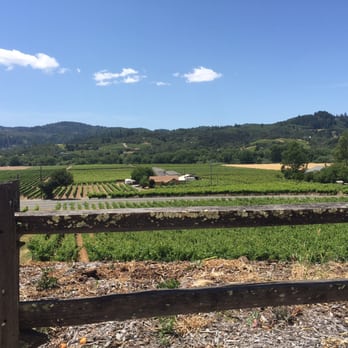
I had an amazing wine tasting experience today at Peterson. I've enjoyed their Old Vine Zin (Mendocino County) so much I needed to come back to pick up more and taste some other wines they offer. You know how the film "Sideways" made Merlot a dirty word? Well let me tell you, Peterson's Merlot is outstanding! So happy I gave it a try. It has a very earthy taste which I enjoyed. I learned it has won some awards as well. Pam was our wine tasting server and she made our time there most enjoyable. Pam is very approachable with a warm personality. We met the owner Fred while there and what a kick he is- friendly and funny! It was a glorious day so we moved our tasting outdoors at a table in the sun with a view of Bradford Mountain where the winery estate is. The prices are very affordable for their wines. I highly recommend this family owned winery. read more


Great Great Great and Great again. ..... We had the pleasure of visiting the Petersen Winery in Dry Creek , what a great find. We had a great host Danny who not only allowed us to taste every wine they made but allowed us to join their wine club. What a great experience as Danny explained all aspects of how to check out wines. We ended up purchasing several wines and aerators, he gave us a tour of the vineyard and took us to their next door Winery neighbor. It was also great to need Fred Petersen and his daughter Emily, great hosts ! We'll be back ! read more


Good wines...the dessert port wine is crazy good. Nice owners...father and daughter duo. And they had a mini movie theater setup and were playing Groundhog Day all day long...that's just absolutely awesome! We even got to meet and take a photo with cardboard Bill Murray. read more

Business owner information

James P.
Hi Chun, So glad you enjoyed your visit to Peterson over the Winter…

9 years ago
Peterson is an award-winning, family owned and operated Dry Creek Valley winery known for its artistic animal-inspired labels and deep, multilayered, and soulful red wines, with a smaller production of white and seasonal rosé as well. The tasting room and winemaking facilities are located in a sort of vintner's collective (Timbercrest Farms) just off of Dry Creek Road, somewhat reminiscent of wine "ghettos" I enjoy visiting in Lompoc (Santa Barbara) and Templeton (Paso Robles). Peterson is not a newcomer to the Dry Creek Valley, however, and its community ties run deep. The founding father, Fred P., releases a Zinfandel each fall to help raise money for local and state firefighter associations, and he is a member of the Geyserville volunteer fire department, whose services in a drought-stricken state like California are invaluable. Other members of the family (Jamie P. and Emily P.) take care of day-to-day winemaking and marketing alongside a very small team of assistants and tasting room staff. It feels authentically human scale here, and the tasting experience is casual and fun, even if many of the wines have real depth and profundity. You can choose a Bradford Mountain estate only flight or sample a mix of wines sourced from vineyards in Sonoma and Mendocino Counties. I came with a friend and we sampled from both, plus a few bonus pours. My personal favorite was a 2013 estate GSM blend brimming with bright Grenache flavors wrapped up with Syrah spice and Mourvèdre earthiness. Delicious! The range of old vine Zinfandels is also impressive and fits in well with other local wineries who specialize in this heritage varietal. Since Peterson makes almost 25 different wines, often in productions of 100 cases or less, you never know what you'll discover. All the more reason to return again for a follow up visit! read more


15 years ago
Remarkable wines especially when one considers the price - real value for quality. We bought 2009 Zero Manipulation for $15. How can one pass on a wine with a Jackalope on the label? Inside the bottle is a great Wednesday wine, maybe even a Friday wine. Whitey, the 15 year old giant cat, is the star animal of our winery tasting travels. Friendly and loveable. Also, helps you pick the wines. The Dry Creek wineries produce a wider variety of wines and styles of wines than the traditional PN and Zin crowd along the Russian River. This area of the Alexander Valley is surprisingly good. We prefer it to most of the samples we tried along the Russian River. Tasting room location is in the same parking lot as 10 other wineries tasting rooms - right off Dry Creek Road. Stop at this ONE location and you will be able to taste wines from Amphora, Collier Falls, Dashe, Forth, Philip Staley, Peterson, Lago di Merlo, Kokomo, Mietz and Papapietro. Easy peasy. read more


Sooooo many wineries! How the hell do you know which one is a decoy and which is the real deal? Yelp may help - but in this case, a reference from Trentadue after we told her we like reds. Peterson is the real deal!! What is good about Peterson Winery? Certainly not the facility which is in a cluster of tasting shops on a hill off the main road. The tasting room is nice - don't get me wrong! It's just not in a bucolic setting of oaks and carefully tended gardens. It is all about: the wine! They have blends and 100% wines. Sofie and I liked the 2012 Il Granaio Sangiovese the best... we bought two bottles yesterday... and drank them both last night with 1" thin rib eyes. The wine was full of flavor and smooth as a kitten's belly. Oh... we had help from son and daughter-in-law as Sofie and I do not each normally drink full bottle of wine with our dinner. They have a "Bradford Zinfandel" - which amused me because I have a case of the VML Bradford Zin which I like very much. Their Zin was not much different. The grapes came from Bradford Mountain in the distance - more of a respectable hill than a mountain in my opinion - but they call it a mountain and I'm good with that. If my name were Brandford and I had the choice of being called a mountain or a hill - you can be certain I would be a mountain. I liked their Bradford Mountain Cabernet best and bought a bottle of that I mouthed off to our wine guide (Chris Rush) about how I favor blends to the pure grape wines - touting my recent expedition to Bell Winery in Yountville. I was stroked by his agreement and that he had been to Yountville just that day! I asked him, "Why are the wines over there so damn expensive? I mean, I can't taste much difference between Sonoma County wines and Napa?!" His answer made a lot of sense to me: real estate prices! Yep! Napa county land values are much higher than Sonoma county - and believe me - paying a 1% value of land value in taxes each year has everyone scrambling to make their land pay!! Why do people cut down the trees on their land or grow pot? You gotta pay the annual tax. Where's the money going to come from? Peterson Winery is the most unpretentious winery I have visited in a long time - and it has honest wines. What is an honest wine? One that can stand on it's own without some guy behind the counter talking it up like it was the cure for cancer. The guy our counter was Chris Rush. He is kind of like Rasputin in appearance and charisma - a full beard, penetrating eyes and a captivating flow of interesting information on every subject that came up. I began talking about the growth rings of the fine grained douglas fir in the table top (this was my second tasting adventure and I was drinking - not driving ) and he said, "...oh yes! I studied dendrology in college..." and off he went on another interesting and informative dissertation of microclimate influences on viticulture. His knowledge of wine, growing grapes and local lore is inexhaustible! I am building a list of "Best Sonoma Wineries" - this will be included. Want to experience the best of Sonoma Wineries - add this one to your list. Bonus! They give away wine labels. Take as many as you wish and paste them wherever you want. I put mine on my computer so people can see, "Oh wow! He's so cool with the wine sticker on his laptop!" Yeah! See attached photo. read more


7 years ago


9 years ago
The Dry Creek Valley is one of those interesting places in Sonoma wine country where old vine Zinfandel "field blends" are king, an ongoing effort at preserving heritage clones first introduced into the area by turn of the century Italian immigrants and their Californian descendants. It would be hard to imagine the area without its iconic, head-trained, gnarled vines sprouting lush, leafy canopies of green to guard the precious berry clusters from too much direct sunshine. But the Dry Creek Valley is about more than heritage vines and field blended Zins. It is also a place for experimentation, for newer winemakers, along with their sons and daughters, to put down roots, graft new varietals, and try their hand at other things. Rhône reds. Lesser known Italian varietals like Teroldego, Fiano, Trebbiano, Montepulciano, Aglianico, and Nero d'Avola. The minor Bordeaux blending grapes, like Petit Verdot, Malbec, and Carménère. Maybe not Chardonnay or Pinot - the Russian River AVA a few miles away has got a lock on those - but definitely room for Mediterranean grapes from Portugal, Spain, Southern France, Italy, Corsica, Sardinia, and Sicily. A Dry Creek Valley Cannonau, for example, would be awesome! What would California be without a little risk taking now and then? Peterson is a very well calibrated mixture of the heritage side of Dry Creek combined with a more youthful, expressionistic streak. Using their Bradford Mountain estate (on the western side of the valley) as a site to try out different things, Peterson crafts limited amounts of around two dozen wines each vintage, from GSM blends done in a Côtes du Rhône style to single varietal bottlings of Bordeaux reds (Merlot, Cabernet Sauvignon, Petit Verdot) to a daring "3V" white blend of Verdelho, Vermentino, and Vernaccia. At the same time, they also source Zinfandel, Petite Sirah, Carignane, Sangiovese, and Barbera from other vineyards, often from heritage sites, to create a wide range of Zins and other hearty and soulful red wines that have cross-generational appeal. It would be extremely difficult to sample the full range of Peterson wines on a single visit, but if you come with a friend or two, you can probably taste through 10-12 wines for modest tasting fees of $10-15. If you are into Zin (and chances are if you're considering a Dry Creek Valley visit, you are), you'll like the range of choices here. My favorites on a recent visit were the 2012 Bernier Vineyard dry farmed Zin (with Petite Sirah addition) and the 2013 Tradizionale Dry Creek Valley field blend. The Bernier has softer, lusher fruit and makes a great pairing with grilled pork chops and polenta, while the Tradizonale has the peppery spice and red berry flavors that would pair well with homemade pasta, pizza, or a hearty minestrone soup with fresh bread for dipping. Among the Bradford Mountain wines, be sure to sample the Merlot and Petit Verdot if they are on the menu, as they have qualities particular to a higher elevation, rocky site that valley-floor grown Merlot and PV don't: more acid, more bramble and herbaceous elements that keep the fruit and alcohol in check. The best, most crowd-pleasing wines may well be the 2013 GSM estate blend, which has perfect Grenache fruit at its core framed by Syrah and Mourvèdre and a bit of Carignane for color and depth, and the 2013 Super Tuscan "Il Granaio," which combines Sangiovese from the Teldeschi Vineyard with Bradford Mountain estate grown Bordeaux varietals like Cab, Merlot, and Petit Verdot. Both of these wines embody well the Peterson trademark style of mixing old with new, combining Italian varietals with French noble reds, and accenting the wines with distinctive wine label art that uses animal motifs to symbolize the qualities of each wine (GSM is a wolf, the Super Tuscan is a goat, for example). All in all, there is a lot of complexity to savor when you taste Peterson wines, but also plenty of room for fun, rusticity, and tradition as well. Make it a must stop on your next Dry Creek Valley visit! read more



15 years ago

6 years ago


8 years ago


16 years ago

8 years ago

13 years ago

15 years ago

7 years ago


10 years ago

18 years ago

12 years ago

15 years ago

16 years ago

14 years ago

10 years ago
I love love love Peterson Winery. I'm familiar with their wines over here in Connecticut and made it a priority to go visit when I spent a week in Sonoma. Winemaker Jamie Peterson gave our group a private tour of their cellar and wine aging area before his sister Emily led us to the picnic area to sample wines. We were there celebrating my sisters wedding weekend and had a large and rowdy group. Credit to Emily for letting us take our time and slowly get through all the wine. The grounds were gorgeous and the wine was even better. Emily and Jamie did a great job answering our questions and discussing their winemaking process. Of course we all went away buying a few bottles. I'll be back next time I'm in California! read more




17 years ago


15 years ago


17 years ago
Some very nice wines with an amazing staff for their tasting room. Carl and Patrick pulled out all the stops for us and we tasted some great wines and our shippment was waiting for us when we got home. You two are the best. You made our day!! read more


14 years ago

6 years ago
19 years ago

Page 1 of 2
More info about Peterson Winery
4791 Dry Creek Rd
Healdsburg, CA 95448
Directions
(707) 431-7568
Call Now
Visit Website
http://www.petersonwinery.com
Hours
Payment methods
Food & Alcohol
Services
Outdoor Amenities
Other Amenities
From the Business