My 88‑year‑old dad spent 24 days at Trellis Centennial Rehabilitation Facility after a six‑day stay…read moreat Centennial Hills Hospital, where he was treated for malnourishment and severe dehydration caused by a brutal case of shingles. Once he was deemed "medically stable," the hospital transferred him here for physical rehabilitation. Like most patients arriving at Trellis, he came in on a gurney--weak, confused, and suffering from "hospital delirium," a condition I had never heard of until then. He had a long road ahead of him.
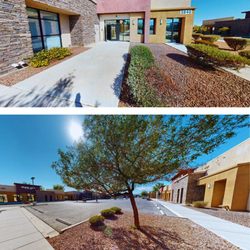
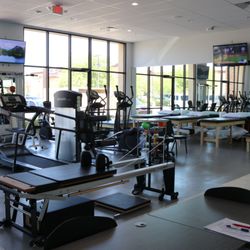
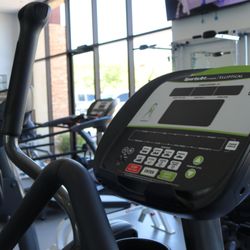
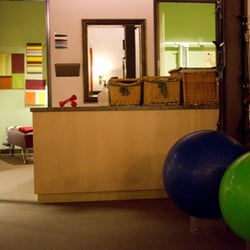
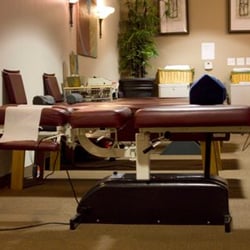
The facility itself was nicer than I expected: large common areas with plenty of seating, big‑screen TVs at both ends, and a pleasant outdoor courtyard.
But the real strength of Trellis is the healthcare staff. They were exceptional. My dad's primary CNA, Aleah, was the standout--truly the star of the show. Watching her care for my dad, I would have believed she was caring for one of her own family members. Even when he was ornery or threw her a curveball, she handled it with patience and grace. His occupational therapist, Raymond, and his physical therapist, Badge, were also excellent. And across the board--from nurses to CNAs to PTs, OTs, nutritionists, and housekeeping--the clinical team was skilled, compassionate, and consistently attentive. They are the reason my dad made real progress.
Unfortunately, the administrative side of Trellis is a completely different story. From the moment we arrived, we were handed a stack (well, an electronic stack) of forms. I understand the need for paperwork, but the entire process felt designed more to protect the facility than to support my dad's recovery.
The biggest issue involved my dad's macular degeneration treatments. He receives eye injections every seven weeks, and one of those appointments fell during his stay. I started trying to coordinate it a week in advance. His doctor's office explained that because he was a resident at Trellis, Trellis--not Medicare--had to be billed. If they billed Medicare, it would be denied. What followed was a frustrating loop of unanswered messages, unclear answers, and administrative runaround. Despite my efforts, I ultimately had to cancel the appointment.
As we approached the 20‑day mark--the point at which Medicare stops covering 100% and the patient becomes responsible for $217 per day--the business office suddenly appeared to say my dad was "nearing his baseline." Interestingly, none of his healthcare providers agreed with that assessment. Still, after five additional days, the administrative staff declared he had reached maximum improvement and discharged him. My dad and I were both uneasy about it, though it did allow me to get him to his eye appointment that same day.
Now, nearly two months post‑rehab, my dad is doing better than he was before he got sick--despite the admin team insisting he had "baselined" long ago. Go figure.
I do want to acknowledge Julie at the front desk, who was consistently pleasant and helpful in navigating the administrative maze.
In the end, I owe a tremendous debt of gratitude to the healthcare workers at Trellis. Their skill and compassion got my dad back on his feet.
The administrative staff, however, made an already stressful situation far more difficult than it needed to be.
Healthcare workers: 5 stars.
Administrative staff: 1 star.