
Silver Mountain Vineyards Photos


You might also consider


More like Silver Mountain Vineyards
Recommended Reviews - Silver Mountain Vineyards
Start your review...

Reviews With Photos


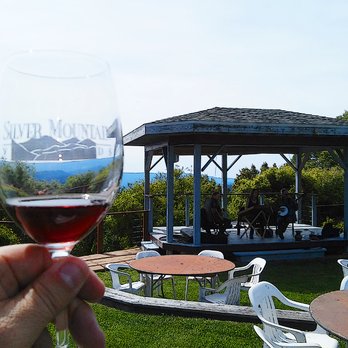
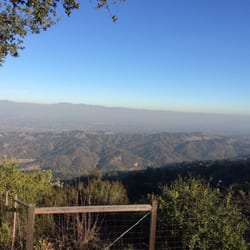
First, at 2100 ft. elevation, the grounds are amazing. The actual tasting area might be a little tight- it's in a room with educational posters and maps, collected rain water for drinking, food (on special occasions), and dozens of ribbons they won from fairs and festivals. But they have a large deck with great views of the redwoods of Monterey Bay, and they have a huge amphitheater (where on special events like Passport Days and Solstice, they have live music). Bonus for the animals: I went down to pet Spencer, the dog for whom some of the wines are named, but he was not showing me happy dog signs, no wagging tail, no hand sniffing, he looked at me as if I farted in an elevator. But when I gave up, he exposed his neck and belly for rubs, and would grumble when I tried to leave. (Miguel L. rudely said the dog was neglected- but truth is, the dog is exhausted from all of the attention). The white cat is harder to find- and it is really fluffy and light, sweet and and meowy. Miguel didn't mention it, but the cat has emotional issues and is bad at math. The tasting is a good deal, especially considering you get to pick your own pours. On Passport Days, we got to pick five wines. All of them were good to great. I especially liked the dry but fruity wine named after their dog, Spencer's Choice or Spencer's Pick. It had notes of dead fish and butt. (I'm kidding).


What are we trying so desperately to find when we travel somewhere special to taste fine wine? What are we hoping to feel, beyond the momentary pleasures of a mild buzz? I set off recently on a visit to Silver Mountain Vineyards in the Santa Cruz Mountains in search of answers. Three hours later, I ended up with a few bottles instead. The visit did help clarify things, though, and that's a really good reason to return in search of future insight. Basically, I learned three things about my wine tasting proclivities that may resonate with you as well. If so, I would encourage you to contact Silver Mountain to arrange a tasting of your own. First, I respond positively to compelling human interest stories that make me feel warm and fuzzy inside knowing that life, while full of setback and sorrow, doesn't have to entail endless suffering. Second, I am highly susceptible to fun-filled consumer experiences that provide me with lots of new topics to discuss with my friends and family when next we meet. Third, as someone with more than a casual interest in wine, I become very excited when I discover wines of character and charm that capture my attention and make me want to learn more about them as they continue to age. This ability of fine wine, regardless of how much it actually costs, to entertain us in its youth but then to evolve over time is the true source of its enduring appeal. If wine can gain in beauty and complexity as it gets older, then so in theory can we. Wines that are made honestly and expertly invite us to drink deeply and with intent, but they also make great company if we decide it is time to confront life's challenges directly rather than grasp for yet another distraction. And that's a very cool combination, in my book at least. To recap: wine tasting at its best is one part personal story, one part consumer experience, and one part sensory impression. It's not about finding the perfect food and wine pairing, trying an obscure grape varietal, or adding a 98 point wine to one's cellar. It is simply a way to form meaningful connections to the world around us through the magical medium of wine. The Silver Mountain Vineyards story is structured around the personal life journey of its founder, Jerold O., who rehabilitated an abandoned orchard deep in the Santa Cruz Mountains in the late 1970s with a goal of making fine wines similar to those he enjoyed from France and that were being made by pioneering California winemakers after the Second World War, including the Russian River Valley vintner, Joseph Swan, and the founder of Chalone Vineyard, Richard Graff. After years of effort, Jerold and his small support staff turned Silver Mountain into a thriving vineyard with an attached winery known for its sustainable, earth-friendly practices. When floods, fires, and even a major earthquake in the 1980s threatened to destroy the dream, Jerold doubled down and rebuilt the winery and continued to craft fine wines with the help of a talented assistant winemaker and group of dependable growers who supplied him with grapes to supplement the estate's limited production numbers. Now more than forty years on, thanks in no small part to a devoted circle of wine club members and the support of the Santa Cruz Mountains winemaking community, the Silver Mountain story continues. The consumer experience here doesn't attempt to outdo the luxury offerings you'll find in Sonoma or Napa, where attentive, attractively styled staff cater escort you around immaculately landscaped grounds as if it were a tour of the Palace of Versailles, often while serving your wines in varietal specific stemware as they do so. What you can expect here instead is more modest but also more meaningful: a gracious, unassuming welcome, polite and helpful table service, and a comfortable, quiet location beneath the shade of a few ancient looking trees to enjoy your wines. You can choose one of four separate wine flights (4 wines for $15), order wine by the glass or bottle, or do a combination of both. Picnics are welcome and encouraged and lingering for two hours or more is very easy to do. A bottle of the estate rosé ($22) is perfect for sharing in warmer weather, but glasses ($12) of Pinot Noir (from multiple vineyard sites), Chardonnay, or "Alloy" Cabernet-dominant Bordeaux red blend would be equally enjoyable following a tasting flight. Don't expect anyone aggressively to sell you the wines or convince you of their merits. Chances are good, however, that the owner himself will be present to assist you with wine recommendations, talk about the winery's history, or share his thoughts on the current harvest. It's not a candlelit tour of the wine caves or ATV ride through the vines, but it is the sort of simple human kindness that one tends not easily to forget.


Great spot .. great wine ... def would suggest an update to the patio but the tasting was delicious knowledgeable staff friendly and amazing view


Winemaker Jerold O'Brien does a number of beautiful things. He made the 2000 Monterey County Chardonnay. He grows the wine grapes on the estate - organically. He makes it easy to enjoy lovely sunsets overlooking the Monterey Bay. Get Thee to the Winery


6 years ago
This place was spot on for a celebration during the pandemic 2020! The service was impeccable, hosts had a great attitude and the property is beautiful. It made our day. Tables were spread out so proper social distancing while you sip and enjoy. The drive to this place is beautiful (excludes the silly Bay Area traffic even during pandemic, you just have to live with it). Great wines! They allow you to bring in your own picnic/snacks/lunch as long as you clean up after yourself and pick up your trash which you have to take long with you. Not sure if it's a Covid thing but doesn't seem too much of an ask so we were happy to oblige. Definitely will visit again! read more


1 year ago

5 years ago
$15 for 5 wines, but you can revisit the wines. We made reservations for Saturday at 1pm. Good amount of people were wine tasting in the tasting room. We are scared of covid so we kept our masks on while we wait for someone to pour us wine and then we go outside to drink. The portion size poured is sometimes a good pour and sometimes a small pour. Depends who you get. There's a cute friendly dog that's always hanging around. You can picnic here too. Plenty of tables and chairs. It was cold, damp, foggy, and gloomy when we went so we didn't stay for the picnic. We liked the 2 Chardonnay. One was reserve and the other one was regular. The Alloy red wine was good. The tasting fee is waived if you buy a bottle. read more

2 years ago

First, at 2100 ft. elevation, the grounds are amazing. The actual tasting area might be a little tight- it's in a room with educational posters and maps, collected rain water for drinking, food (on special occasions), and dozens of ribbons they won from fairs and festivals. But they have a large deck with great views of the redwoods of Monterey Bay, and they have a huge amphitheater (where on special events like Passport Days and Solstice, they have live music). Bonus for the animals: I went down to pet Spencer, the dog for whom some of the wines are named, but he was not showing me happy dog signs, no wagging tail, no hand sniffing, he looked at me as if I farted in an elevator. But when I gave up, he exposed his neck and belly for rubs, and would grumble when I tried to leave. (Miguel L. rudely said the dog was neglected- but truth is, the dog is exhausted from all of the attention). The white cat is harder to find- and it is really fluffy and light, sweet and and meowy. Miguel didn't mention it, but the cat has emotional issues and is bad at math. The tasting is a good deal, especially considering you get to pick your own pours. On Passport Days, we got to pick five wines. All of them were good to great. I especially liked the dry but fruity wine named after their dog, Spencer's Choice or Spencer's Pick. It had notes of dead fish and butt. (I'm kidding). read more


6 years ago
What are we trying so desperately to find when we travel somewhere special to taste fine wine? What are we hoping to feel, beyond the momentary pleasures of a mild buzz? I set off recently on a visit to Silver Mountain Vineyards in the Santa Cruz Mountains in search of answers. Three hours later, I ended up with a few bottles instead. The visit did help clarify things, though, and that's a really good reason to return in search of future insight. Basically, I learned three things about my wine tasting proclivities that may resonate with you as well. If so, I would encourage you to contact Silver Mountain to arrange a tasting of your own. First, I respond positively to compelling human interest stories that make me feel warm and fuzzy inside knowing that life, while full of setback and sorrow, doesn't have to entail endless suffering. Second, I am highly susceptible to fun-filled consumer experiences that provide me with lots of new topics to discuss with my friends and family when next we meet. Third, as someone with more than a casual interest in wine, I become very excited when I discover wines of character and charm that capture my attention and make me want to learn more about them as they continue to age. This ability of fine wine, regardless of how much it actually costs, to entertain us in its youth but then to evolve over time is the true source of its enduring appeal. If wine can gain in beauty and complexity as it gets older, then so in theory can we. Wines that are made honestly and expertly invite us to drink deeply and with intent, but they also make great company if we decide it is time to confront life's challenges directly rather than grasp for yet another distraction. And that's a very cool combination, in my book at least. To recap: wine tasting at its best is one part personal story, one part consumer experience, and one part sensory impression. It's not about finding the perfect food and wine pairing, trying an obscure grape varietal, or adding a 98 point wine to one's cellar. It is simply a way to form meaningful connections to the world around us through the magical medium of wine. The Silver Mountain Vineyards story is structured around the personal life journey of its founder, Jerold O., who rehabilitated an abandoned orchard deep in the Santa Cruz Mountains in the late 1970s with a goal of making fine wines similar to those he enjoyed from France and that were being made by pioneering California winemakers after the Second World War, including the Russian River Valley vintner, Joseph Swan, and the founder of Chalone Vineyard, Richard Graff. After years of effort, Jerold and his small support staff turned Silver Mountain into a thriving vineyard with an attached winery known for its sustainable, earth-friendly practices. When floods, fires, and even a major earthquake in the 1980s threatened to destroy the dream, Jerold doubled down and rebuilt the winery and continued to craft fine wines with the help of a talented assistant winemaker and group of dependable growers who supplied him with grapes to supplement the estate's limited production numbers. Now more than forty years on, thanks in no small part to a devoted circle of wine club members and the support of the Santa Cruz Mountains winemaking community, the Silver Mountain story continues. The consumer experience here doesn't attempt to outdo the luxury offerings you'll find in Sonoma or Napa, where attentive, attractively styled staff cater escort you around immaculately landscaped grounds as if it were a tour of the Palace of Versailles, often while serving your wines in varietal specific stemware as they do so. What you can expect here instead is more modest but also more meaningful: a gracious, unassuming welcome, polite and helpful table service, and a comfortable, quiet location beneath the shade of a few ancient looking trees to enjoy your wines. You can choose one of four separate wine flights (4 wines for $15), order wine by the glass or bottle, or do a combination of both. Picnics are welcome and encouraged and lingering for two hours or more is very easy to do. A bottle of the estate rosé ($22) is perfect for sharing in warmer weather, but glasses ($12) of Pinot Noir (from multiple vineyard sites), Chardonnay, or "Alloy" Cabernet-dominant Bordeaux red blend would be equally enjoyable following a tasting flight. Don't expect anyone aggressively to sell you the wines or convince you of their merits. Chances are good, however, that the owner himself will be present to assist you with wine recommendations, talk about the winery's history, or share his thoughts on the current harvest. It's not a candlelit tour of the wine caves or ATV ride through the vines, but it is the sort of simple human kindness that one tends not easily to forget. read more


4 years ago

7 years ago
Great spot .. great wine ... def would suggest an update to the patio but the tasting was delicious knowledgeable staff friendly and amazing view read more


Winemaker Jerold O'Brien does a number of beautiful things. He made the 2000 Monterey County Chardonnay. He grows the wine grapes on the estate - organically. He makes it easy to enjoy lovely sunsets overlooking the Monterey Bay. Get Thee to the Winery read more

5 years ago

Amazing views. Friendly staff. They had irish music playing which was a nice touch. They had a bunch of finger foods out which was yummy. The wines were pretty tasty as well! Not sure why Miguel said in his review that the dog looked abused. He is anything but. He's old if anything. The owner said he was a rescue that came from an abusive situation so if he doesn't seem super outgoing that probably has something to do with it..but he's takin care of. read more


8 years ago

8 years ago

8 years ago
7 years ago
8 years ago
8 years ago

8 years ago
8 years ago
8 years ago
8 years ago

8 years ago

8 years ago
8 years ago

8 years ago
8 years ago

8 years ago
8 years ago

9 years ago
6 years ago


8 years ago
7 years ago
8 years ago
8 years ago
8 years ago

Page 1 of 2
More info about Silver Mountain Vineyards
269 Silver Mtn Dr
Los Gatos, CA 95033
Directions
(408) 353-2278
Call Now
Visit Website
http://www.silvermtn.com
View offerings
Hours
Payment methods
Food & Alcohol
Services
Indoor Amenities
Outdoor Amenities
Other Amenities
From the Business
Ask the Community - Silver Mountain Vineyards
Are they dog friendly?
I think on leash, they should be fine. There is not enough open space since most is taken up by picnic tables.
Review Highlights - Silver Mountain Vineyards
You might also consider
















Why does Yelp recommend reviews?
15 reviews that are not currently recommended
The reviews below are not factored into the business's overall star rating.

2 years ago

8 years ago
8 years ago
8 years ago
8 years ago
8 years ago
8 years ago

8 years ago
8 years ago
8 years ago
8 years ago
8 years ago
8 years ago

8 years ago

9 years ago


