Services - Smog Tech Pros
Smog check
Auto general diagnosis
Auto no-start diagnosis
Smog Tech Pros Photos


More like Smog Tech Pros
Recommended Reviews - Smog Tech Pros
Start your review...


Reviews With Photos


If you're looking or a star station to smog your car, this is the one, highly recommended this place, amazing people and great service,


In and out in 15 minutes!! No line as I arrived just a few mintutes after opening on a Tues morning. Transparent pricing listed on the wall. Friendly professional service and thorough too, I saw the tech inspecting the system with a flashlight and mirror on his hands and knees. Overall, I will return to take care of my other vehicle smog needs!! Thanks again!


Great experience at Smog Tech Pros. They got me in and out in under 20 minutes which was awesome. The staff was friendly, professional, and made the whole process quick and stress-free. It's hard to find places that are efficient and still provide great customer service, but they did exactly that. I'll definitely be coming back here for my next smog check. Highly recommend.


I've been coming to these guys for at least seven years. Although quiet, they remain professional, and I've never had any issue with their service. The guy holding the sign out front, shaking his head, enjoying his music, puts a smile on my face. As he's enjoying life!


Amazing service I love coming over here. I've been here for many many years and I keep coming back because the service is excellent.


1 year ago
1 year ago

3 years ago
1 year ago
1 year ago

3 years ago
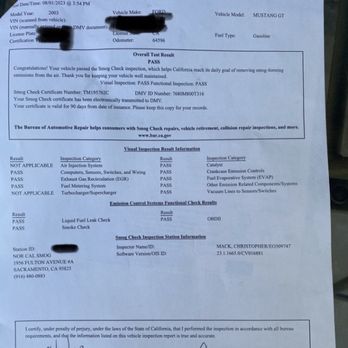
Really disappointed with the service I got from this shop and being lied too. Don't take your car here.... See full story below. So while I was waiting for the smog test I kept noticing they were moving my car around from one end of the shop to other and I was like that's odd. So I stepped out to the front of the garage to get a closer view and started looking at the computer screen of smog testing equipment where the smog tech was at and could see it wasn't working properly on there end. While standing at the garage one of the smog techs came over and said they had been having problems with their smog equipment data communication that day. So I went back in to the shop and another smog tech came in to talk with the manager about the computer data communication they were having and the manager was like oh I thought we fixed it and the smog tech said it's still giving him problems, these two we're talking amongst each other but I could overhear them .... So then this manager calls me to the desk and states that I have a bad a cigarette lighter which is causing the smog test to fail and that I need fix it to pass smog ???? I said wait a minute your smog tech just told me it was your smog equipment data connection problem and I also overheard you and the other smog tech say the same thing about your shops bad data communication line.... The manager goes on to say no it's your cars cigarette lighter and you need to fix it and then come back for the retest..... So I leave the shop and come home to fix the cigarette lighter issue.... I proceeded with my test light to test the cigarette lighter and it worked, I also plugged in my car phone charger and it worked too! So the next day I called the smog shop to talk with the manager to check to make sure before I bring my car back that there data computer line is fixed..... he continues to go on to say there's not a problem with the computer line and it's my car..... I asked for my money back because at this point he was totally being dishonest..... He said he wouldn't give my money back.... So rather than continue to argue or go back to a dishonest mechanic shop I took my car to a different smog shop and it passed with no issues. The below photo shows the passed smog check vehicle inspection report from the honest shop I went after Smog Tech Pros said my car was the problem. read more
2 years ago

2 years ago

4 years ago
1 year ago

2 years ago

2 years ago
1 year ago

3 years ago
1 year ago
2 years ago

2 years ago

3 years ago
2 years ago

2 years ago

2 years ago
2 years ago

3 years ago
3 years ago

3 years ago

7 years ago
I always hate getting the smog check done and usually leave it to the last minute. I work nearby and did some research on local smog places and saw that Smog Tech has great reviews. I took an early lunch break and was planning on taking a longer break thinking it would take forever. Not the case. I showed up and the technician told me it would take 10 minutes. Not even. I think total time from getting in and paying it took 10 minutes. On top of it I got $10 off for checking in. I highly recommend this spot. read more


3 years ago

3 years ago

5 years ago
Business owner information

Shahnawaz K.
WE ARE STAR CERTIFIED!!…

3 years ago

5 years ago
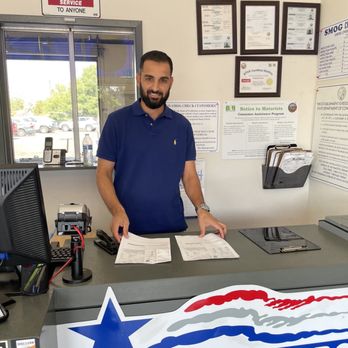
Fast and Efficient. Just under $50 out the door with coupon. Earned my business and trust. read more

Business owner information
Shahnawaz K.
Thanks Robert!

4 years ago
2 years ago
2 years ago

4 years ago

4 years ago
3 years ago

4 years ago
More info about Smog Tech Pros
Ask the Community - Smog Tech Pros
Can you smog a 45' new motor coach?
Unfortunately we wouldn't be able to accommodate that size.
Review Highlights - Smog Tech Pros






Why does Yelp recommend reviews?
37 reviews that are not currently recommended
The reviews below are not factored into the business's overall star rating.
12 years ago
3 years ago
10 years ago

6 years ago
1 year ago

9 years ago

12 years ago

12 years ago

6 years ago

7 years ago
8 months ago
7 months ago

2 years ago
10 years ago

8 years ago

12 years ago

11 years ago

9 years ago

6 years ago

7 years ago


